November 6 brings two more Justice Department departures
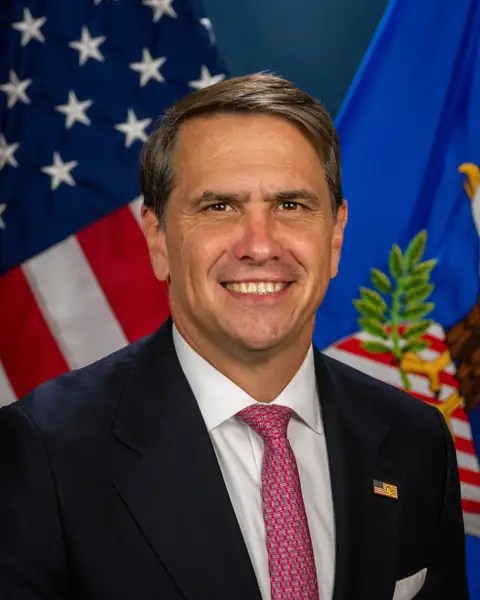
John Eisenberg, the assistant attorney general leading the National Security Division, and Jason Reding Quiñones, the U.S. attorney for the Southern District of Florida, resigned from the Justice Department on November 6, 2026. Attorney General Todd Blanche announced the departures in separate posts. They followed the November 5 resignation of Civil Rights Division chief Harmeet Dhillon, extending the sequence of leadership changes across different parts of the department.
Blanche said he had accepted Eisenberg’s resignation and praised his national security service, including the division’s work on terrorism prosecutions and disrupting planned attacks. In the separate announcement about Quiñones, Blanche thanked him for his service and cited work against violent crime, trafficking and transnational crime. These statements describe the attorney general’s assessment of the departing officials. They do not announce a replacement for either position.
Quiñones also published his own statement, saying he had submitted his resignation to the president and that it was effective that day. He thanked Trump, his colleagues and law enforcement officers and described leading the office in his home district as especially meaningful. Blanche’s Eisenberg announcement confirms his acceptance of that resignation on November 6, without supplying a separate departure timetable.
Reuters independently reported both departures and said the reasons were not clear. The public announcements reviewed here do not attribute either resignation to the midterm results or describe a coordinated decision involving Dhillon. Three officials leaving within two days establishes a chronology, rather than proof of a shared motive. Dhillon’s own account that she had planned her departure before the election remains distinct from what the other officials have publicly said.
Dhillon resigns and sets out her account of the timing
Harmeet Dhillon resigned as the Justice Department’s assistant attorney general for civil rights on November 5, 2026. Attorney General Todd Blanche accepted her resignation, according to independent reporting by NPR and the Associated Press. A resignation letter dated November 5 and published by Fox News provides her own written account: she told White House chief of staff Susie Wiles in early October that she would leave after the midterm election.
The announcement came two days after the November 3 vote. The chronology has political significance, but Dhillon disputes the suggestion that the election result caused her decision. In an interview with Fox News Digital, she said she had decided to return to private practice before Election Day and that Wiles had asked her to wait until afterward. That description of their conversation is Dhillon’s account, rather than an independently documented statement from Wiles.
Her letter is addressed to President Donald Trump and formally resigns the post. It thanks him for the opportunity to serve and presents a list of initiatives that Dhillon regards as accomplishments. The document supplies evidence of her decision and her stated view of the tenure. Its description of policy victories is an assessment by the departing official, rather than a separate finding that every challenged policy was unlawful or that every lawsuit succeeded.
NPR reported that Blanche announced his acceptance on X and praised Dhillon’s defense of civil liberties and enforcement of the law. His assessment differs sharply from the criticisms voiced by former division employees. The resignation therefore closes a period whose meaning remains contested: the attorney general describes public service carried out with conviction, while critics describe an institution redirected away from its traditional priorities.
The letter’s early-October conversation and the November 5 announcement are separate points in the departure process. The first describes when Dhillon says she communicated her intention. The second is the date of her formal letter and the public acceptance reported by news organizations. Neither establishes that she was fired, and her interview expressly presents the departure as her choice.
The office she is leaving is the leadership of the Civil Rights Division, not the attorney general’s position. Blanche remains identified by the Justice Department as attorney general. Dhillon’s letter does not name a successor. The next leadership announcement will matter because the division handles an extensive enforcement portfolio, with continuing investigations and litigation extending beyond the tenure of any one political appointee.
A tenure defined by a dispute over civil-rights enforcement
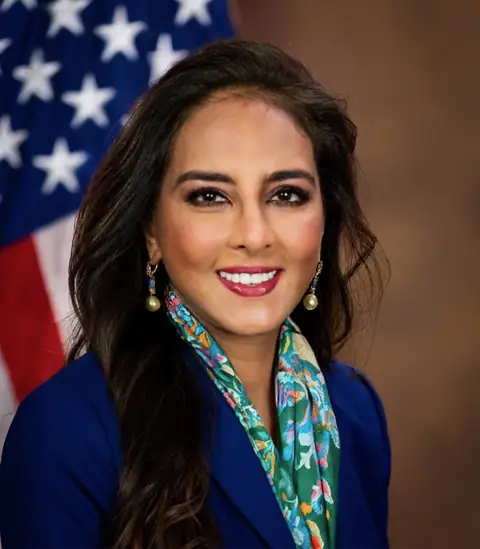
Dhillon entered the role in April 2025. Her official Justice Department biography records Senate confirmation on April 3 and her swearing-in by then-Attorney General Pam Bondi on April 7. President Trump had nominated her in December 2024. Those dates place the November resignation about 19 months after she took office, spanning the period in which she reorganized the division’s priorities.
Before joining the department, she founded Dhillon Law Group and the Center for American Liberty. The department’s biography describes a practice focused on free speech, civil rights, and campaign and election law. It also records her education at Dartmouth College and the University of Virginia School of Law and her clerkship for federal appeals Judge Paul Niemeyer. Her move to government brought a lawyer with an established advocacy practice into an office with national enforcement responsibilities.
In the resignation letter, Dhillon points to action against diversity, equity and inclusion policies, litigation involving school gender policies and sports, religious-liberty enforcement, antisemitism cases, election monitoring and the creation of a Second Amendment section. Those are the initiatives she chose to highlight in explaining what she believed the division had accomplished. They also identify the policy areas around which much of the disagreement about her leadership developed.
The Second Amendment section is visible in the department’s current organizational material. Its official page describes investigating alleged patterns of infringement by law-enforcement agencies and participating in litigation through lawsuits, interventions and court briefs. The page lists actions involving firearm permitting and state restrictions. These records establish an enforcement program and its stated objectives. A department announcement that it filed a lawsuit is different from a court judgment agreeing with its allegations.
Independent reporting describes substantial staffing changes alongside that policy shift. NPR reported that roughly 300 attorneys had departed. Dhillon told Fox News Digital that she had recruited more than 130 lawyers during her tenure. Those figures describe different measures and are not a verified opening-and-closing headcount. They should not be subtracted to produce a claimed current staffing total.
The Associated Press described criticism from former division attorney Stacey Young, who argues that the changes damaged the division and its established mission. NPR also reported Young’s criticism. Dhillon’s own account is that she changed the institution in the direction she came to pursue. The contrast concerns enforcement priorities, staffing and the use of federal power. It is not resolved by treating either the administration’s praise or an opponent’s criticism as a judicial finding.
The division’s work and the questions after her departure
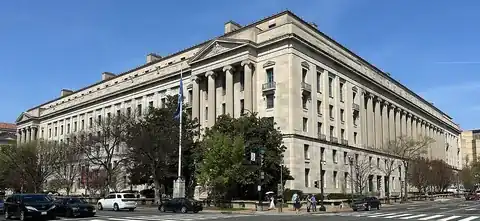
The department’s election-monitoring announcement offers a recent example of the division’s operational reach. On November 3, DOJ said it was deploying approximately 1,000 monitors and observers across all 50 states, an effort coordinated by the Civil Rights Division. The participants included personnel from the division, other department components, U.S. attorney’s offices and the Office of Personnel Management. The department characterized it as its largest election-monitoring effort.
DOJ said monitors would check compliance with federal voting-rights statutes. Its announcement separately identified work by the Voting Section, Disability Rights Section and Criminal Section. That division of responsibilities matters: election monitoring is not a statement that every observed location has committed an offense. The release described an enforcement and observation program, not a nationwide finding of fraud or a certification of election results.
The division’s remit is wider than elections. Its organizational page lists 12 sections covering areas including criminal civil-rights enforcement, disability rights, education, employment, housing, immigrant and employee rights, special litigation and appeals. The same structure includes policy and strategy, federal coordination, voting and Second Amendment work. A change in the person at the top therefore has implications across several areas of federal enforcement, rather than one isolated program.
VIRVIB analysis: the practical consequences of Dhillon’s departure will depend on decisions that follow it. A successor’s appointment, staffing choices and the handling of particular cases will provide more concrete evidence than assumptions about an automatic change of policy. The resignation itself neither announces a replacement enforcement agenda nor resolves the lawsuits and investigations associated with her tenure.
View sources
Source publication or schedule date: Dhillon resignation November 5, 2026; Eisenberg and Quiñones announcements November 6, 2026. Latest statements checked November 7 UTC.
- Harmeet Dhillon — November 5 resignation letter, published by Fox News
- NPR via KUNC — November 5 acceptance and division changes
- Associated Press — November 5 resignation and competing assessments
- Fox News Digital via LiveNOW — Dhillon’s account of timing and private practice
- Justice Department — Dhillon biography and confirmation dates
- Justice Department — Second Amendment Section remit and litigation
- Justice Department — November 3 election-monitoring announcement
- Justice Department — division organization and enforcement sections
- Justice Department — Attorney General Todd Blanche biography
- Attorney General Todd Blanche — November 6 Quiñones resignation announcement
- Jason Reding Quiñones — November 6 statement and effective date
- Attorney General Todd Blanche — November 6 acceptance of Eisenberg resignation
- Reuters — November 6 reporting on both departures and unclear reasons
- CBS News — November 6 reporting on Eisenberg and other DOJ departures
Prepared with AI assistance. Source-based reporting checked on November 7, 2026. This article does not update automatically. Read our editorial standards.