Jay Rockefeller’s death is announced after a career rooted in West Virginia
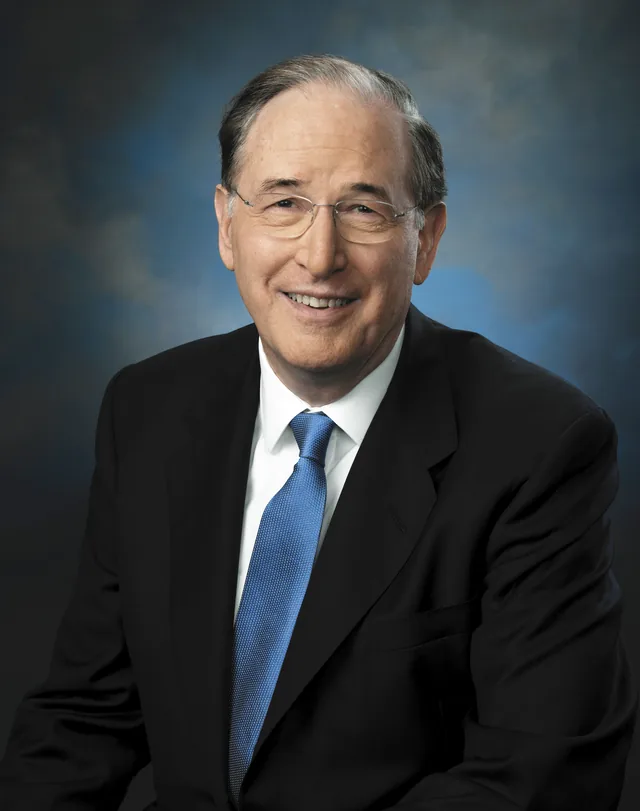
Jay Rockefeller, the former West Virginia governor and five-term U.S. senator, has died at 89. Governor Patrick Morrisey confirmed his passing in a statement dated November 6, 2026. The Associated Press and Reuters independently reported the death. Rockefeller’s career connected the politics of a coal-producing state with national debates over children’s health insurance, communications infrastructure and the oversight of American intelligence.
November 6 is the date of the public announcement used here. The governor’s statement praised Rockefeller’s work for health care, miners’ families and veterans, and offered condolences to his wife, Sharon, and their family. Those words are an assessment from a successor in state office. They accompany a public record that stretches from an anti-poverty assignment in the 1960s through three decades in the Senate and retirement in 2015.
Born John Davison Rockefeller IV in New York City on June 18, 1937, he came from the family associated with the Standard Oil fortune. His great-grandfather was John D. Rockefeller. Yet the career he built was in West Virginia and in the Democratic Party, rather than in the Republican tradition associated with several members of his family. The contrast between inherited wealth and his adopted state’s economic struggles remained a central feature of his public story.
The National Governors Association records his graduation from Harvard in 1961 and earlier study in Japan. His early work included the Peace Corps and the State Department. In 1964, an anti-poverty assignment brought him to West Virginia. The Congressional Directory identifies him as a VISTA volunteer in Emmons, a coal community that he later repeatedly described as the foundation of his political commitments.
In his December 4, 2014 farewell address, preserved by the Government Publishing Office, Rockefeller described learning in Emmons how little he had understood about the problems residents faced. He connected that experience to roads, schools, drinking water, safe employment and access to care. He delivered that account of his priorities as he prepared to leave the Senate.
He won election to the state House of Delegates in 1966 and to the secretary of state’s office in 1968. His first bid for governor ended in defeat in 1972. He then became president of West Virginia Wesleyan College before returning to electoral politics. He won the governorship in 1976 and won reelection in 1980. The governors association dates his two terms in office from January 17, 1977, through January 14, 1985.
Those years brought practical pressures beyond campaigning. West Virginia University’s archive describes the 1977 floods and the emphasis on moving housing above flood plains. It also records the 1977–78 coal strike and his refusal to use the National Guard to suppress it. The same account describes his work on mine safety and the President’s Commission on Coal, placing his support for miners within the responsibilities and conflicts of governing a coal state.
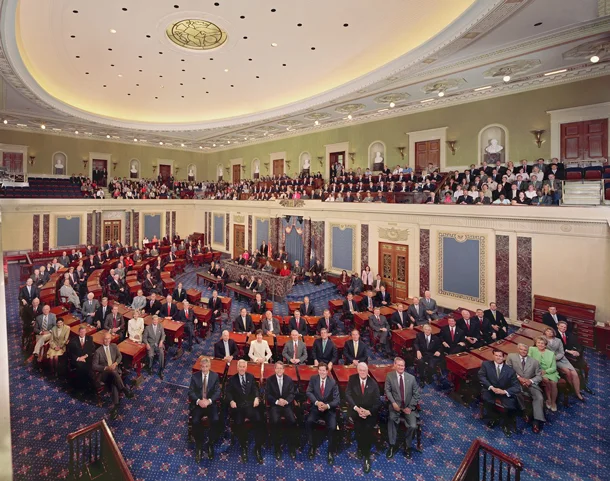
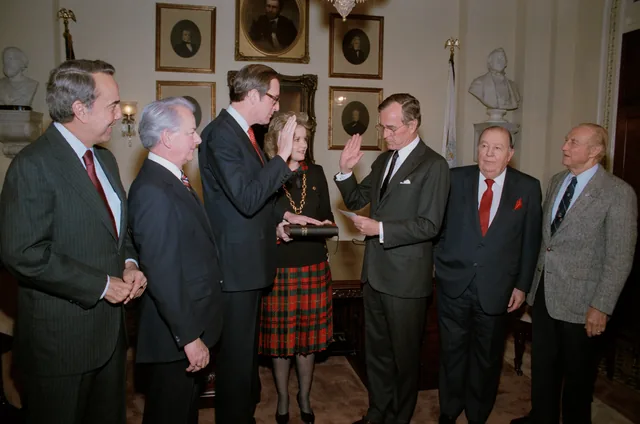
Rockefeller won his first Senate election on November 6, 1984. A Senate Photographic Studio image records his ceremonial swearing-in on January 15, 1985, with Vice President George H.W. Bush administering the oath and Sharon Rockefeller holding the Bible. He would serve five terms before retiring in 2015. His marriage to Sharon Percy dates to 1967, and the couple have four children, according to the university’s account of his life.
Health insurance, communications and the choices in his Senate record
Rockefeller’s Senate legacy is especially visible in programs whose names became more familiar than the legislators behind them. The Children’s Health Insurance Program, known as CHIP, is one example. The National Governors Association identifies him as a co-author. The congressional tributes collected at his retirement also record Republican Sen. Orrin Hatch’s account of working with him on children’s coverage. The record supports a shared legislative achievement, rather than crediting one senator with creating the program alone.
Federal program history explains what that achievement did. CHIP became law in 1997 and supplies federal matching funds to states for coverage of children whose families earn too much to qualify for Medicaid but cannot afford private insurance. A December 1997 federal implementation letter identifies the Balanced Budget Act as the law that established the program under Title XXI of the Social Security Act. States could operate a separate children’s program, expand Medicaid or combine the approaches.
That design helps explain why CHIP figures prominently in accounts of Rockefeller’s service. Its purpose concerns a gap between two routes to coverage, rather than simply creating a new name for Medicaid. The program’s continued operation depends on federal law, state administration and funding decisions across many years. Its institutional life extends beyond the tenure of the lawmakers who negotiated its creation.
Communications policy supplied another durable strand. Federal Communications Commission records credit a bipartisan group including Rockefeller, Sen. Olympia Snowe and then-Rep. Edward Markey with the E-rate provisions associated with the Telecommunications Act of 1996. The program supported access to telecommunications and information services in schools and libraries. For rural communities, that placed connectivity alongside the more familiar public infrastructure of classrooms, roads and utilities.
Rockefeller also worked on the legislation that led to FirstNet. West Virginia University’s archive traces his Public Safety Spectrum Act proposal to 2010 and the subsequent 2012 law. The FirstNet Authority’s own history records that the Middle Class Tax Relief and Job Creation Act, signed February 22, 2012, created the authority and allocated 20 megahertz of spectrum and $7 billion for a network dedicated to first responders. Those are the original statutory resources, not a statement of the network’s current budget or reach.
His national security record contains choices that should remain part of an assessment alongside those domestic programs. On October 11, 2002, he voted for the resolution authorizing the use of U.S. armed forces against Iraq. The Senate’s roll call records 77 votes in favor and 23 against. Fellow West Virginia Sen. Robert Byrd voted against it. The two senators represented the same state while reaching different decisions on that authorization.
Rockefeller later chaired the Senate Intelligence Committee. The university’s description of his papers includes work on prewar intelligence, intelligence reform, surveillance and the CIA detention and interrogation program. His service also included leadership of the Commerce and Veterans’ Affairs committees. Those responsibilities put him in positions to investigate government activity, shape legislation and question administration officials, while leaving a record of his own votes open to scrutiny.
The papers he donated to West Virginia University preserve the working material behind that career. Their significance extends beyond a sequence of offices or a family name. Records of constituent concerns, policy development and committee work allow later readers to examine how his stated priorities translated into decisions. Rockefeller leaves a public legacy in legislation and institutions, alongside a documentary record through which the achievements, compromises and disputes of his service can continue to be assessed.
View sources
Source publication or schedule date: Death announcement November 6, 2026. Historical documents retain their original dates.
- West Virginia governor — November 6 statement confirming Rockefeller’s passing
- Associated Press — independent death announcement and career reporting
- Reuters — November 6 obituary
- National Governors Association — education, elections and exact gubernatorial terms
- Congressional Directory — February 2014 West Virginia entry
- WVU Libraries — biographical note and collection of Rockefeller papers
- Government Publishing Office — farewell address and congressional tributes
- WVU Libraries — November 2014 donation and family background
- CMS — CHIP program history and purpose
- Federal implementation letter — December 8, 1997 CHIP authority and program options
- FCC — E-rate’s bipartisan legislative origins
- FirstNet Authority — February 22, 2012 creation and statutory resources
- U.S. Senate — October 11, 2002 Iraq authorization vote
- WVU Libraries — January 15, 1985 ceremonial swearing-in photograph
Prepared with AI assistance. Source-based reporting checked on November 6, 2026. This article does not update automatically. Read our editorial standards.