The Supreme Court grants review, without deciding the dispute
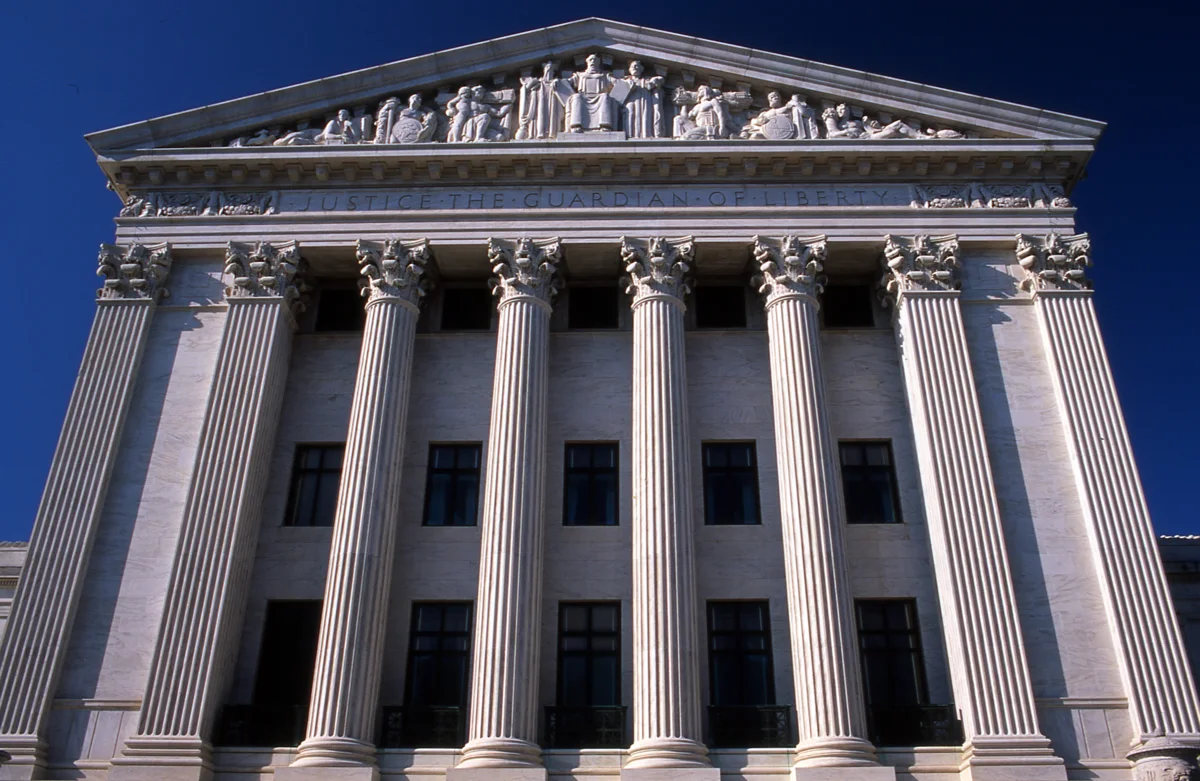
The U.S. Supreme Court agreed on November 6 to hear Goldman Sachs Bank USA’s appeal in a bankruptcy arbitration dispute. The case asks when a bankruptcy court may refuse to enforce an arbitration agreement for claims that a creditor violated the automatic stay, the protection that generally halts collection efforts after a bankruptcy filing. The immediate question concerns the forum for deciding those claims, rather than permission for creditors to ignore the stay.
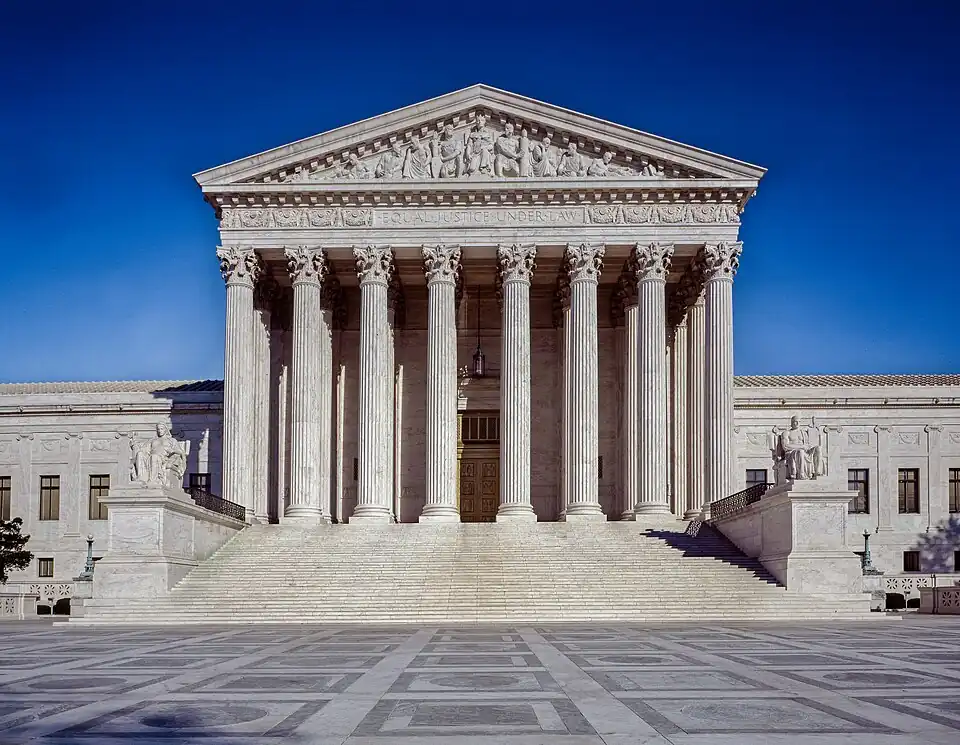
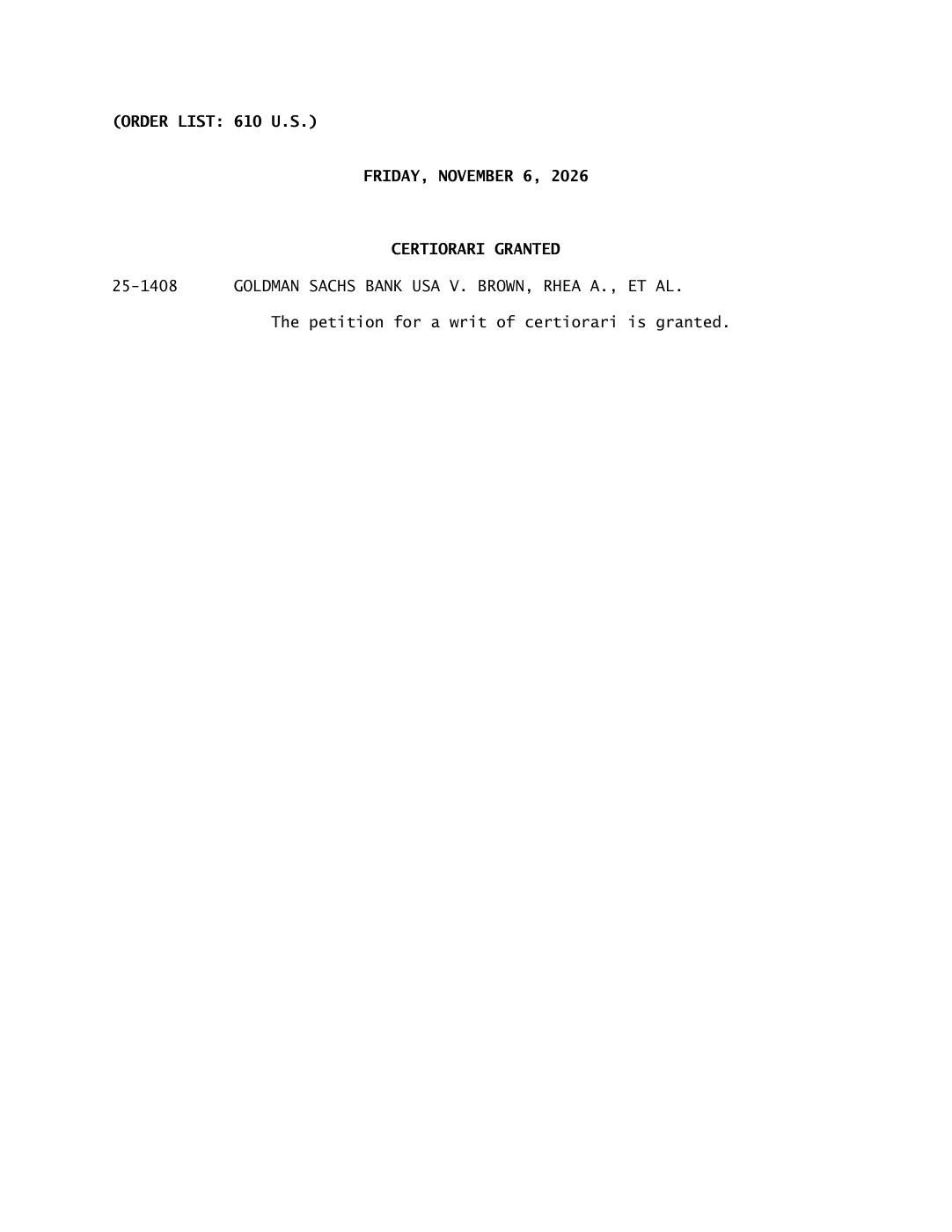
The court’s one-page order grants the petition in Goldman Sachs Bank USA v. Brown, No. 25-1408. Its docket identifies the decision under review as the Fourth Circuit’s March 18, 2026 judgment. The grant brings the dispute before the justices. It does not reverse that judgment, award compensation to the debtors or determine that the bank committed the alleged violations. Reuters and Bloomberg Law independently reported the court’s decision to take the case.
Two federal laws supply the competing rules. Section 2 of the Federal Arbitration Act generally makes written arbitration agreements in covered contracts enforceable, subject to its stated exceptions. The Bankruptcy Code, meanwhile, creates the automatic stay and remedies for violations. The dispute is about how those statutory systems fit together when the claim arises from the bankruptcy process itself.
Section 362(a) generally stops acts to collect claims that arose before the bankruptcy filing, among other listed actions. The statute also contains exceptions, limits and provisions allowing relief from the stay. A bankruptcy filing therefore should not be described as stopping every possible legal proceeding. In this case, the claimed misconduct concerns attempts to collect pre-bankruptcy credit-card debt after the bank received notice of the filings.
The available statutory remedy is also specific. Section 362(k) provides for actual damages, including costs and attorneys’ fees, for an individual injured by a willful stay violation, and permits punitive damages in appropriate circumstances. Those requirements make proof of injury consequential. They are not a promise that every disputed contact will produce compensation.
How Brown and Maze’s credit-card claims reached the justices
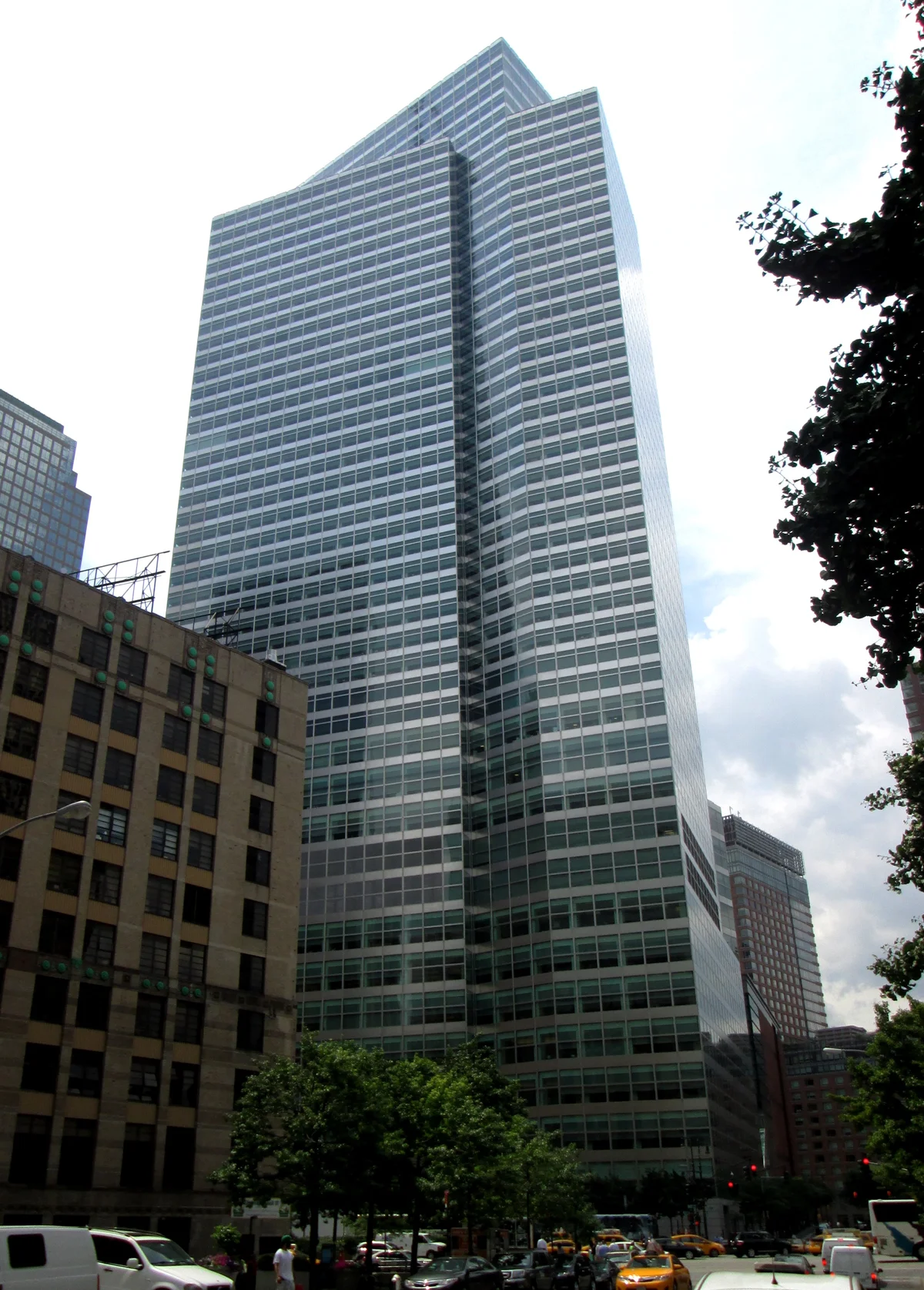
The Fourth Circuit’s opinion traces the dispute to two bankruptcy cases in the Western District of Virginia. Rhea Ann Brown filed under Chapter 13 in June 2023. Gregory Kevin Maze filed under Chapter 7 in November 2023. Both listed Goldman Sachs credit-card debt among their obligations. According to the opinion’s account, the Bankruptcy Noticing Center electronically notified the bank within days of their filings.
Brown alleged that collection communications continued for more than six months despite notices from her and her lawyer. Maze alleged continuing emails and calls for more than three months. Their adversary proceeding sought damages and other relief for asserted willful violations of the stay. The original complaint also proposed a class of similarly situated debtors. These are the allegations and requested remedies described in the record, rather than a Supreme Court finding that a nationwide class has proved its claims.
Goldman Sachs invoked the arbitration provisions in the credit-card agreements. As reproduced in the appellate opinion, the provisions allowed either side to elect individual binding arbitration and restricted joining or consolidating claims in arbitration. The bank asked the bankruptcy court to compel arbitration and pause the adversary proceeding. The parties did not dispute the validity of the arbitration clause in the appeal.
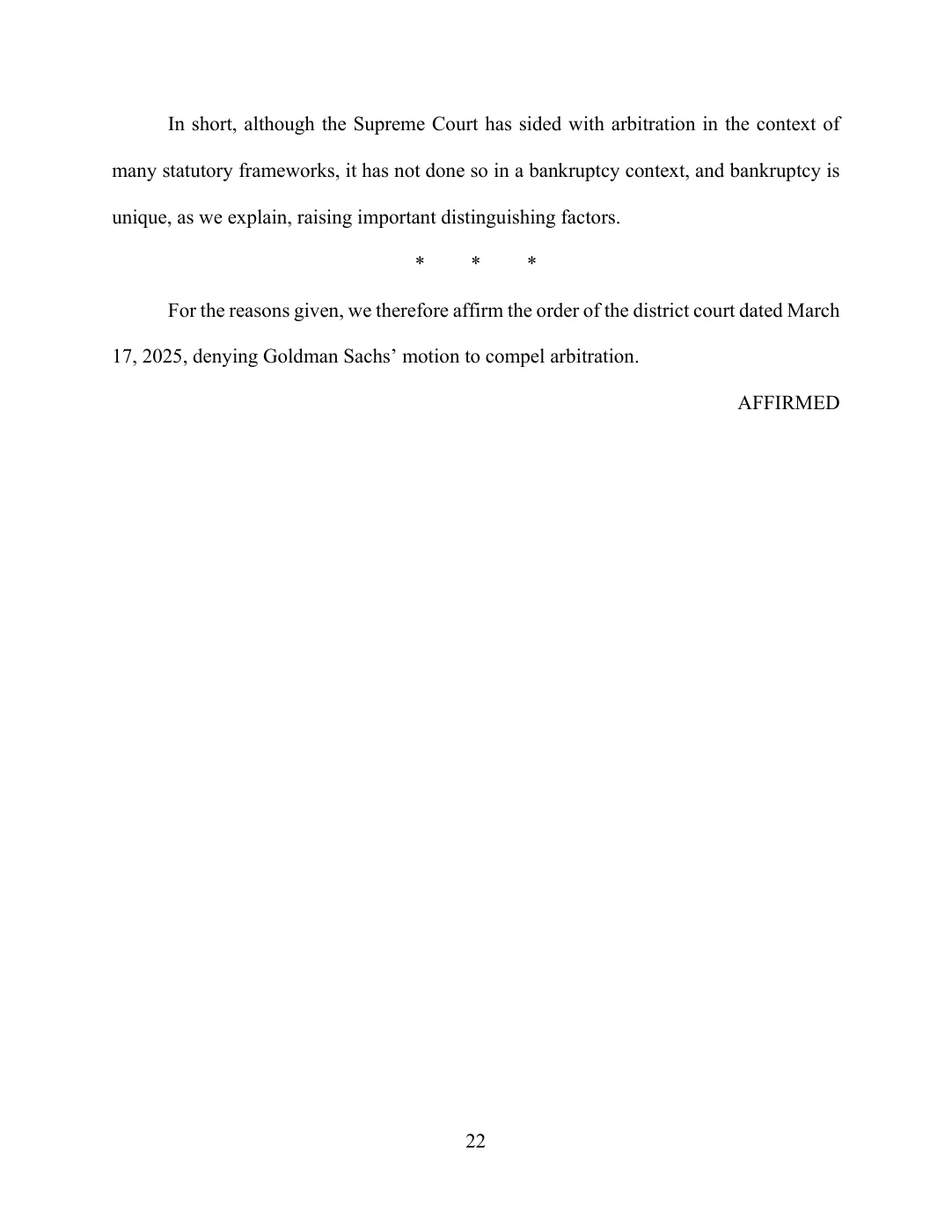
The bankruptcy court denied the motion in July 2024. Its published explanation treated the claims as arising from the bankruptcy itself and found an inherent conflict between enforcing arbitration in this setting and the Bankruptcy Code’s purposes. The district court affirmed in March 2025. A divided Fourth Circuit panel then upheld that result on March 18, 2026.
That sequence separates the forum question from the underlying collection dispute. The bank’s motion sought a different mechanism for resolving the claims. The debtors sought to keep them before the bankruptcy court. A decision about which forum may hear a claim does not, by itself, resolve whether the claimant has established each element needed to win.
Why the appellate judges divided over arbitration
Judge Paul V. Niemeyer wrote the Fourth Circuit majority opinion, joined by Judge Pamela Harris. They concluded that compelling arbitration in the circumstances of this case would conflict with bankruptcy’s structure and protections. Their reasoning emphasized centralized decision-making, uniform enforcement, the bankruptcy judge’s expertise and the court’s ability to enforce the automatic stay.
The majority saw the stay as serving creditors as well as debtors. It prevents competing collection efforts from disrupting the coordinated treatment of a debtor’s assets and obligations. In the majority’s analysis, a private agreement between one creditor and a debtor should not undermine the collective interests protected by that process. The opinion also emphasized that the claimed right existed because of the Bankruptcy Code, rather than simply being a pre-existing contract claim brought into bankruptcy.
The majority did not say that calling a claim a core bankruptcy matter automatically defeats arbitration. It examined the asserted conflicts in this particular setting. That distinction matters because a broad statement that bankruptcy courts can disregard every arbitration clause would go beyond the decision the Supreme Court is reviewing.
Judge Robert King dissented. He argued that arbitration of these damages claims would not add or remove a creditor or disrupt distributions in the bankruptcy cases. He considered the claims subject to the parties’ valid agreements and rejected the majority’s finding of an irreconcilable conflict. His analysis stressed that Maze had received a discharge and Brown’s repayment plan had already been confirmed.
King also identified a conflict with the Second Circuit’s 2006 decision in MBNA America Bank v. Hill. The majority distinguished that case because the bankruptcy there had closed and there was no ongoing reorganization. Their disagreement is therefore more precise than a general contest between courts and arbitrators. It concerns how closely a particular claim remains connected to bankruptcy administration, and whether that connection justifies refusing otherwise valid arbitration terms.
The Supreme Court’s acceptance of the appeal does not disclose which of those approaches it will adopt. The eventual reasoning could matter as much as the winning party, particularly if the justices distinguish between different claims, remedies or stages of bankruptcy.
The September dismissal and what remains unresolved
The record developed further after the appellate decision. In a September 14 supplemental brief, Brown and Maze told the Supreme Court that the bankruptcy court had dismissed their complaint without prejudice on September 10. They said the court found that the complaint inadequately alleged actual damages and allowed twenty-one days to amend. They argued that this development made the case an unsuitable vehicle for Supreme Court review.
Goldman Sachs acknowledged that dismissal in its September 15 response but argued that it did not resolve the arbitration dispute. The bank said continued litigation over the claims would still be governed by the Fourth Circuit’s refusal to compel arbitration. The two sides thus agreed that a dismissal had occurred while disagreeing about its significance for the justices’ decision to hear the case.
The debtors’ supplemental filing also emphasized their reliance on Section 105(a), which concerns bankruptcy courts’ authority to implement the Code, alongside Section 362(k). Goldman Sachs contested their characterization of that theory. Those are competing party arguments. Neither supplemental brief is a ruling by the Supreme Court, and the November 6 grant does not explain how the justices will handle those procedural and remedial questions.
For readers assessing the consequences, three matters remain separate. Whether the allegations adequately support relief concerns the merits and pleading requirements. Whether arbitration must be enforced concerns the forum. Whether a proposed class may proceed concerns collective litigation. The record does not support combining all three into a claim that the justices have authorized debt collection or awarded a class-wide recovery.
The November 6 order establishes that the Supreme Court will review the arbitration dispute. The docket checked for this report lists the grant without an argument date or a merits decision. Further briefing and the court’s eventual opinion will show whether it adopts a broad rule or a narrower approach tied to these bankruptcy claims. Until then, the existing statutory stay and the disputed responsibility for enforcing it remain the central issues.
View sources
Source publication or schedule date: November 6 Supreme Court grant; March 18 appellate opinion; September 14–15 party filings. Sources checked November 7, 2026.
- Supreme Court — November 6 order granting certiorari
- Supreme Court — official docket No. 25-1408
- Fourth Circuit — original March 18 opinion and dissent
- U.S. Bankruptcy Court — July 15, 2024 opinion page
- 11 U.S.C. § 362 — automatic stay and remedies
- 9 U.S.C. § 2 — arbitration agreements
- Reuters — independent November 6 report
- Bloomberg Law — independent November 6 report
- Respondents — September 14 supplemental brief, party filing
- Goldman Sachs — September 15 response, party filing
- Jeff Kubina — Supreme Court photograph and CC BY-SA 2.0 provenance
- Beyond My Ken — Goldman Sachs Tower photograph and CC BY-SA 4.0 provenance
Prepared with AI assistance. Source-based reporting checked on November 7, 2026. This article does not update automatically. Read our editorial standards.