A funding dispute, with families on both sides of the rule
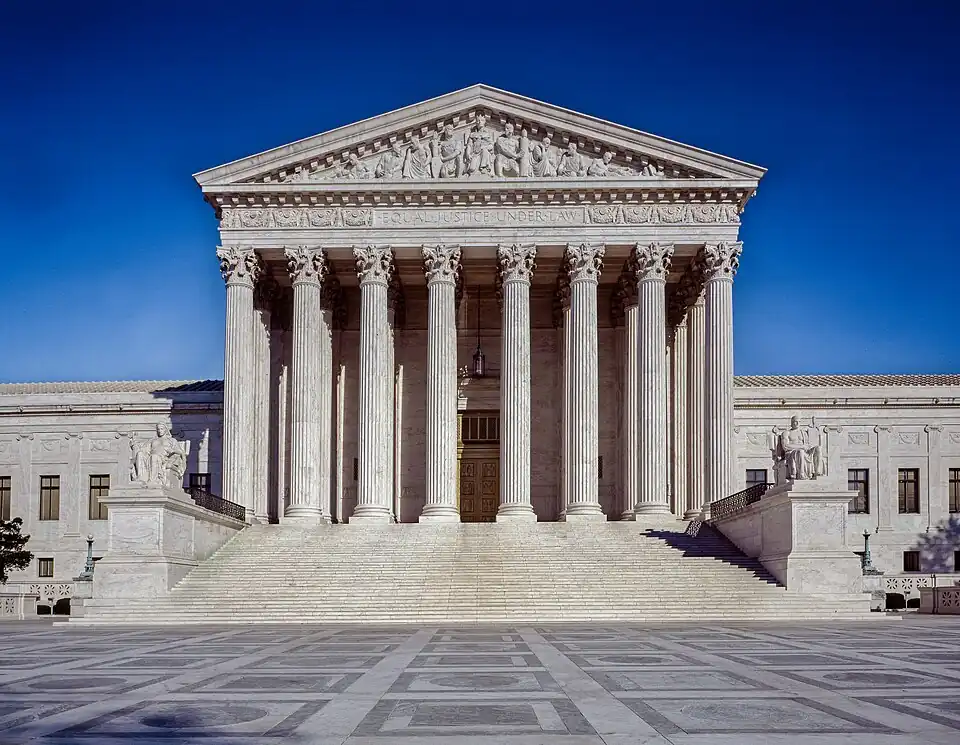
The Supreme Court is scheduled to hear St. Mary Catholic Parish v. Roy on Tuesday, November 3, 2026, bringing a dispute over Colorado’s publicly funded preschool program before the justices on Election Day. The Court’s docket and November calendar confirm the date. This is an upcoming oral argument, not a newly announced ruling permitting or prohibiting the schools’ admissions policies. Reuters highlighted the case on October 31 as a test of religious-liberty law.
At the center is a practical question: what conditions may Colorado attach to preschool tuition assistance when families choose a religious provider? The state’s universal preschool system uses public and private providers. Participating schools must agree to equal enrollment opportunity across specified characteristics, including religious affiliation, sexual orientation and gender identity, as those characteristics apply to a child or the child’s family. Schools need not join the program, but public funding carries those requirements.
The Catholic challengers say accepting the conditions would conflict with their religious exercise. Their June 25 Supreme Court brief argues that Colorado cannot make access to a generally available benefit depend on abandoning faith-based practices. The petitioners include parishes and parents Daniel and Lisa Sheley. Their contention is about access to funding for a Catholic education; presenting it as a challenge to whether Catholic schools may exist would misstate the dispute.
Colorado gives a different account. Its August 17 brief says the program welcomes faith-based providers and allows religious teaching, while requiring every publicly funded provider to serve families without protected-class exclusions. The state rejects the claim that it is disfavoring religion. That position places the interests of children and families seeking equal access alongside the interests of schools and parents seeking religious accommodation. Neither side’s description is itself the Supreme Court’s conclusion.
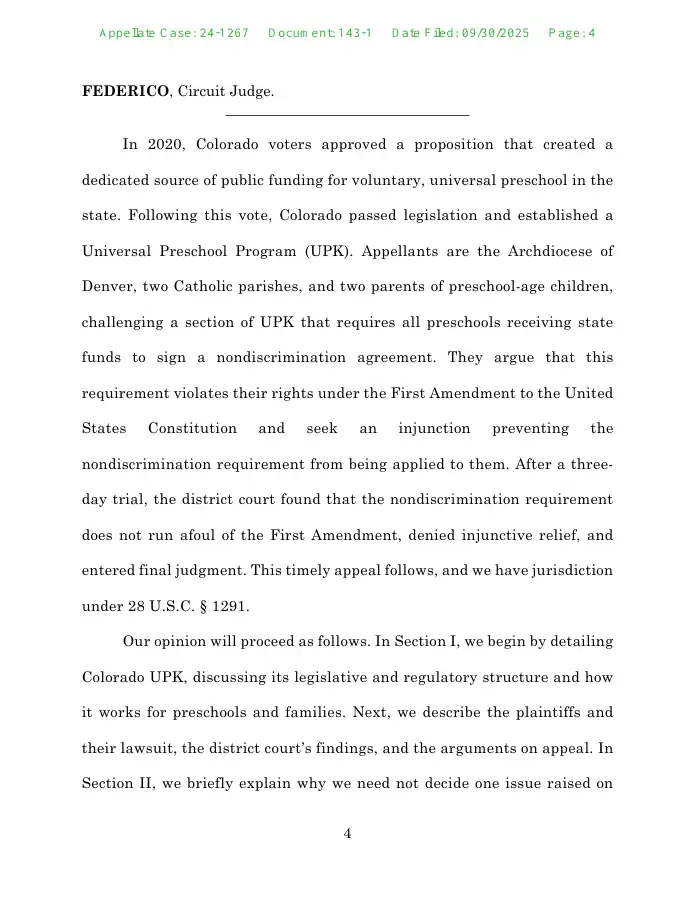
The Tenth Circuit’s September 30, 2025 opinion supplies the record beneath the argument. It describes the program’s origin in a 2020 funding proposition, later legislation, enrollment matching and the Catholic schools’ objections. It affirmed the denial of the requested injunctive relief. The Supreme Court is now reviewing that judgment. A reader following the case should keep the lower court’s existing decision separate from the broader changes the challengers want the justices to make.
Sources: Supreme Court — official docket, No. 25-581 ↗ · Supreme Court — November 2026 argument calendar ↗ · Tenth Circuit — original September 30, 2025 opinion ↗ · Petitioners — June 25 merits brief ↗ · Colorado respondents — August 17 merits brief ↗ · Reuters — independent October 31 case preview ↗
Two legal questions, and a third the Court did not take
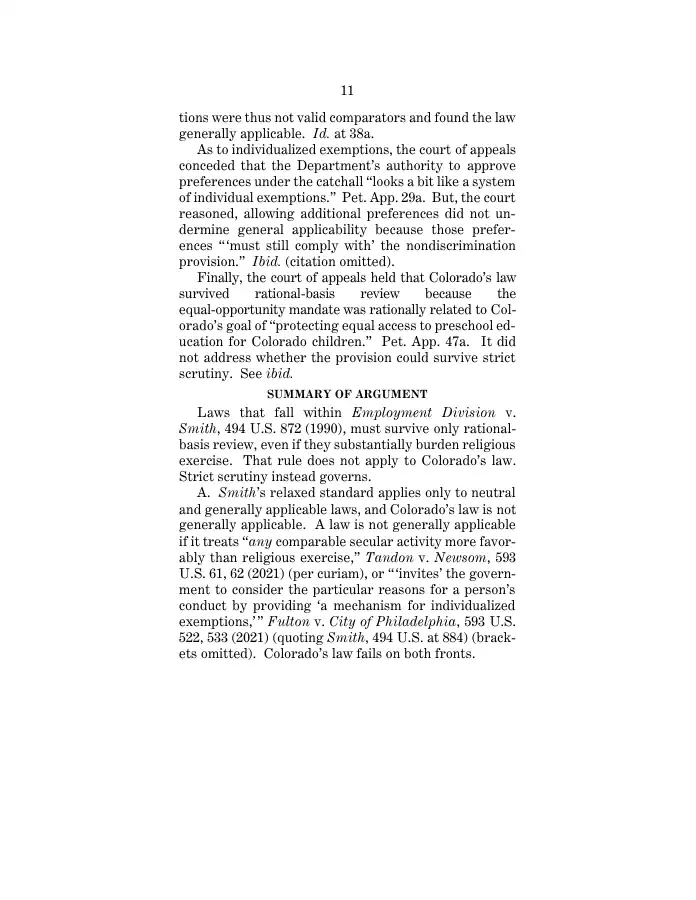
The first accepted question concerns when a rule is generally applicable under Employment Division v. Smith, the 1990 precedent addressing neutral laws that burden religious exercise. The issue is not simply whether a rule mentions religion. It also concerns whether comparable secular conduct receives favorable treatment or whether officials have a mechanism for individual exemptions. Those distinctions can affect the level of constitutional scrutiny applied to the rule.
The challengers argue that Colorado’s enrollment preferences undermine its claim of uniform treatment. The federal government’s July 2 amicus brief supports them. It points to arrangements for children with disabilities and low-income families, and to a catchall process for approving preferences. The United States contends that those features make the program insufficiently general and require strict scrutiny. An amicus brief is an argument offered to the Court; federal participation does not settle the case.
Colorado disputes both the comparison and the premise that its officials can waive equal-access requirements. Its brief says specialized services for children with disabilities and families living in poverty advance the program’s equal-opportunity purpose. It also argues that enrollment preferences remain subject to the nondiscrimination provision. The Tenth Circuit accepted the state’s position that these arrangements did not require the religious exemption sought here. The legal disagreement therefore turns on what is comparable, not merely on whether any preferences exist.
The second accepted question addresses Carson v. Makin and public benefits. The petitioners argue that conditioning assistance on surrendering religious exercise triggers more demanding review even without an explicit exclusion of religious institutions. Colorado responds that Carson concerns disfavored treatment of religion and does not create a universal exception from neutral funding conditions. The United States also supports a broader public-benefits argument. These are competing accounts of how existing precedents fit together.
The grant of review contains an important boundary. On April 20, the Supreme Court accepted only the petition’s first two questions. A third asked directly whether Smith should be overruled, and was not included. That limits what the Court agreed to review; it does not mean the interpretation of Smith is irrelevant. A decision about general applicability or public-benefit conditions could matter substantially while still differing from an express decision to discard the precedent. Headlines should identify the actual holding when one arrives.
Sources: Tenth Circuit — original September 30, 2025 opinion ↗ · Petitioners — June 25 merits brief ↗ · Colorado respondents — August 17 merits brief ↗ · United States — July 2 amicus brief ↗ · Supreme Court — questions accepted, limited to questions 1 and 2 ↗
What to watch at the November 3 argument
The Court’s November hearing list names Nicholas R. Reaves for the petitioners, Sarah M. Harris for the United States as amicus, and Helen Norton for the state respondents. It allocates one hour for argument. The monthly calendar says the Court convenes at 10 a.m. The docket records an October 5 order allowing the federal government to participate and share argument time. Those procedural entries explain who is scheduled to address the justices; they reveal no vote count.
For listeners, the clearest questions concern the boundaries of each proposed rule. How should the Court decide whether a secular enrollment preference and a requested religious accommodation are comparable? Does a matching preference amount to an exception from equal-access obligations? How would a public-benefits rule apply where government funds services provided by private organizations? The answers lawyers give may clarify the dispute, but a justice’s question is not a commitment to a final position.
The distinction between argument and decision matters for families, too. The November 3 listing is not a new enrollment offer, a promise of reimbursement or an instruction to change a child’s school. No merits opinion appears in the docket reviewed for this preview. The current record identifies a pending constitutional challenge. The effect on particular schools, families and funding conditions will depend on the eventual judgment and the legal reasoning supporting it.
The Court provides live argument audio through its website, followed by recordings and transcripts. Those official materials will allow readers to compare what was actually said with predictions about the outcome. Until the hearing occurs, there is no November 3 transcript to quote. VIRVIB has not attended a future argument or interviewed the families, and this preview does not invent scenes from their classrooms or personal financial circumstances.
VIRVIB analysis: the next substantive update should follow the argument, an intervening order or the eventual decision. A useful account will explain whether the justices address equal access, comparable exceptions, public benefits or some narrower ground. For now, the verified position is a scheduled hearing on two constitutional questions after a lower-court judgment favoring Colorado. The competing claims deserve precise attribution, especially where religious freedom and protection from discrimination are being invoked on behalf of different families.
Sources: Supreme Court — official docket, No. 25-581 ↗ · Supreme Court — November 2026 argument calendar ↗ · Supreme Court — November hearing list and counsel ↗ · Supreme Court — oral argument audio and transcripts ↗
Why this story is in the editionGoogle Trends U.S. RSS reviewed October 31, 2026, including current sports, entertainment and weather queries. This previously uncovered Supreme Court preview was selected from verified news after reviewing 506 existing articles. No Google Trends ranking or search volume is asserted.
Prepared with AI assistance. Source-based reporting checked on 2026-10-31. This article does not update automatically. Read our editorial standards.