A reconciliation message produced another argument about its meaning

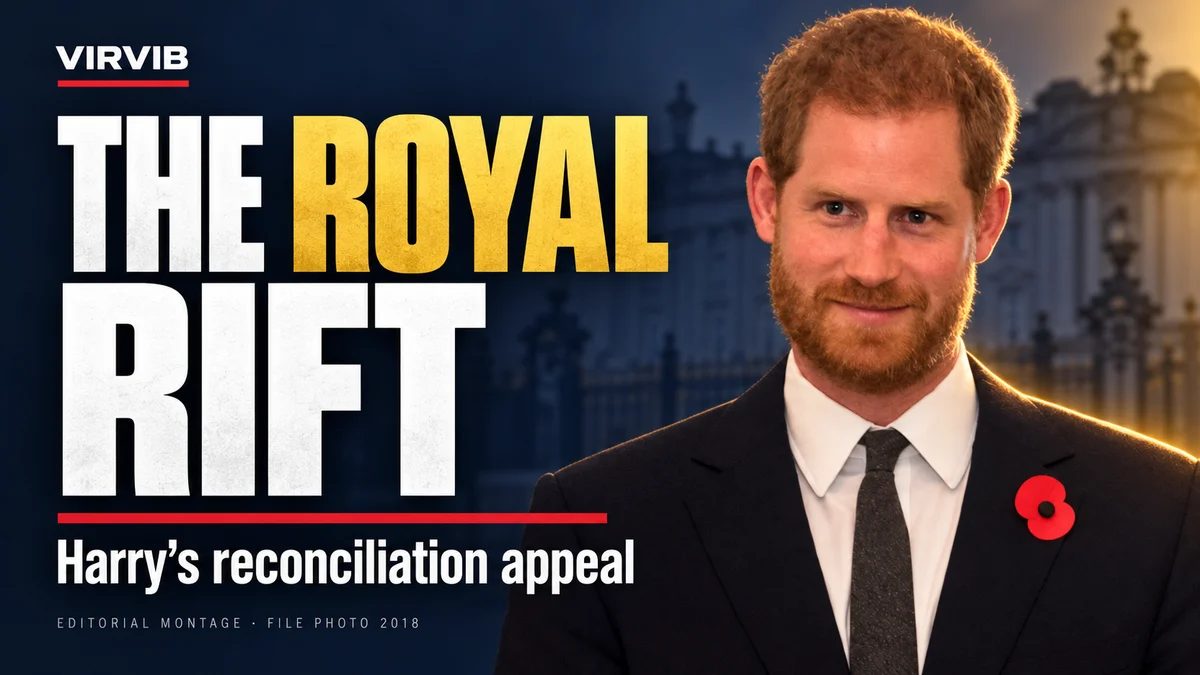
Prince Harry's October 20 interview with GQ reopened the family argument while presenting a wish to repair it. Speaking to Zach Baron, he described reconciliation as a priority. A remark about people who did not want things to work out attracted particular attention. His spokesperson later said it was not intended as criticism of Prince William or another family member. Both the remark and that clarification belong in an account of what happened.
The interview was recorded in New York in late September and published weeks later. Its subject extended beyond the royal disagreement to grief, parenting and public life. Treating a short passage as the whole conversation loses the setting in which it was said. It also does not establish that anyone named in the wider family discussion had agreed to a meeting or shared Harry's preferred route forward.
Reuters and ITV reported his wish to move beyond past disputes, alongside the spokesperson's response to the interpretation of the remark. Associated Press likewise described the interview as an expression of wanting relationships with his father and brother to improve. These accounts support a statement about Harry's expressed intention. They do not provide a joint declaration by Harry, William and King Charles that their disagreements have been resolved.
That is why the interview can be news without proving a breakthrough. Reconciliation involves more than one person, and a public expression of willingness does not reveal the private conditions each participant might consider necessary. An account of the latest remarks should avoid assigning unspoken motives to William or Charles. The confirmed development is a new interview and a clarification from Harry's side. Claims about what relatives privately felt require their own sourcing, rather than being treated as the inevitable meaning of the clip.
Sources: GQ — October 20, 2026 interview with Zach Baron ↗ · ITV News — interview and spokesperson clarification ↗ · Reuters — October 20 reconciliation reporting ↗ · Associated Press — October 20 interview reporting ↗
Leaving official duties did not erase the family relationship

The institutional break provides essential context. The couple's spring 2020 statement described a move toward privately funded lives and independent charitable and commercial interests. It also acknowledged that they would stop representative duties for the Queen. Their stated preference for a more limited role did not become a permanent arrangement allowing them to choose individual official responsibilities while remaining outside the institution.
In February 2021, Buckingham Palace confirmed they would not return as working members of the royal family. The statement said honorary military appointments and royal patronages would return to the Queen for redistribution. It also described Harry and Meghan as loved family members. That combination is the important point: the public record differentiated institutional duties from personal kinship rather than announcing that the family relationship no longer existed.
This helps explain why a geographical return cannot resolve every part of the disagreement. Living closer can make contact more practical, but it does not automatically restore representative responsibilities or resolve arguments about what has been said in public. A question about whether Harry is closer to his relatives is therefore distinct from a question about whether he has resumed an official role.
It also limits the meaning of shorthand labels. A person can remain a royal relative while conducting work independently of the Crown. A private visit, an independently organized charitable engagement and an official assignment are not interchangeable. Keeping those categories clear is more informative than declaring every public appearance either a royal comeback or an attempt to create a rival institution. The statements establish changes in duties. They do not provide access to private family conversations, and they should not be expanded into a definitive account of anyone's affection or anger.
Sources: The Royal Family — February 19, 2021 status statement ↗ · Sussex Royal — spring 2020 transition statement ↗
Why the documentary and Spare continue to frame the debate

The family's disagreements did not remain confined to official announcements. Netflix's six-part Harry & Meghan series, released in December 2022, presented the couple's account of their relationship and departure. The service's own synopsis describes their perspective, alongside contributions from people who knew them and commentators on the wider setting. That is the description of a documentary narrative, not an official adjudication of each contested memory.
Harry's memoir Spare followed in January 2023. Penguin Random House's publication record identifies the book as his account of loss, public life and the events surrounding his relationship with Meghan. The publisher's language promotes a memoir and should be understood as such. A memoir can document the author's perspective and make claims that become news, but its publication is not equivalent to another participant accepting every description.
The scale of those projects helps explain their continuing relevance. The publisher said in its August 2024 paperback announcement that Spare had sold more than six million copies across formats worldwide. It also said the paperback's contents were unchanged. Those are dated publishing claims, not a current sales total or evidence about the state of reconciliation. They indicate how widely Harry's version of events had circulated before the latest interview.
Public storytelling creates a particular tension. Harry can see discussing his experience as a way of taking control of it, while relatives may have different views about discussing a shared history. The latter is an explanation of a potential conflict, not a claim to know their private response. The documented sequence matters: departure statements, a documentary, a memoir and new interviews have each added a public layer. A later wish to reconcile does not erase that record, but the record also does not prove that reconciliation is impossible.
Sources: Penguin Random House — Spare publication record ↗ · Netflix Media Center — Harry & Meghan series synopsis ↗ · Penguin Random House — 2024 paperback announcement ↗
What would count as a change beyond another headline

The couple's return to Britain also prompted renewed clarification of their public status. Reuters reported on September 7, 2026 that a letter authorized by King Charles said they remained non-working royals, with charitable activity conducted privately. The description addresses their role, rather than deciding whether father and son can have a personal relationship. Reading it as a blanket rejection of all family contact would add something the reported text does not establish.
Harry's October comments about wanting an improved relationship should be read with the same discipline. They tell readers what he said he wanted. The spokesperson's clarification limits an interpretation of one disputed phrase. Neither confirms a shared timetable for resolving matters with William or Charles. Interviews, photographs at public occasions and brief greetings can each be relevant, but their significance depends on context and what participants actually confirm.
A substantive next development could be a joint statement, a publicly confirmed meeting with an explained purpose or an attributable account of an agreed change. It would still be necessary to distinguish personal contact from a return to duties. The absence of such an announcement does not prove what happened privately. It simply leaves the public record short of the broader conclusion that some headlines would like to draw.
The latest interview is therefore best understood as a renewed reconciliation appeal with an accompanying clarification. It sits within a documented disagreement over roles, public narratives and family relationships. The reporting supports that account without requiring a verdict on whose private feelings are justified. The useful question for the next story is not whether one sentence can end the rift. It is whether a new, attributable development changes what the participants have agreed, rather than merely changing the language used to describe an unresolved relationship.
Sources: ITV News — interview and spokesperson clarification ↗ · Reuters — October 20 reconciliation reporting ↗ · Reuters — September 7, 2026 royal-status letter ↗
Why this story is in the editionSelected for documented recent coverage or a current connection to ongoing reporting. This is an editorial selection, not a ranking of worldwide searches or audience demand.
Prepared with AI assistance. Source-based reporting checked on October 25, 2026. This article does not update automatically. Read our editorial standards.