A new review did not reverse the old judgment

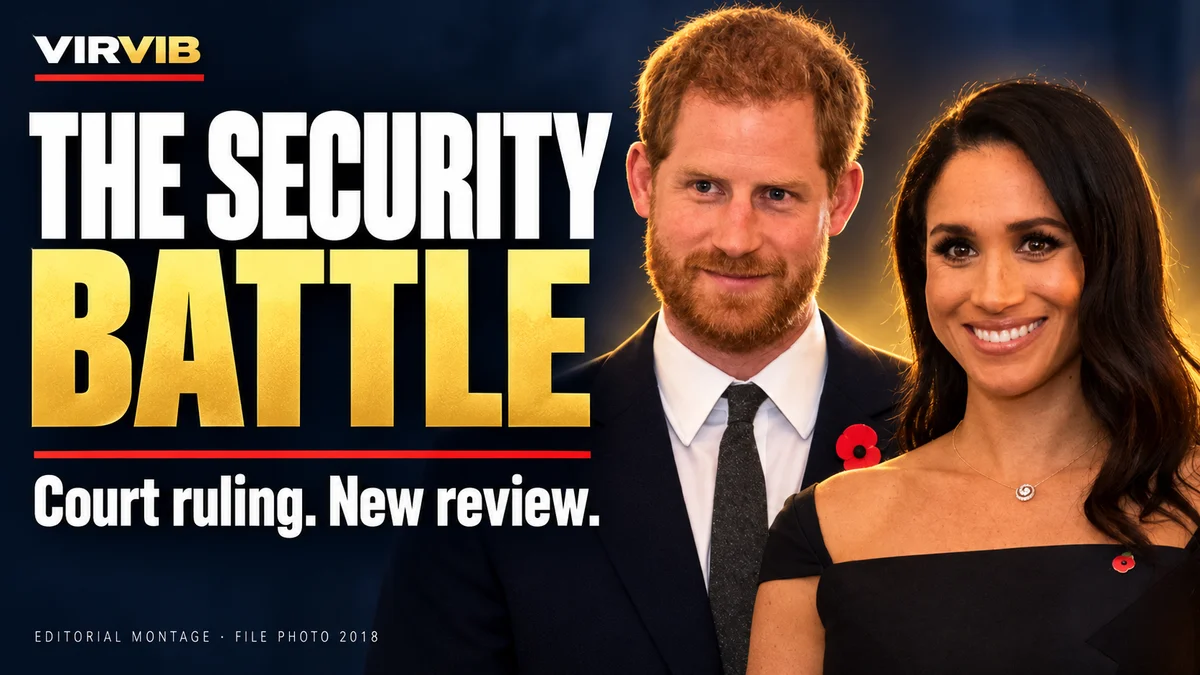
Harry and Meghan's return to Britain has renewed a dispute that did not end when Harry lost his security appeal. ITV reported in September 2026 that their circumstances would receive further risk reviews, while Metropolitan Police Commissioner Sir Mark Rowley described protection decisions as part of a national process in an October interview with LBC. The continuing assessment matters, but it should not be confused with a court changing its earlier decision.
The two processes ask different questions. The May 2025 appeal concerned the lawfulness of the approach taken to Harry's protection after he stepped back from royal duties and moved abroad. A later review can consider circumstances at a different time, including a return to residence in the United Kingdom. It does not follow that the original arrangements were unlawful, or that a different present-day outcome is guaranteed.
ITV's September account said Harry and Meghan would each receive an assessment and that the commissioning of those reviews did not mean their protective security would increase. That qualification is often the most important sentence for readers. A decision to look again creates a process, not a completed allocation of police resources. Reporting it as automatic reinstatement of the protection they had as working royals would overstate what had been confirmed.
The latest public comments reviewed here also do not disclose the operational detail necessary to judge the couple's protection from the outside. A commissioner describing how a national system works is not announcing every measure used for one family. The defensible account is therefore narrower than the recurring headlines: the old appeal was lost, circumstances later changed and further assessment was reported. A confirmed review outcome would be a new development. Public argument about what the outcome ought to be is not the same thing.
Sources: ITV News — September 14, 2026 review reporting ↗ · LBC — October 8 interview with the Met commissioner ↗
What the Court of Appeal actually decided in May 2025

The official judgment identifies the defendant as the Home Secretary, who is accountable for the Executive Committee for the Protection of Royalty and Public Figures, known as RAVEC. Harry sought a declaration that arrangements applied during his United Kingdom visits were unlawful. The Court of Appeal rejected the challenge on May 2, 2025. The case was a review of administrative decision-making, rather than a trial of whether Harry's fears were sincerely held.
The court considered whether RAVEC had good reason to depart from its ordinary policy in the unusual circumstances created by his changed role and residence. It accepted that tailored, visit-specific arrangements could lawfully replace the previous approach. The official summary also records that threat assessments had been obtained before the 2020 decision. This is more specific than saying officials never considered risk, and more limited than saying no further assessment could ever be appropriate.
Harry's lawyers argued that the bespoke process singled him out for inferior treatment. The court acknowledged the force of his personal concerns but did not accept that they established the legal grounds needed to overturn the decision. That distinction is the core of the judgment: dissatisfaction with the result and proof of an unlawful process are different propositions. Recognizing the former did not require the court to find the latter.
The ruling also did not say that no security had ever been provided. It addressed the adequacy and legal basis of arrangements applied to particular visits. Some material remained confidential because publication could create risks for protected people. Those limits are a reason to be precise about the public judgment, rather than fill the gaps with claims about an absent escort, an unpublished threat or a decision supposedly made by a single relative.
Sources: Judiciary — May 2, 2025 Court of Appeal judgment ↗ · Judiciary — official appeal summary ↗ · 11KBW — explanation of the appeal outcome ↗
Why the argument became tangled with royal status

The security argument has unfolded alongside the couple's change from working royal roles to private careers. In their 2020 transition statement, Harry and Meghan said their profile and circumstances meant they would continue to require effective security. That statement expressed their position. It did not replace the authority of the institutions responsible for deciding police protection or disclose a permanent entitlement binding those institutions.
After their return in August 2026, ITV reported concerns about the available arrangements and carried criticism from a former royal protection officer. ABC News also reported the contrast between their privately funded team and the request for additional official protection. Expert criticism can illuminate the debate, but it remains expert opinion. It is not a new RAVEC decision, a judicial finding or proof of a particular undisclosed vulnerability.
The distinction between private bodyguards and state protection helps explain why the dispute cannot be reduced to whether the couple can afford to hire staff. Private provision and police provision are different institutional arrangements. At the same time, an argument that a public figure faces continuing risk does not answer every question about the level, circumstances or public funding of protection. Those questions require assessment rather than a celebrity popularity test.
The public debate often turns this into a contest between personal grievance and royal privilege. That framing misses the administrative issue. Harry can remain the King's son and a recognizable public figure while the decision about resources follows a process beyond family preference. The court record locates responsibility with the Home Secretary and RAVEC. A headline suggesting that one royal can simply switch protection on or off needs evidence for that claim, not just a familiar account of family tensions.
Sources: ITV News — August 27 security arrangements reporting ↗ · ABC News — security questions after the UK return ↗ · Sussex Royal — the couple’s 2020 transition statement ↗
The October comments and the next meaningful decision

In his October 8 LBC appearance, Sir Mark Rowley described a national process that considers risk and whether personal police protection is needed. His explanation places the decision in a structure involving police, government and the security services. It is useful context precisely because it avoids treating the question as an informal favor. It should also be read within its limits: a description of the process is not a full publication of any individual's assessment.
The new residence was the reported reason for looking again. ITV's September report said the couple had been invited to provide relevant information about their changed circumstances. A system can lawfully revisit a decision when facts change without conceding that the old decision was invalid. Conversely, a new review can leave arrangements unchanged. Neither the existence of a review nor the continuing disagreement tells readers which result has been reached.
Any future report should identify its date, its source and what was actually decided. Was a risk assessment commissioned, completed or acted upon? Did a named authority confirm a change, or did a commentator argue for one? Does the report concern general eligibility, a specific public appearance or another circumstance? These distinctions make it possible to follow the story without publishing personal routines or treating confidential detail as an invitation to speculate.
The present record establishes a rejected legal challenge and later reporting of renewed assessment. It also establishes that Harry's concerns have persisted. It does not establish that the court declared him risk-free, that police protection has been permanently guaranteed or that every detail is publicly known. The next material update would be a confirmed assessment outcome or an attributable statement about a change. Until then, the dispute is best understood as an unresolved protection-policy argument following a completed appeal, not a newly decided court case.
Sources: Judiciary — May 2, 2025 Court of Appeal judgment ↗ · ITV News — September 14, 2026 review reporting ↗ · LBC — October 8 interview with the Met commissioner ↗
Why this story is in the editionSelected for documented recent coverage or a current connection to ongoing reporting. This is an editorial selection, not a ranking of worldwide searches or audience demand.
Prepared with AI assistance. Source-based reporting checked on October 25, 2026. This article does not update automatically. Read our editorial standards.