Dolores Huerta dies at 96: what has been confirmed
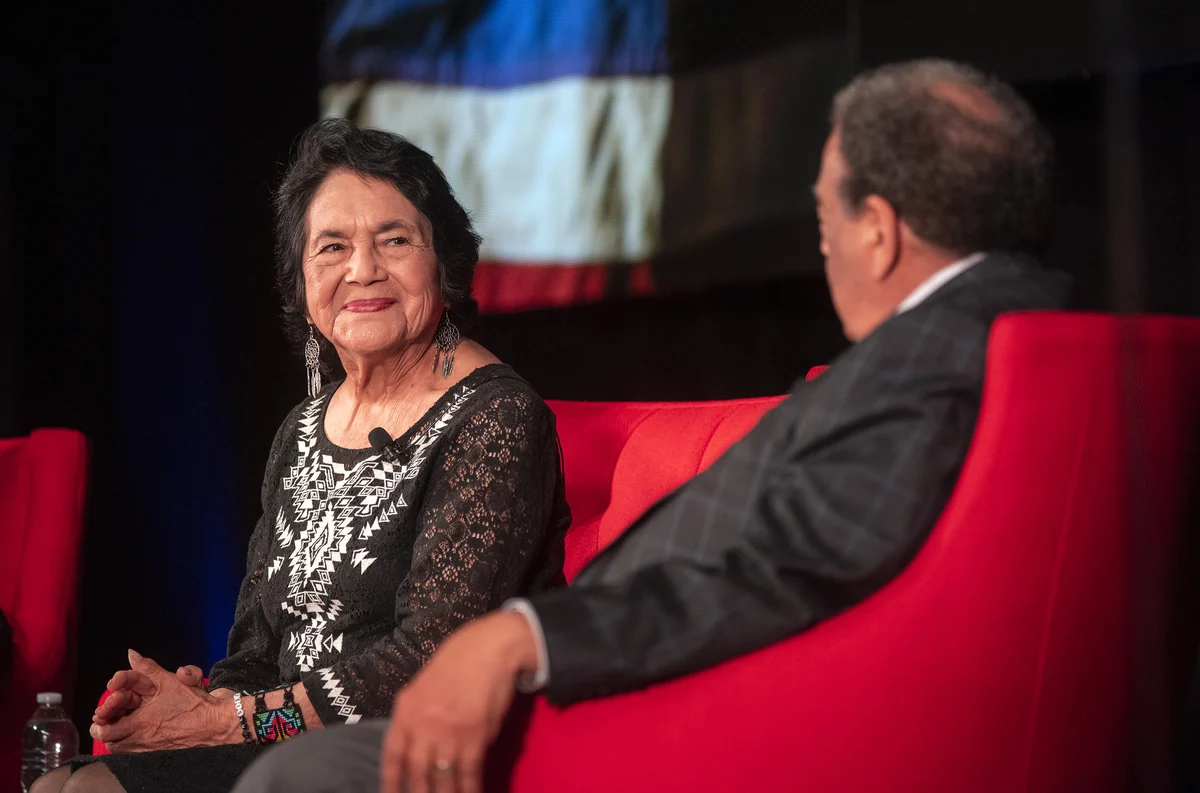
Dolores Huerta, the labor organizer who helped build the United Farm Workers and made farmworkers’ conditions a national issue, died on October 28, 2026. She was 96. Her foundation’s memorial announcement says she died at home in Bakersfield, California, with close family. The Associated Press independently reported the family’s announcement. Her death closes a public life that extended from classroom teaching and neighborhood organizing to contract negotiations, national boycotts and campaigns for women’s political participation.
California Governor Gavin Newsom ordered flags flown at half-staff in her honor. In a joint statement with First Partner Jennifer Siebel Newsom, he recognized her work on labor rights, gender equity and civil rights. The official response places her influence beyond the history of a single union: she helped change who could speak for agricultural workers, and which conditions consumers and elected officials were asked to confront.
The immediate news also explains renewed interest in her life. “Dolores Huerta” appeared in Google Trends’ United States trending-search view checked on October 28. This report makes no claim about her position in a national ranking or the number of individual Americans searching. The substantive questions are who she was, what she helped achieve and how to understand a legacy that includes both collective victories and difficult disclosures about the movement she served.
Born April 10, 1930, in Dawson, New Mexico, Huerta grew up in Stockton, California. The National Park Service’s historical biography describes a childhood in a community of families with Mexican, Filipino, African American, Japanese and Chinese backgrounds. Her mother’s community involvement influenced her approach to nonviolent organizing. Huerta earned a teaching credential and taught farmworkers’ children before turning to the conditions affecting their parents.
That career change had a practical origin. The Library of Congress recounts how the poverty she encountered among students drew her toward improving wages and working conditions. In 1955 she began organizing with the Community Service Organization in Stockton. Voter registration and lobbying were part of that work, alongside campaigns for protections including disability insurance for farmworkers. Her organizing therefore developed through both neighborhood participation and encounters with state government.
VIRVIB historical analysis: the teaching-to-organizing transition helps explain the range of her later work. A child’s hunger, a parent’s pay and a family’s political voice were connected problems in her approach. The record does not support reducing her contribution to delivering speeches beside a more famous colleague. It shows preparation for the detailed work of building an organization and negotiating with institutions.
Sources: Dolores Huerta Foundation — official memorial and obituary ↗ · Associated Press via KQED — independent obituary, October 28 ↗ · California governor — October 28 statement and flag order ↗ · Google Trends — United States, checked October 28 ↗ · National Park Service — historical biography and Filipino workers’ role ↗ · Library of Congress — early organizing and the 1972 slogan ↗
How organizing became a grape boycott and bargaining power
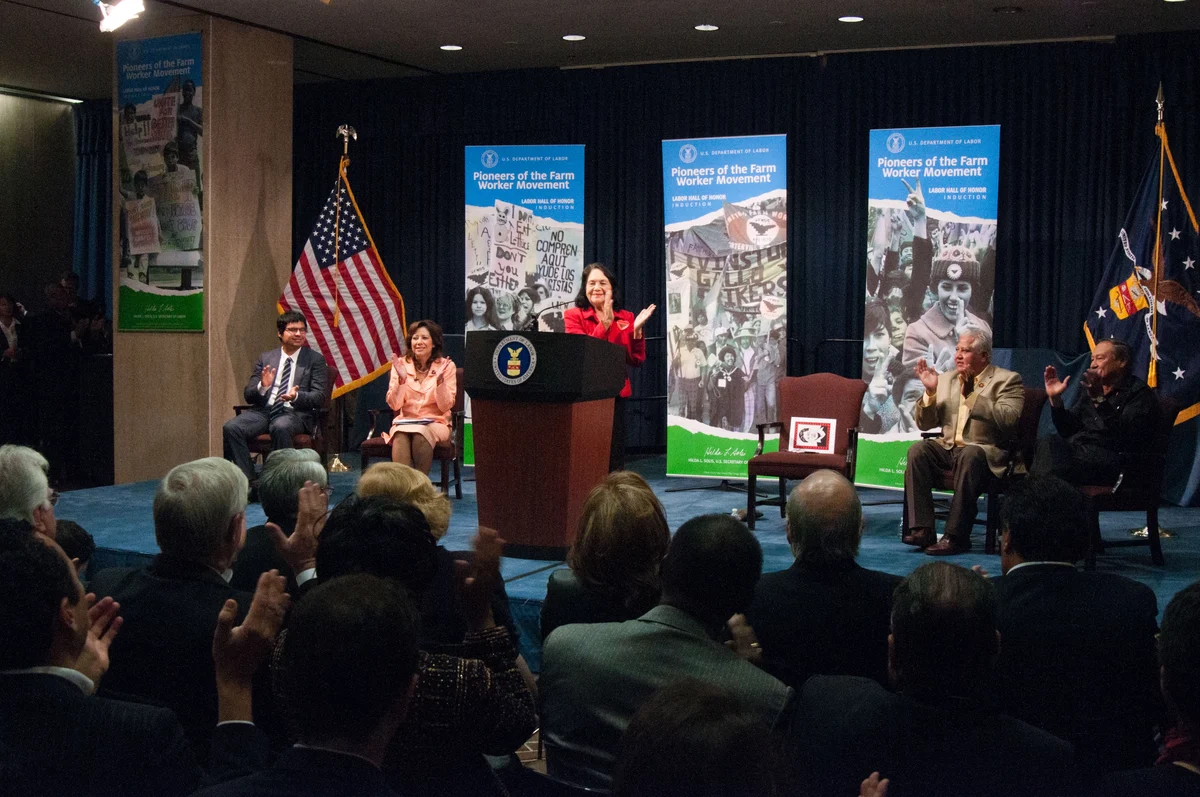
In 1962, Huerta and Cesar Chavez established the National Farm Workers Association. The organization that became the United Farm Workers was built through more than one community’s efforts. The National Park Service records that the mostly Filipino grape workers affiliated with the Agricultural Workers Organizing Committee sought the NFWA’s support for their Delano strike in 1965. The organizations merged in 1966. That chronology matters: Filipino workers’ leadership belongs at the beginning of the account, rather than as an addition to a story centered entirely on Chavez and Huerta.
Huerta helped take the dispute beyond the vineyards. According to the Park Service’s account of her career, she directed the grape boycott on the East Coast while Chavez led the West Coast effort. She moved to New York for four years, beginning with smaller stores before campaigning against larger chains. This was a way to reach people far from the fields through a familiar decision: whether to buy the crop whose harvesting conditions were being challenged.
The campaign produced bargaining gains in 1970. Huerta served as a lobbyist and a lead contract negotiator, work that required turning public pressure into terms workers could use. The National Archives describes agreements covering wage increases, health benefits, safer conditions and restrictions on harmful pesticides. Those provisions explain why the history is about more than recognition. A contract can attach obligations to an employer; a sympathetic audience alone cannot do that.
The union’s efforts also reached the legislature. Huerta’s foundation credits her advocacy with helping secure California’s Agricultural Labor Relations Act in 1975, which gave agricultural workers a framework for organizing and collective bargaining. It was a separate kind of achievement from winning a particular contract: legislation concerned the rules under which workers and employers would negotiate. Neither result should be attributed to one person acting alone. Organizers, striking workers and supporters supplied the collective force behind them.
The geographic reach extended beyond California. The Texas Tribune’s obituary describes Huerta’s connections to farmworkers in South Texas and her role, alongside Chavez, in founding La Unión del Pueblo Entero in the Rio Grande Valley. The broader record links agricultural employment with immigrant rights, public services and community representation. Her influence cannot be measured solely by the location of the original grape strike.
VIRVIB historical analysis: three methods run through these campaigns. Organizing brought workers together; the boycott recruited outside allies; negotiation sought enforceable gains. Lobbying added a route to changing public rules. Keeping those methods distinct makes the achievements easier to understand and avoids treating a memorable slogan as if it did all the work. It also preserves the roles of the many workers whose participation made the campaigns possible.
Sources: Dolores Huerta Foundation — official memorial and obituary ↗ · National Park Service — historical biography and Filipino workers’ role ↗ · National Park Service — boycott strategy and contract negotiations ↗ · National Archives — farmworker contracts and Huerta’s career ↗ · The Texas Tribune — independent reporting and Texas connections ↗
A lasting slogan, later activism and a difficult final chapter
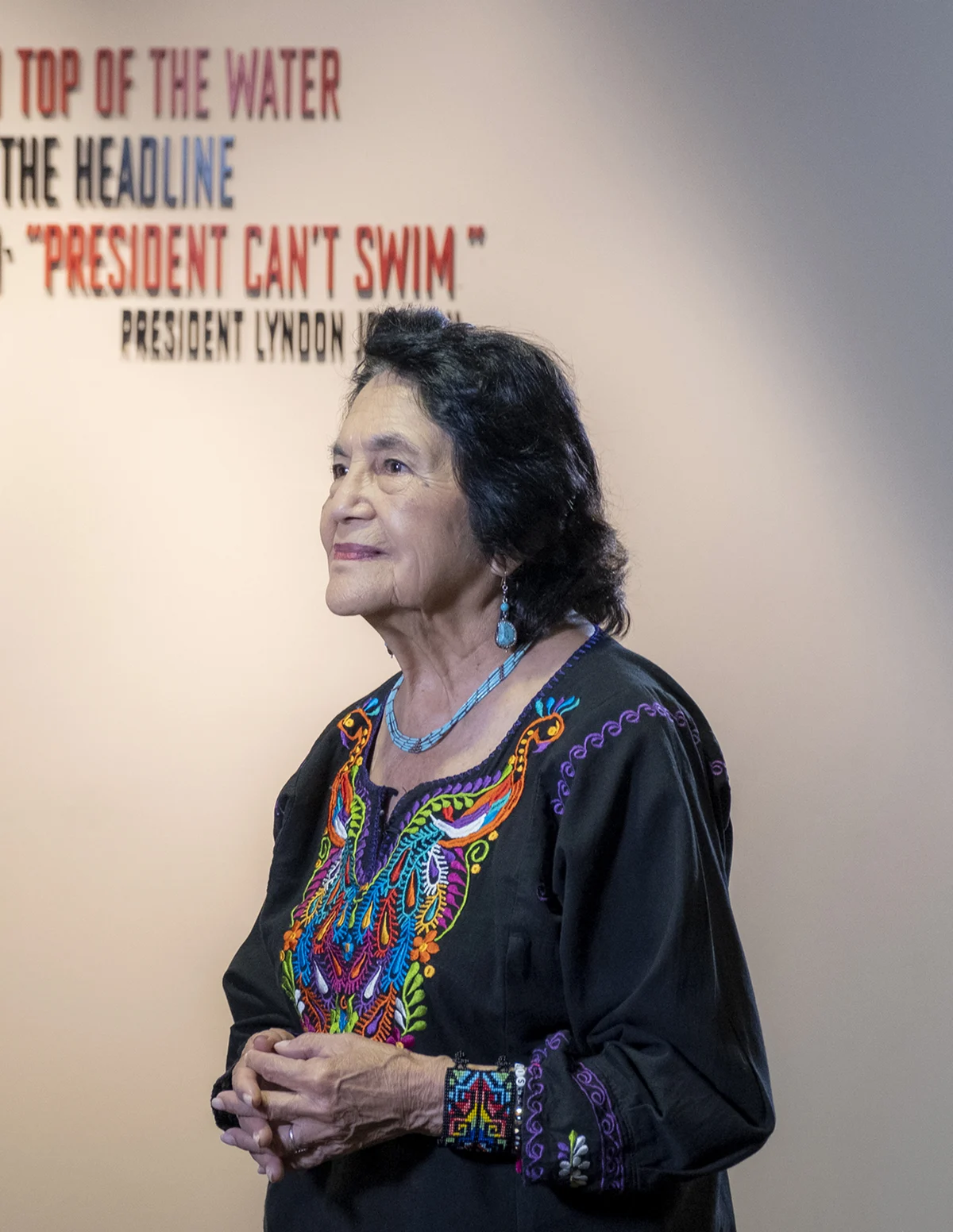
Huerta’s best-known phrase came from a specific organizing struggle. The Library of Congress places “Sí, se puede” in Arizona in 1972, when workers were confronting restrictions on organizing and doubting whether California’s successes could be repeated there. The phrase expressed the possibility of action. Its later circulation in other movements made it familiar to people who might not know the history of the farmworker campaign that produced it.
National recognition followed decades of work. On May 29, 2012, President Barack Obama honored Huerta with the Presidential Medal of Freedom. The archived White House account places her among that year’s 13 recipients, including Toni Morrison and Bob Dylan. The award recognized a career already established through campaigns and negotiations; it did not mark the end of her public participation.
Huerta continued advocating into her 90s. The AP obituary describes appearances and protests involving poverty, racial justice, LGBTQ+ equality and women’s rights. Her foundation lists civic engagement, education equity, health and safety, and LGBTQIA+ equity among its areas of work. It also maintains youth, immigrant-justice and neighborhood-organizing programs. Those activities show how her later public role extended beyond the union with which her name first became associated.
The final year also brought a painful public account of her relationship with Chavez. Her foundation’s memorial says that in March 2026 she disclosed that he had sexually assaulted her in the 1960s. It says she had remained silent for decades because she feared damaging the farmworker movement. These are her allegations and her explanation for the delay. They are essential context for discussing the movement’s leadership, and should be attributed rather than converted into an invented account of events this publication witnessed.
Before her death, the foundation shared a PBS KVIE report about her return to public life after time away to heal. That account described her support for a California Museum exhibit, a Peace and Justice Cultural Center in Bakersfield and an initiative encouraging men to confront violence against women. It provides a record of her continued work following the disclosure, rather than leaving her final chapter defined only by the allegation.
VIRVIB analysis: remembering Huerta requires holding the achievements and the institutional failures in the same account. Workers’ contracts and political participation remain documented outcomes. Her disclosure also challenges any version of labor history that assumes an important cause guarantees safety within its leadership. Recognizing her contribution does not require turning every person or institution associated with it into an uncomplicated symbol.
The family has asked for privacy and said it will share plans to recognize her life and legacy, according to the statement reported by the Texas Tribune. This article does not announce an unconfirmed memorial date or venue. For now, the established news is her death at 96 and the public recognition of a career spent organizing. Further family announcements will provide the next concrete details for people seeking to pay tribute.
Sources: Dolores Huerta Foundation — official memorial and obituary ↗ · Associated Press via KQED — independent obituary, October 28 ↗ · Library of Congress — early organizing and the 1972 slogan ↗ · The Texas Tribune — independent reporting and Texas connections ↗ · Archived White House — May 29, 2012 Medal of Freedom ceremony ↗ · Dolores Huerta Foundation — current programs and mission ↗ · Dolores Huerta Foundation — PBS KVIE account of her return to public life ↗
Prepared with AI assistance. Source-based reporting checked on 2026-10-28. This article does not update automatically. Read our editorial standards.