A request to dismiss claims, rather than a court ruling
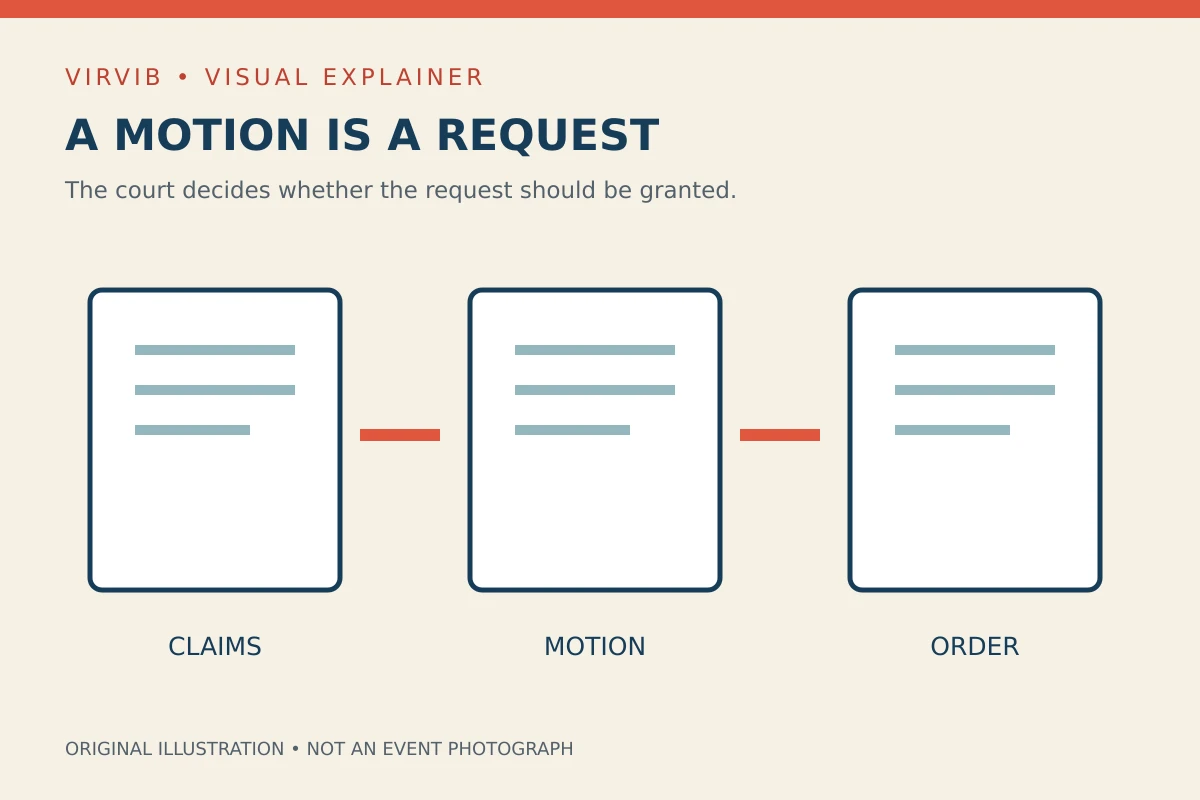
Diego Sarabia has asked a New York judge to dismiss the claims against him in the civil lawsuit brought by a former Cornell University student identified as Jane Doe. NBC News reports that the motion was filed on Friday, October 23. Sarabia denies the allegations. The filing is a request for judicial action, rather than an announcement that he has been cleared or that the lawsuit has ended.
The complaint, filed in September, concerns alleged conduct at the Chi Phi fraternity house in October 2024. NBC reports that Sarabia's attorneys challenge both the legal sufficiency and timing of the claims against him. They argue that the conduct specifically attributed to their client does not support the broader allegations made collectively against several defendants. The plaintiff's lawyer declined to comment to NBC on Sunday. Those positions describe an adversarial dispute that the court must resolve.
A civil complaint contains allegations submitted by a plaintiff. A dismissal motion contains arguments submitted by a defendant. Neither document becomes a judicial finding simply because it is filed with a clerk or quoted by a publication. This distinction is especially important in a case involving sexual misconduct, where a shortened headline can otherwise turn a defense argument into a declaration that an accusation was disproved.
The same care applies to a defendant's description of the alleged conduct. A lawyer may characterize an allegation narrowly while explaining why a particular cause of action should fail. That characterization remains an argument made for the client. It should not replace the complaint's allegations or be presented as a judge's account. This article avoids reproducing unnecessary details about the alleged assault and retains the plaintiff's public pseudonym.
For readers following the next stage, the key document would be an order deciding the motion and identifying which claims, if any, are affected. A ruling about one defendant need not dispose of claims against other people or institutions. An order could also address only part of a case. The available report establishes that Sarabia is seeking dismissal; it does not establish a granted motion, a trial verdict or a criminal acquittal. Those are different outcomes, reached through different proceedings.
Sources: NBC News — dismissal request and parties’ positions ↗
Why timing and legal sufficiency are different arguments
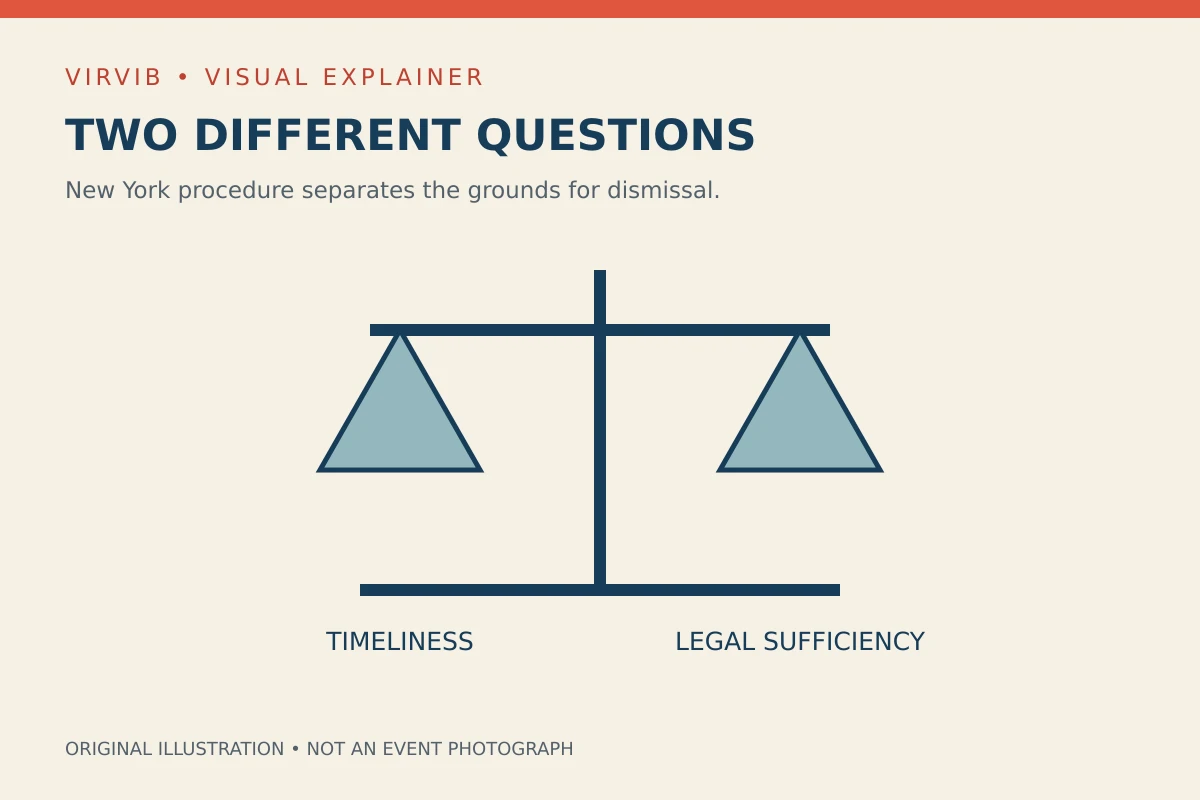
New York's Civil Practice Law and Rules provides the procedural framework for a motion to dismiss. Rule 3211 lists several possible grounds. Subsection (a)(5) includes a statute-of-limitations defense. Subsection (a)(7) concerns a pleading that fails to state a cause of action. A lawyer invoking both is asking the court to consider different legal questions, even when they arise from the same narrative.
A limitations argument concerns whether a claim was brought within the period the law allows. A sufficiency argument concerns whether the allegations satisfy the legal requirements for the cause of action. Neither question is identical to deciding, after a trial, whether a witness's account is true. The reported defense in this case disputes the allegations while also arguing that they do not support the claims even when considered under the standard applicable to a dismissal request.
That procedural posture explains a phrase often found in reporting about motions: accepting allegations as true for the purpose of the motion. It is a way of conducting a specified legal analysis, not a personal admission by a defendant. Readers should not turn a lawyer's conditional argument into a confession. Conversely, an unsuccessful dismissal request would not itself establish liability. It could mean that a claim remains eligible to proceed to later stages.
The operative law and the pleaded facts both matter. A general reference to a one-year deadline cannot settle every sexual-misconduct claim, because the applicable cause of action and any statutory extension have to be examined. This article does not independently calculate a deadline for Jane Doe or predict how the judge will apply the statutes. It identifies the reported dispute and the official rule that explains why timing and sufficiency can be raised separately.
VIRVIB analysis: a useful update will describe the requested relief, the response and the court's reasoning. If an order is issued, its scope matters as much as its headline result. Dismissal of a particular claim on a procedural ground says something specific about that claim. It should not automatically be translated into a conclusion about every allegation, every defendant or the university's separate responsibilities. The distinction allows scrutiny of the case without deciding contested facts in a news article.
Sources: NBC News — dismissal request and parties’ positions ↗ · New York Senate — CPLR Rule 3211 ↗
Cornell’s review and the civil lawsuit operate on different tracks

Cornell has published a separate account of its response. Its frequently asked questions page says university offices investigated the allegations under university policies and Title IX, with hearings in which the complainant and respondents could present evidence. The university describes a panel process for findings and sanctions. Those procedures belong to the institution's disciplinary system and are distinct from the New York civil lawsuit.
The university also says a special committee of its trustees retained former Deputy Attorney General Sally Yates of King & Spalding to lead an independent review. The review concerns how Cornell prevents and responds to sexual harassment, assault and related misconduct, including its handling of the allegations involving Jane Doe. Cornell says the reviewers will have access to relevant material consistent with law and privacy requirements, and that the board intends to share results and recommendations with its community.
A further university update, dated October 13, announced a suspension of Interfraternity Council social events and measures concerning support and prevention. These institutional actions do not establish the civil liability of a named individual. They address a broader question: whether the university's systems and culture protect students and respond appropriately when allegations arise. An institutional inquiry can therefore remain relevant even while a court considers a defendant's request about particular claims.
Earlier reporting also described Sarabia's request for limits on public statements about the case. ABC News reported that his lawyers sought a narrowly tailored gag order, citing concern about prospective jurors. That request concerns public commentary and fair proceedings. It is not the same motion as the later request to dismiss the claims. A chronology that treats every filing as a single attempt to end the case loses that distinction.
The next developments to watch are documented orders, responses filed by the parties and any published findings from Cornell's review. Each answers a different question. A court order can change the civil case. A university finding can address disciplinary or institutional conduct. A lawyer's statement can explain a party's position without changing either. Keeping those categories separate preserves both accountability and the unresolved status of the allegations.
Sources: Cornell — investigations and independent-review FAQ ↗ · Cornell — institutional updates ↗ · ABC News — earlier request concerning public statements ↗
Prepared with AI assistance. Source-based reporting checked on 2026-10-26. This article does not update automatically. Read our editorial standards.