Case timeline
- Two men posing as police steal 13 works from the Isabella Stewart Gardner Museum.Source ↗
- The museum begins displaying the empty frames, according to the FBI.Source ↗
- FBI publicly discusses leads concerning movements through Connecticut and Philadelphia.Source ↗
- Authorities release security footage recorded the night before the theft.Source ↗
- Museum trustees extend the $10 million reward.Source ↗
- VIRVIB checks the official investigation and recovery pages.Source ↗
The night the museum lost thirteen works
At 2:45 a.m. on March 18, 1990, the thieves left Boston’s Isabella Stewart Gardner Museum. According to the museum’s account, they made two trips to their vehicle with the stolen art. Behind them, two guards remained restrained in the basement. Police would not arrive until 8:15 a.m.
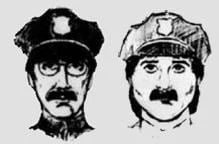
The theft had begun with an apparently official request for entry. Two men in police uniforms said they were responding to a disturbance. A guard let them through the employee entrance. Eighty-one minutes of theft followed, according to the FBI. Thirteen works vanished. Their absence remains visible in the museum’s empty frames, while investigators continue trying to establish where the objects went and how to bring them home.
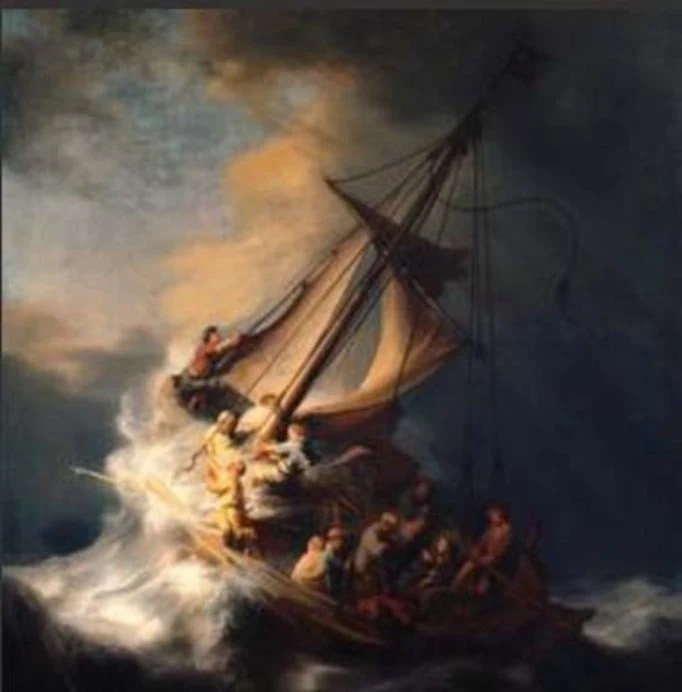
The stolen objects were not all paintings. The FBI’s recovery notice includes works by Rembrandt, Vermeer, Manet and Degas, along with a Chinese bronze beaker and an eagle finial. Vermeer’s The Concert and Rembrandt’s Christ in the Storm on the Sea of Galilee are among the most recognizable losses. Calling the incident the theft of thirteen paintings obscures the variety of objects investigators are trying to recover.
The list of missing objects takes the reader through several parts of the museum. The Dutch Room lost major paintings and smaller objects. Rembrandt’s Christ in the Storm on the Sea of Galilee and A Lady and Gentleman in Black were cut from their frames. Vermeer’s The Concert and Flinck’s Landscape with an Obelisk were removed from theirs. A Chinese bronze beaker was taken from a table; a small Rembrandt self-portrait etching was removed from the side of a chest. These are the museum’s descriptions of the removals, not imagined actions assigned to a particular thief.
Elsewhere, five Degas works and the eagle finial disappeared from the Short Gallery. Manet’s Chez Tortoni was taken from the Blue Room on the first floor. The distribution makes the loss more complicated than a single empty wall. The stolen collection contains different media, sizes and artists, and each object may require its own recovery history. The FBI now says the works were separated after the robbery. Recovering one would be a major development without necessarily resolving where the others are.
The surviving security information also contains a sharp contrast. Motion detectors recorded movements during the theft, according to the museum. But the FBI’s 2015 release says the thieves took surveillance film from that night. A separate recording from the preceding night survived. It later became the subject of a public appeal concerning a visitor and vehicle. Investigators could return to recorded traces, but those traces did not amount to a complete film of the robbery.
For the guards, the theft’s end did not immediately mean release. The museum’s chronology leaves them restrained for hours after the intruders departed. That interval belongs in the account alongside the missing art. This was a crime involving the confinement of people, as well as the removal of cultural objects. Neither the value of the paintings nor the later fascination with the mystery should obscure what happened to the employees left behind.
The empty frames became another surviving trace. Unlike a laboratory exhibit, their purpose is public and visible: they preserve the places of absent works within the collection. A visitor can stand before a frame and understand exactly which object is missing without knowing who last held it. That visible certainty sits beside the investigation’s central uncertainty. The museum knows what it lost. It is still asking who can help establish where those works are now.
The museum’s account describes paintings removed from frames and works taken from several rooms. It places the thieves’ departure at 2:45 a.m., with two trips to their vehicle, and the arrival of police at 8:15 a.m. The sequence allows a documented account of entry, confinement, removal and discovery without inventing conversations between the thieves or claiming to know why particular objects attracted them.
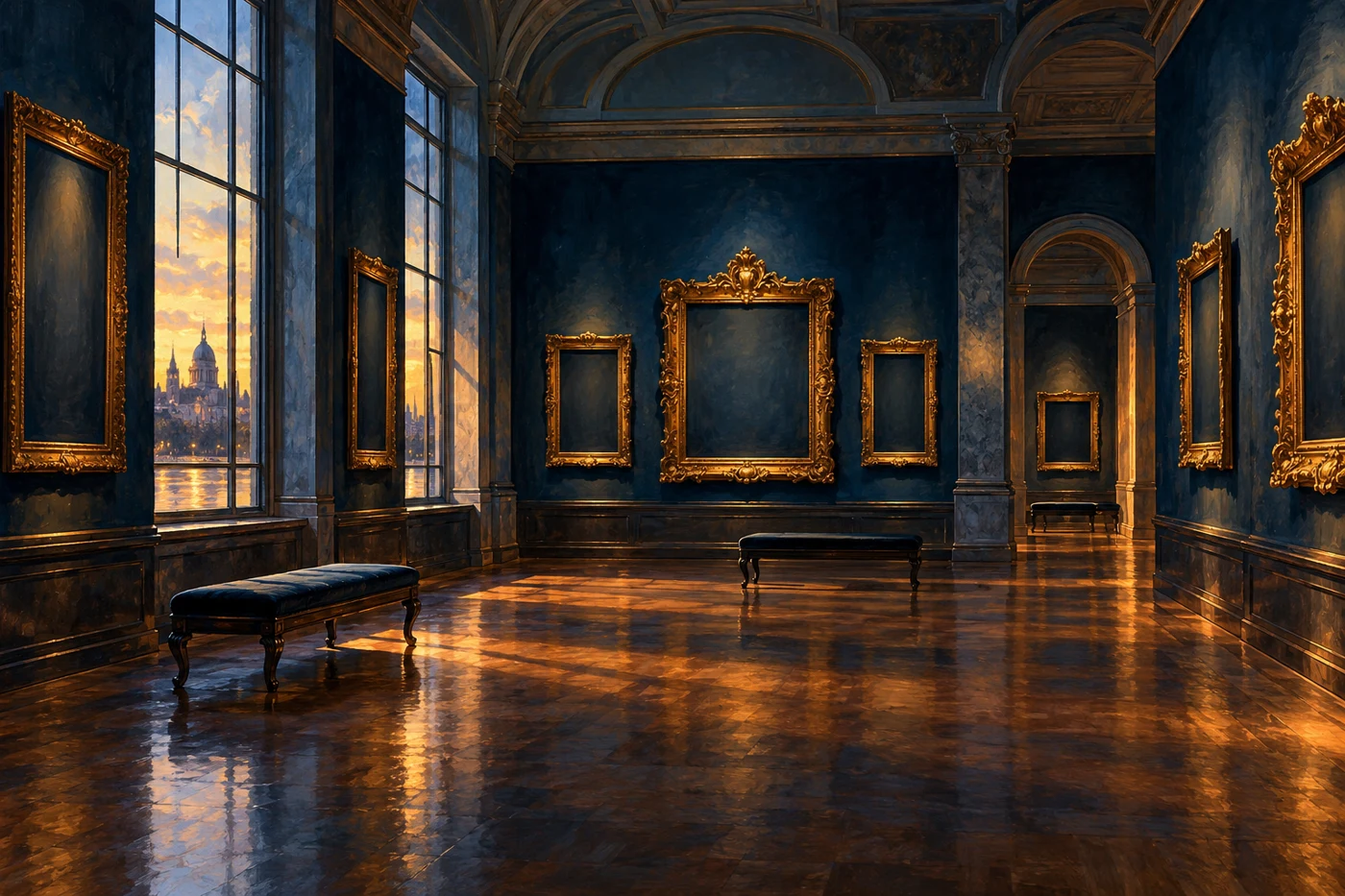
The lasting effect is visible in the museum’s presentation. The FBI dates the display of empty frames to 1994. Those gaps preserve the absence within an institution whose founder arranged the collection as a carefully composed whole. The loss is therefore more specific than a monetary valuation: it interrupts the relationships between works and the setting in which visitors were meant to encounter them.
An illustration of empty gilded frames can communicate that absence. It cannot reproduce the exact appearance of the rooms on the night of the theft unless grounded in authenticated images. The illustration accompanying this file is explicitly imaginative. Official photographs, records and object images belong to a separate evidentiary category, with their sources identified so readers can tell the difference.
Sources: FBI case history ↗ · Gardner Museum: theft and ongoing investigation ↗ · FBI stolen-artwork notice ↗ · FBI historic-footage release, August 6, 2015 ↗
What later official disclosures actually showed
The public record contains several distinct kinds of information: a documented theft, investigative assessments about later movements of the art and appeals concerning possible leads. Treating all three as equivalent would make the story appear more resolved than it is. The date and wording of each announcement are part of the evidence a reader needs.
At a March 2013 news conference, the FBI said it had determined that the art had traveled through the Connecticut and Philadelphia regions in the years after the theft. Officials nevertheless said they did not know its current location. That was an investigative assessment about a past movement, accompanied by an explicit limit. It was not a public inventory of objects recovered, nor a statement that all thirteen pieces remained together.
The FBI’s stolen-art notice now says investigators determined that the works were separated after the robbery. It describes some pieces as believed to have traveled along the Eastern seaboard. The phrasing matters: an agency’s stated belief about part of the route does not supply a complete chain of possession. This file does not convert regional leads into a precise address or identify a private holder without substantiation.
A separate appeal came in August 2015, when authorities released security footage recorded the night before the heist. The FBI said it showed a vehicle approaching a rear entrance and an unidentified visitor admitted by a guard. Officials sought help identifying the person or vehicle. They described similarities between that vehicle and a vehicle reported near the museum before the theft, while acknowledging that the images were low resolution.
The footage is important because it is recorded material rather than a later imagined scene. Its existence still does not prove that the person shown committed the theft. The public appeal asked for information; it did not announce a conviction or a completed identification. A responsible reconstruction can explain why investigators examined the recording without assigning guilt to an unidentified figure.
The same 2015 release said the thieves took surveillance film from the night of the robbery but left the earlier recording behind. That distinction helps prevent a common confusion: footage from a preceding visit is not footage of the theft itself. A video illustration should never be presented as the missing recording.
These disclosures narrow certain questions while leaving others open. They indicate why authorities have followed later transfers and earlier access, but they do not publicly establish the full route of every stolen object. A coherent theory must account for those gaps. Merely joining several documented fragments with an invented transaction would create a narrative, not a verified chain of custody.
Sources: FBI investigation update, March 18, 2013 ↗ · FBI historic-footage release, August 6, 2015 ↗
Recovery, rewards and the questions still open
The continuing public appeal focuses on recovery. The FBI’s stolen-artwork notice says the museum offers up to $10 million for information leading to the safe return of the stolen works in good condition. It also makes clear that the FBI does not administer that private reward or its terms. Readers should consult the linked notice and museum page for current conditions rather than assume a payment is automatic.
The amount has changed over time. A 2013 FBI announcement described a $5 million offer. In January 2018, the museum announced that its trustees had extended the $10 million reward introduced the previous year. The older amount is part of the chronology, not the amount this case file presents as current. Dates prevent an archived appeal from being mistaken for a new one.
The museum’s ongoing-investigation page separately mentions an additional $100,000 reward for information leading to the eagle finial’s return and a share of the reward for information producing the return of individual works or groups of works. Those details make the recovery effort more precise than an all-or-nothing picture of thirteen objects arriving together. Any entitlement remains a matter for the museum and its applicable conditions.
The FBI directs relevant information to its official tip service or a local field office. The museum also lists its security director’s contact information on the theft page. Those are the appropriate places for firsthand knowledge. VIRVIB is publishing a sourced explanation of the case, not offering a private reward, collecting alleged evidence or acting as an intermediary for a transaction.
For readers assessing a claimed discovery, the essential distinction is between recognition and authentication. A work that resembles an online image is not automatically the missing original. A story about a hidden painting is not a verified sighting. A credible recovery announcement would need to identify which object had been authenticated and explain who confirmed the result. Finding one work would not, by itself, explain the whereabouts of the other twelve.
The unresolved questions are consequently concrete. Where is each object? What is its condition? Who can document its movement after 1990? Which portions of the route described in public appeals can be corroborated further? Those questions can be asked without elevating unsupported allegations about named people.
The sources checked for this file continue to describe an unsolved theft and an active effort to recover the collection. No recovery of the thirteen works is claimed here. The most significant future development would be the authenticated return of an object, a verified account of its custody or a new official finding. Until then, the empty frames record an absence; they do not supply the answer.
Sources: FBI case history ↗ · Gardner Museum: theft and ongoing investigation ↗ · FBI stolen-artwork notice ↗ · Museum reward extension, January 2018 ↗
Prepared with AI assistance. Source-based reporting checked on October 28, 2026. This article does not update automatically. Read our editorial standards.