Lula wins Brazil’s runoff, with a dispute over voting hours

Luiz Inácio Lula da Silva has won another term as Brazil's president, defeating Senator Flávio Bolsonaro in the October 25, 2026 runoff. The result keeps the incumbent in office after a campaign that ended with a dispute over an extension of polling hours. The central distinction for readers is between the electoral authority's announced result and the losing candidate's challenge to the process. They are separate developments, and neither should disappear from an account of the night.
The Superior Electoral Court, known as the TSE, published totals of 64,256,232 votes for Lula and 59,826,041 for Bolsonaro. Its October 26 announcement gives their shares as 51.79% and 48.21% of valid votes. Those figures put the difference at 4,430,191 votes, calculated from the court's published totals. They supersede the earlier percentages circulating while reporting was still being updated. The result is a fourth presidential term for Lula.
Al Jazeera's linked report used a different snapshot, showing 51.76% against 48.24%. Agência Brasil's initial victory report likewise described an incomplete count. A reader comparing coverage needs the time and completion status attached to each figure. VIRVIB uses the later TSE announcement here rather than combining a percentage from one stage with a vote total from another. The difference between those snapshots is not, by itself, evidence of a changed election outcome.
For an American audience, another distinction matters. These percentages describe a nationwide contest between two candidates. They are not Electoral College projections, seat allocations or probabilities of winning. A 51.79% vote share means a share of the valid ballots reported for the presidential contest. It does not mean that 51.79% of all residents, all eligible citizens or all registered voters selected that candidate. The denominator changes the meaning of the number.
VIRVIB analysis: the most useful result graphic is therefore one that identifies both the candidates and what is being measured. A final tally belongs beside its source and review date. An earlier count can explain the chronology, but it should not remain in the headline as though it were the latest total. The same discipline applies when sharing screenshots: a photograph of a partial results page records a moment in the count, rather than establishing the eventual result. This article is a checked report, not an automatically updating results feed.
Sources: TSE — official reelection announcement and polling-hours account, October 26 ↗ · Al Jazeera — election outcome and Bolsonaro response, October 26 ↗ · Agência Brasil — initial victory report, October 25 ↗ · TSE — majority electoral system ↗
Why the extension became a political confrontation

Flávio Bolsonaro refused to accept the outcome and sought the election's annulment, according to Al Jazeera's account. His objection focused on the late extension of voting, following transport difficulties that affected access to polling. The report also describes requests from both candidates for additional time in particular states. It is important to identify Flávio, the candidate in this runoff, rather than using the family surname in a way that confuses him with former president Jair Bolsonaro.
The electoral court's own explanation acknowledges operational disruption. It describes a Supreme Court interim decision extending voting from 5 p.m. to 7 p.m., Brasília time, at stations that remained open. Some machines had already been closed. Receipt of polling-station result files was temporarily suspended, producing a backlog before processing continued. That description concerns how voting and transmission were managed; it should not be rewritten as an admission that the announced totals were fabricated.
A legal challenge and a successful legal challenge are different events. A candidate can reject a result in a speech, announce an intention to sue or file a case. A court can then examine a claim and issue a decision. Reporting should name the stage supported by the available record. This article does not state that the election has been annulled, that a rerun has been ordered or that a court has accepted an allegation of fraud. None of those conclusions follows simply from a candidate demanding cancellation.
VIRVIB analysis: scrutiny of an election does not require choosing between ignoring operational problems and treating every problem as proof that the outcome is invalid. The relevant questions are specific. Which polling locations were affected? Which legal order applied? What remedy was requested? What did the responsible court decide? Those questions direct attention toward documents and evidence, where competing claims can be tested, rather than toward the volume of a political reaction.
The TSE's guidance also distinguishes a voter choosing a null ballot from a judicial finding that voting was legally invalid. Blank and null ballots do not automatically cancel an election, even if their number is large. Annulment is a separate legal matter governed by the applicable rules and decisions of electoral justice. That distinction helps readers follow the dispute without treating the word invalid as though it always refers to the same thing. The next reportable development would be a documented filing or decision, with its actual scope explained.
Sources: TSE — official reelection announcement and polling-hours account, October 26 ↗ · Al Jazeera — election outcome and Bolsonaro response, October 26 ↗ · TSE — blank and null votes versus legal annulment ↗
How to read Brazil’s results and check the count
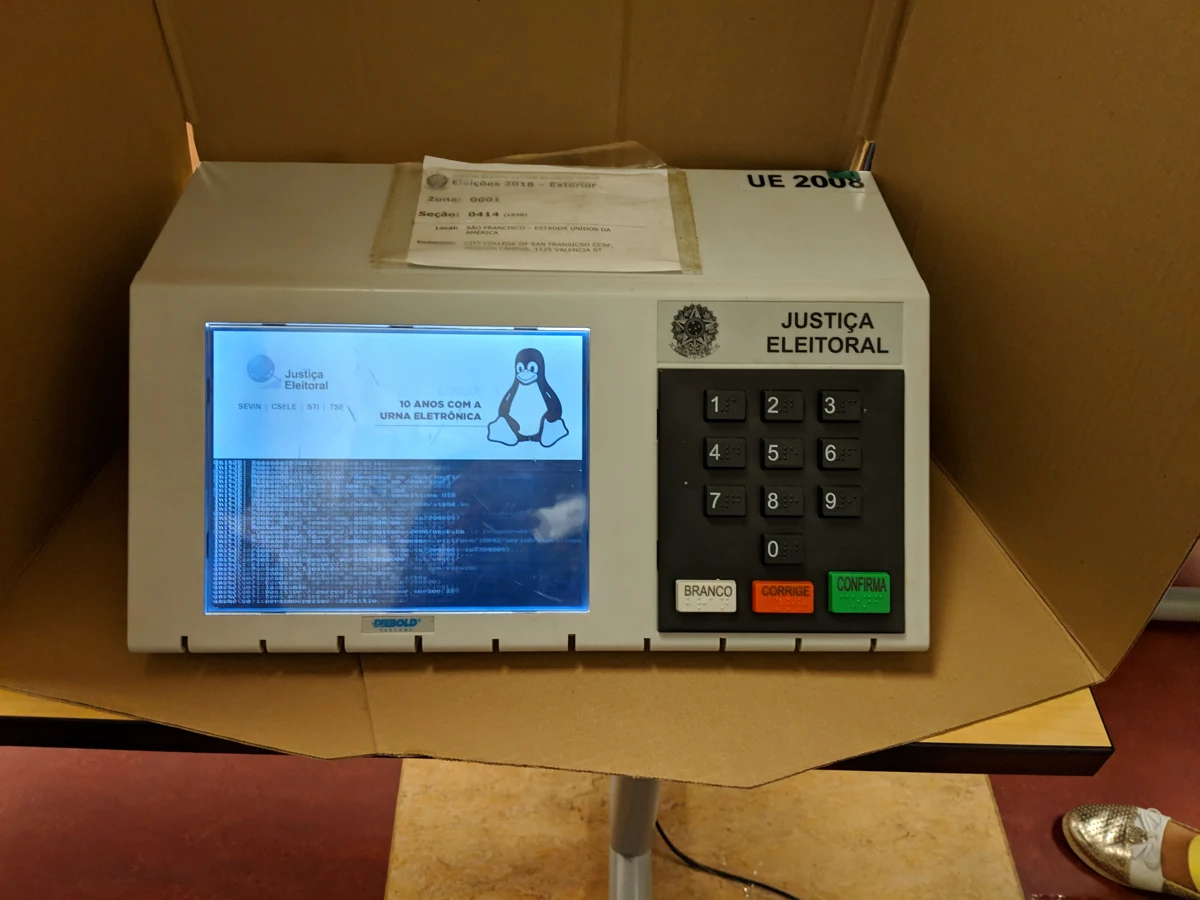
Brazil's presidential election uses a majority system. The TSE explains that a candidate must obtain more than half of valid votes to win the presidency. If nobody does so in the first round, the two leading candidates contest a runoff. Blank and null votes are excluded when determining the valid-vote majority. The runoff therefore gives voters another choice between the remaining candidates, rather than carrying over the first round's percentages as if they were points in a cumulative competition.
This is why turnout and vote share answer different questions. Turnout concerns participation among the electorate. Candidate share concerns the valid ballots in the race. A voter who abstains, a voter who casts a blank ballot and a voter who chooses a candidate have not made equivalent entries in the presidential tally. Keeping those categories separate makes it possible to discuss participation without incorrectly adding unused or invalid selections to either candidate's total.
The count itself has two stages. Each electronic voting machine counts the votes recorded at its polling station and produces a Boletim de Urna, or polling-station results bulletin. Totalization brings those separate results together. The TSE's explanation says that publication progresses as the electoral authorities receive the bulletins. A number on the national results screen is consequently an aggregation of reported station results, not a new survey asking voters how they think they voted.
The official results portal offers both the consolidated totals and access to polling-station files. The TSE describes an audit method that compares a station bulletin with the corresponding section-level report in the totalization system. For readers seeking to check a specific claim, that is a more defined starting point than a cropped national screenshot. Identify the election, round, location and document being discussed, then compare like with like. A first-round file cannot answer a question about the second-round presidential total.
VIRVIB analysis: the remaining task for coverage is to keep developments in their proper categories. The vote establishes the announced winner. Statements show how politicians respond. Court records establish what has actually been requested or ordered. Updated official results can refine numerical reporting, while a legal decision can introduce a different development. Linking those records lets readers examine the evidence without asking them to take an editorial conclusion on trust. As checked on October 26, the TSE has announced Lula's reelection, and Bolsonaro's rejection of the result remains a reported political challenge rather than an announced reversal of that result.
Sources: TSE — majority electoral system ↗ · TSE — counting and totalization explained ↗ · TSE — audit of totalization ↗ · TSE — official results portal ↗
Prepared with AI assistance. Source-based reporting checked on 2026-10-26. This article does not update automatically. Read our editorial standards.