A second complaint fails at the pleading stage
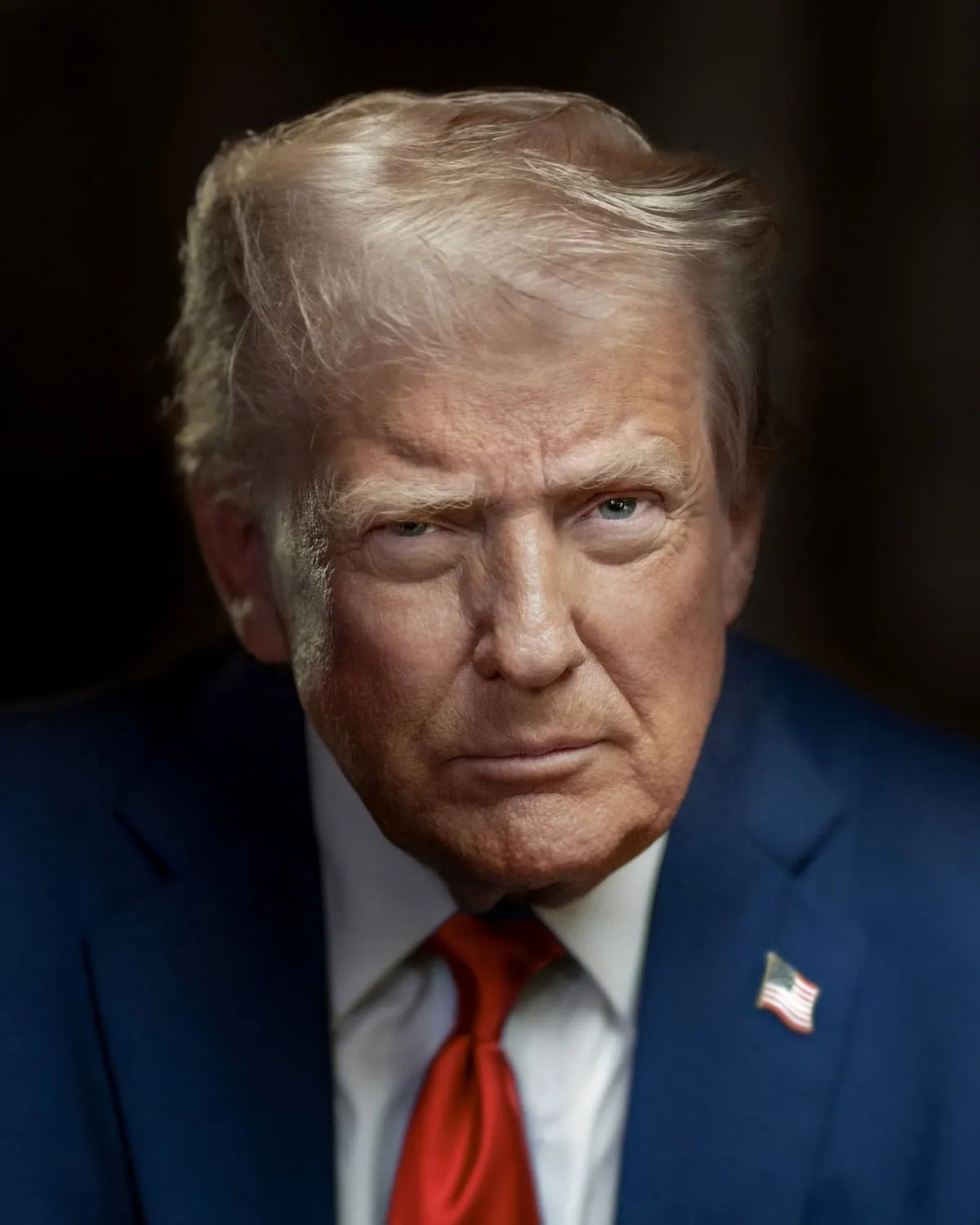
A federal judge in Miami dismissed President Donald Trump’s amended defamation complaint against The Wall Street Journal’s publisher and other defendants with prejudice on October 31, 2026. The decision ends this attempt to proceed with the complaint in the district court. Its central conclusion is that Trump again failed to plead facts plausibly showing actual malice, the constitutional requirement governing a public figure’s defamation claim. It is not a jury verdict establishing who wrote the disputed Epstein birthday letter.
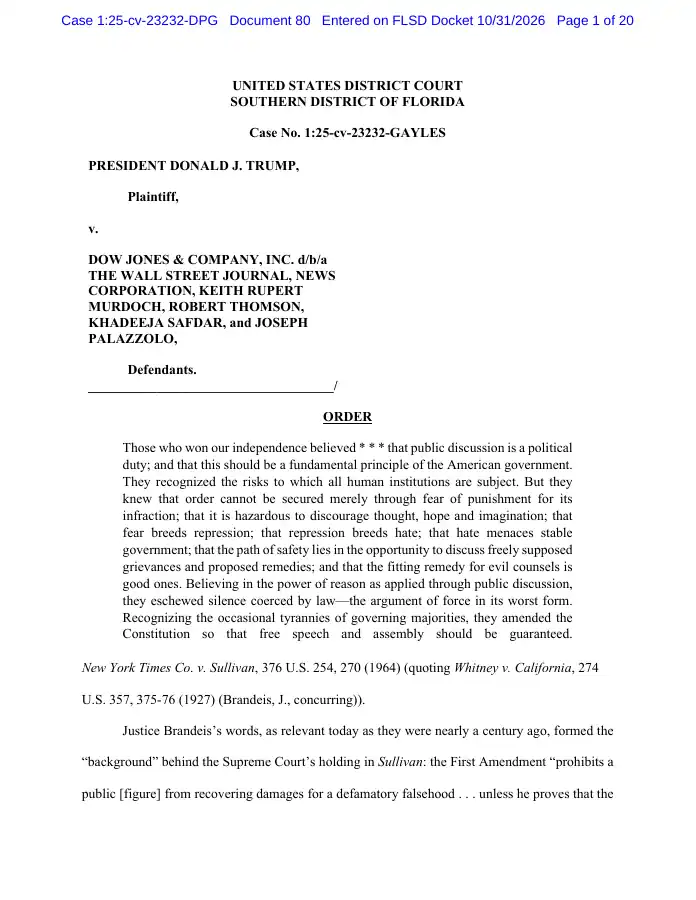
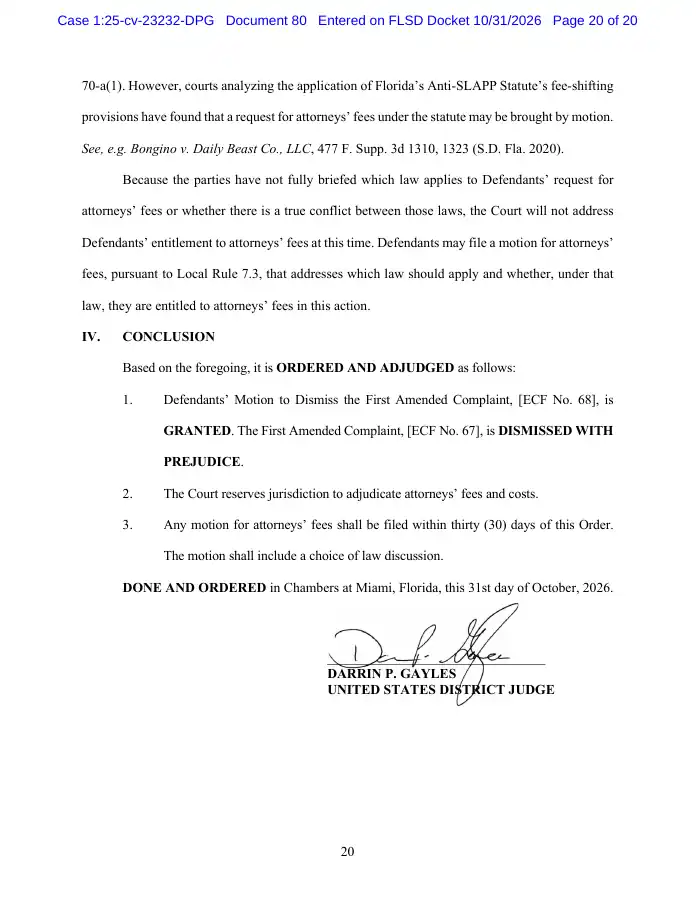
The original 20-page order is docket document 80 in case 1:25-cv-23232 before U.S. District Judge Darrin P. Gayles. It grants the defendants’ motion to dismiss the First Amended Complaint, preserves jurisdiction over attorneys’ fees and costs, and gives the defendants thirty days to submit a fee motion. Reuters and the Associated Press independently reported the dismissal on Saturday. No award of fees or damages appears in the order’s conclusion.
The dispute concerns the Journal’s account of a letter bearing Trump’s name in a birthday album for Jeffrey Epstein. Trump denies writing or signing it and challenged the reporting as defamatory. The defendants include Dow Jones, News Corporation, Rupert Murdoch, Robert Thomson and journalists Khadeeja Safdar and Joseph Palazzolo. A lawsuit about what a newspaper published is distinct from a criminal prosecution over Epstein’s conduct or a decision about every allegation associated with his records.
The chronology in the ruling explains why this was a second attempt. Trump filed the action on July 18, 2025. After the original complaint was dismissed and a request for limited early discovery was denied, he filed his First Amended Complaint on May 27, 2026. The defendants moved against it on June 10, and the court heard argument on August 5. The October 31 order resolves that motion, rather than announcing a trial result.
That procedural setting matters. At this stage, Gayles considered whether the complaint contained enough factual material to state a plausible claim. Well-pleaded factual allegations receive an assumption of truth, but unsupported legal conclusions do not. The judge found that the amended pleading still did not connect its accusations to sufficient facts about each defendant’s state of mind. The dismissal followed a second opportunity to make that case in a complaint.
Sources: Southern District of Florida — original October 31 order, document 80 ↗ · Reuters — independent October 31 dismissal report ↗ · Associated Press — independent October 31 dismissal report ↗ · GovInfo — earlier orders and case background ↗
Why Trump’s denial did not establish actual malice
The order explains actual malice as publication with knowledge of falsity or reckless disregard for whether a statement is false. The inquiry concerns the publisher’s subjective awareness, including serious doubts about the account. It is not a synonym for political hostility, an unflattering headline or the ordinary meaning of spite. A public figure must plausibly allege this element before demanding that a publisher defend the case through discovery.
Trump’s amended complaint relied in part on the Journal’s decision to publish despite his denials. Gayles rejected the idea that a denial by a public figure necessarily prevents further reporting. The court also noted that the article conveyed Trump’s position to readers. Including a subject’s contrary account was relevant to the assessment of malice; the judge did not treat publishing a disputed accusation as automatically unlawful merely because the subject rejected it.
Another part of the complaint criticized the investigation. The ruling describes outreach to Trump and his team, Justice Department officials, the FBI, Maxwell, people named in the album and people involved in its production. Some responded, some declined and some did not answer. Those details are the court’s account of the reporting described in the record, not interviews newly conducted by VIRVIB. Gayles found that the pleaded criticism did not establish deliberate avoidance of the truth.
The distinction between an imperfect investigation and purposeful avoidance is central to the reasoning. The order says a failure to investigate, standing alone, does not establish actual malice. It also rejects a claimed substantive difference between reviewing a document before publication and retaining a copy of it. That does not create a general exemption from verification. It explains why the particular shortcomings alleged here did not meet the applicable constitutional and pleading standards.
Gayles separately examined claimed omissions and the complaint’s reliance on a later Journal article about the letter. He concluded that those arguments did not supply the missing inference of actual malice. The ruling also says the defendants must be assessed individually. Grouping them together, or offering only conclusory allegations about Thomson, did not adequately plead each person’s responsibility. Readers evaluating the decision should follow those specific reasons rather than reduce it to a judgment that powerful people can never sue newspapers.
Sources: Southern District of Florida — original October 31 order, document 80 ↗
What remains unresolved, including fees
The most important limit appears in the order’s discussion of truth. The defendants asked the court to determine that the article was true and not defamatory. Gayles declined to reach those questions because the amended complaint failed on actual malice. He expressly identified whether Trump authored the letter or was Epstein’s friend as factual questions that could not be decided on this motion. Dismissal therefore should not be described as judicial authentication of Trump’s authorship.
The same caution applies to the album produced by Epstein’s estate. The ruling recounts a House committee subpoena and a September 8, 2025 public release containing a page matching the newspaper’s description. But Trump disputed the album’s and letter’s authenticity. Gayles refused to incorporate those disputed documents by reference when deciding the motion. A document’s public release and a court’s willingness to treat its contents as established facts are separate matters.
The order identifies an additional defect in the defamation per quod claim: insufficient allegations of special damages. It distinguishes specific, realized financial losses from general reputational harm. Trump’s broad references to lost profits, out-of-pocket losses and reputational injury were not enough as pleaded. That is a legal assessment of the complaint’s specificity, not a damages calculation and not an award against either side.
Fees remain a possible later proceeding. The defendants invoked anti-SLAPP protections, which concern litigation targeting public participation. Gayles said the parties had not sufficiently briefed whether Florida or New York law governed the fee request or how the different procedures applied. He therefore reserved the question, allowing a motion within thirty days that discusses the choice of law. It would be inaccurate to report that Trump has already been ordered to pay the newspaper’s lawyers.
VIRVIB analysis: the next useful records are any fee motion and ruling, and any documented effort to challenge the dismissal. This article does not announce that an appeal has been filed or that all possible review has ended. The verified development is narrower and substantial: a second complaint failed to plausibly plead actual malice and was dismissed with prejudice, while the judge left authorship and fee entitlement unresolved. That distinction protects readers from mistaking a decision about legal sufficiency for a finding on every contested fact.
Sources: Southern District of Florida — original October 31 order, document 80 ↗
Why this story is in the editionGoogle Trends U.S. RSS reviewed October 31, 2026, including current sports and entertainment queries. This new court decision was selected from verified news after reviewing 505 existing VIRVIB articles. No claim is made that it holds a Google Trends rank or search volume.
Prepared with AI assistance. Source-based reporting checked on 2026-10-31. This article does not update automatically. Read our editorial standards.