Dana White says he will meet Trump Monday; acceptance remains unconfirmed

Dana White said on November 7, 2026, that he planned to meet President Donald Trump at the White House on Monday, November 9, after Trump publicly offered him the press secretary’s job. Speaking at a news conference following Zuffa Boxing 12 in London, the UFC chief said he was flying to Washington. Reuters and the Associated Press independently reported his comments. The announced meeting adds White’s response to the record, but does not establish that he has accepted a government position.
Trump’s original November 7 Truth Social post said he had offered White the job and urged him to accept. White subsequently told reporters that he already had several jobs and expected to have more to discuss after the Monday meeting. AP reported that he declined to describe his previous conversations with Trump and did not make clear whether he was seriously considering the role. Those are limits on what his public response establishes, rather than confirmation of an appointment or a rejection.
Trump also asked White to bring several mixed martial arts fighters as assistants. That request does not establish that those people agreed, that specific posts were created or that anyone has been cleared to serve. The next decision remains whether White will accept the press role and what the White House will announce about its staffing.
The proposed meeting has a different status from the November 6 announcement that Stephen Miller will replace Susie Wiles as chief of staff on November 9. The press secretary speaks for the administration, while the chief of staff manages the president’s White House operation. White’s stated intention to meet Trump does not alter that announced personnel transition. Both developments belong in the administration’s post-midterm staffing story, with the distinction between an offered role and a named successor preserved.
Trump names Stephen Miller to replace Susie Wiles

President Donald Trump announced on November 6, 2026, that Stephen Miller will replace Susie Wiles as White House chief of staff, with Miller's new assignment starting Monday, November 9. Reuters, The Associated Press and NPR reported the change. It is a confirmed personnel decision in the post-midterm debate, rather than another forecast that an official might leave.
Trump said Wiles would move to his political operation. That is the destination described in the announcement, not a newly announced Cabinet appointment. He praised her service and described Miller as a trusted adviser. Miller is moving from his current deputy chief of staff role. NPR identifies him as a central figure in shaping Trump's immigration policies and a member of the president's circle since 2016.
Wiles separately confirmed in an original post on X that November 6 was her last day as White House chief of staff. She said she was proud of the administration's work and that her commitment to the president would continue as her role changed. Her statement and Trump's announcement identify two dates: her final day in the White House role on Friday and Miller's planned start on Monday. They do not identify an interim arrangement for the days between them.
The change follows the November 3 elections, in which Democrats won control of the House and Senate. That sequence establishes the political setting for the announcement. It does not, by itself, establish every private reason for the decision or prove that all the administration officials discussed in earlier reporting will be replaced.
This update changes the status of the Wiles–Miller portion of the story. The earlier discussion of pressure on White House personnel now includes an announced successor and a start date. The questions surrounding Pete Hegseth, Marco Rubio and JD Vance still require their own evidence. Replacing the chief of staff does not announce a decision about any of those officials or change the constitutional rules governing their offices.
Trump reaffirms confidence in Hegseth in released interview

Trump reaffirmed confidence in Pete Hegseth in a CBS interview excerpt released on November 6. Asked whether he had confidence in the defense secretary, he answered, “I do.” The exchange adds a fresh public statement to his November 5 backing for the Pentagon chief. It does not announce Hegseth’s dismissal or identify him as one of the officials who might leave.
Mediaite independently reported the interview exchange on November 6 after the clip aired on CNN. Trump indicated that he might make a few personnel changes but declined to identify who. The interview was taped before he announced Stephen Miller as Susie Wiles’s successor. That sequence matters: the general comments about possible changes should not be presented as a second, later announcement naming additional departures. CBS scheduled the full interview for November 8.
VIRVIB analysis: an expression of confidence records the president’s position at the time of the interview. It does not guarantee how long an official will remain, just as an unnamed reference to possible changes does not establish a dismissal. The confirmed staff transition and the president’s public support for Hegseth remain different developments. Neither supplies evidence that Vance has left his elected office.
The debate follows the November 3 elections. The Associated Press reported that Democrats won control of both chambers of Congress, giving the incoming majority an opportunity to challenge the administration through legislation, investigations and nominations. That result changes the environment in which Trump’s team operates. It does not itself remove anyone from the executive branch or transfer the presidency to the opposition.
In his November 5 interview with ABC News, Trump said, “I have every intention to keep him.” He also acknowledged receiving calls from people dissatisfied with Hegseth. ABC reported that Republican Rep. Thomas Massie planned to reintroduce an impeachment resolution, after an earlier effort stalled before the election recess. These are separate developments: presidential backing, criticism from allies and a proposed congressional proceeding can exist at the same time.
Massie’s own September 15 statement supplies the background to his campaign. He announced eight proposed charges against Hegseth, including allegations that the Iran operation violated the War Powers Resolution and that other military actions exceeded lawful authority. Those are Massie’s accusations. His statement is a primary record of what a member of Congress proposed, not a court judgment establishing that the secretary committed the alleged violations.
Hegseth’s response is also part of the record. Reuters reported that he released a video on November 5 defending his leadership and the Iran war, rejecting the effort to force him out. The account described criticism of his management and relationships with Congress. His refusal to leave establishes his stated position, while Trump’s comments establish the president’s public stance. Neither guarantees what Trump or Congress will do later.
Impeachment would require more than an announcement from one lawmaker. The Senate’s official guide explains that the House approves articles by a simple majority. A trial in the Senate follows, and conviction requires two-thirds of members present. Removal follows conviction. A House impeachment vote therefore would not, on its own, end Hegseth’s tenure. Nor does a report that a vote is being planned establish that the vote has occurred or that enough senators would support conviction.
Vance’s political position is different from his constitutional office

Vance faces a different kind of question. Reuters reported on November 4 that he attributed Republican losses to the Iran war in a public post and questioned whether its costs had been justified. Trump acknowledged knowing Vance’s view while continuing to defend the decision to wage the war. The exchange documents a disagreement over the election’s lessons. It does not establish that Vance has resigned or that Trump can dismiss him.
Unlike a department secretary, the vice president holds an elected constitutional office. The Twelfth Amendment provides for electoral votes for president and vice president. The Twentieth Amendment sets the end of their terms at noon on January 20. These provisions make the vice presidency different from a White House staff assignment. A loss of influence inside the administration is a political development, not the same thing as losing the office.
The constitutional distinction matters when Vance appears in a list of people who could be caught in a reshuffle. Trump cannot simply fire a vice president as he can replace a political aide. Article II includes the vice president among officers subject to impeachment and conviction. A voluntary resignation would create a different situation. Neither procedure follows automatically from an election defeat, criticism by party figures or disagreement with the president.
If a vacancy did arise, Section 2 of the Twenty-Fifth Amendment provides the next step. The president nominates a replacement, who takes office only after a majority vote in both the House and Senate. That is different from the Senate’s role in confirming a Cabinet secretary. The provision fills an actual vacancy. It does not give the president a mechanism for creating one by announcing a preferred replacement.
Marco Rubio’s position illustrates another distinction between speculation and an official’s stated plans. Reuters reported on November 5 that the secretary of state rejected reports he would leave to seek the presidency. In an interview with The New York Times, he said serving through the end of Trump’s term had always been his plan. That denial belongs alongside the speculation, rather than being omitted because a possible departure makes a more dramatic headline.
VIRVIB analysis: a discussion of 2028 can concern influence, party support and a future nomination without describing a current vacancy. Vance and Rubio may attract attention in that discussion, but the evidence here establishes their present offices and public statements. It does not select the next Republican nominee, establish either man’s campaign plans or measure the probability that one will leave the administration.
Cabinet scrutiny and nominations remain separate processes
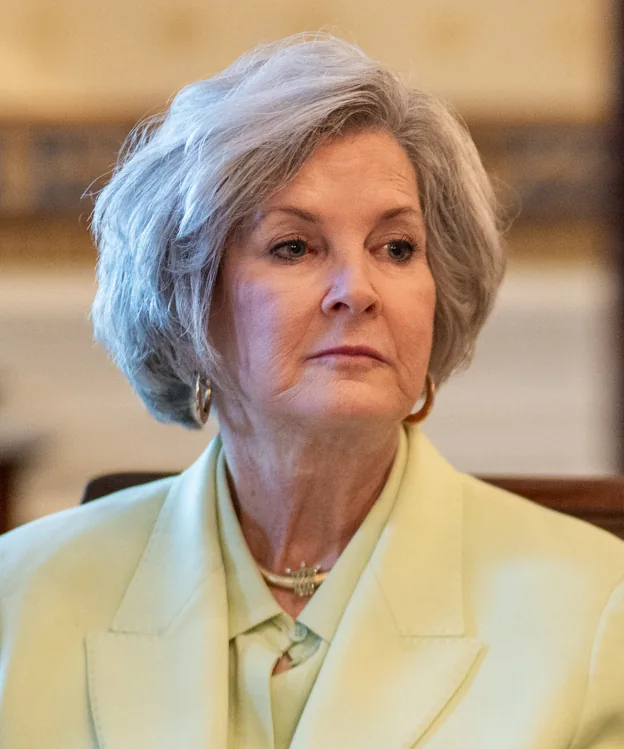
Before the November 6 chief-of-staff announcement, Al Jazeera’s account, drawing on Financial Times reporting, discussed pressure on Wiles, Miller, Commerce Secretary Howard Lutnick, Treasury Secretary Scott Bessent and Health Secretary Robert F. Kennedy Jr. The Wiles–Miller transition now has an announced outcome. The remaining names should not be treated as a single group facing an identical removal process.
The earlier reporting associated criticism of White House management with Wiles, immigration enforcement with Miller and the administration’s health agenda with Kennedy. Those assessments described the political costs of policies and leadership. Trump’s subsequent decision changes who is to manage the White House staff. It does not establish a reversal of the underlying policies or supply a resignation or dismissal announcement for Kennedy.
The Financial Times describes possible scrutiny of Lutnick’s alleged Epstein connections and records his denial of wrongdoing. It also says Bessent is not expected to leave. Those details complicate any suggestion that everyone on the list is about to be fired. A reported association is not proof of criminal conduct, and a forecast of continued service is different from a promise that no personnel decision will ever change.
Congressional oversight is one reason the distinction has practical consequences. The Senate describes investigation as part of Congress’s legislative responsibilities. Its historical overview explains that committees can obtain testimony and records through subpoenas when pursuing matters connected to legitimate legislation. An official can face document demands, hearings and criticism while remaining in office. Those tools gather evidence and inform legislation. They are not themselves an impeachment conviction or a presidential dismissal.
The election calendar also limits what has already changed. Under the Twentieth Amendment, the next terms of senators and representatives begin at noon on January 3, 2027. The members elected in November do not acquire those new terms on election night. Any action by the outgoing Congress must therefore be distinguished from a proposal by incoming leaders for the next Congress. Describing a future committee agenda as a completed investigation would move the chronology forward without evidence.
Replacing a Cabinet officer would create its own next steps. The Senate’s nominations guide describes the president’s role in nominating specified executive officials and the Senate’s role in advice and consent. Political control of that chamber can affect the reception a nominee receives. Announcing a preferred successor, submitting a nomination and winning confirmation are distinct events. A personnel story needs to identify which one has occurred before describing a successor as confirmed.
VIRVIB analysis: the record now combines an announced White House staff transition with separate disputes about other officials. Hegseth retains Trump’s publicly stated backing while facing an impeachment effort. Rubio has denied plans to leave, and Vance’s office has a different constitutional basis from a staff assignment. The next material developments elsewhere would be an attributable resignation or dismissal, a formal nomination, or recorded congressional action. Those events must be verified individually rather than inferred from Miller’s appointment.
View sources
Source publication or schedule date: Updated November 8 with White’s November 7 public response and planned November 9 meeting, independently reported by Reuters, AP and PA. Original Trump offer rechecked. UFC’s original conference page and official video link verified. Earlier personnel and constitutional context retains its dated sources.
- Al Jazeera — November 6 account of post-midterm personnel speculation
- Financial Times — November 6 assessment of officials under pressure
- ABC News — Trump’s November 5 interview and Massie’s proposed resolution
- Reuters — Hegseth’s November 5 response
- Rep. Thomas Massie — September 15 impeachment statement and allegations
- Associated Press — Democrats win control of the House and Senate
- U.S. Senate — impeachment, House majority and Senate conviction threshold
- Reuters — Vance’s November 4 remarks on the Iran war
- Reuters — Rubio’s November 5 denial of departure plans
- National Archives — Twelfth, Twentieth and Twenty-Fifth Amendments
- U.S. Senate — Constitution, Article II and vice-presidential removal
- U.S. Senate — investigations and legislative oversight
- U.S. Senate — presidential nominations and advice and consent
- White House — current Cabinet offices
- Justice Department Office of Legal Counsel — March 9, 1961 opinion on the vice president’s executive role
- Donald Trump — original November 6 appointment announcement
- Susie Wiles — original November 6 departure statement
- Reuters — November 6 appointment and Monday start
- Associated Press via Click2Houston — independent November 6 appointment report
- NPR via WDIY — November 6 appointment and Miller background
- AP via NBC10 — full quoted announcement and links to both original statements
- Wikimedia Commons — Stephen Miller photograph, date and license
- CBS News — November 6 interview excerpt, published before full November 8 broadcast
- Mediaite — independent November 6 report of the released interview exchange
- Associated Press — November 6 live reporting of Trump’s Hegseth answer
- Paramount Press Express — November 6 interview announcement and November 8 broadcast
- Donald Trump — original November 7 Truth Social post offering Dana White the press secretary role
- Reuters — independent November 7 report of the offer
- Associated Press — November 7 report distinguishing the offer from confirmation
- Andrius Petrucenia — London 2015 photograph, original source and CC BY-SA 2.0 license
- UFC — original November 7 Zuffa Boxing 12 post-fight conference page and official video
- Reuters via Yahoo — updated report including White’s planned Monday meeting
- Associated Press via ABC7 — White’s public response and the limits of confirmation
- Press Association via The Irish News — independent report of White’s planned meeting
Prepared with AI assistance. Source-based reporting checked on November 8, 2026. This article does not update automatically. Read our editorial standards.