When and where Swift re-entered Earth’s atmosphere
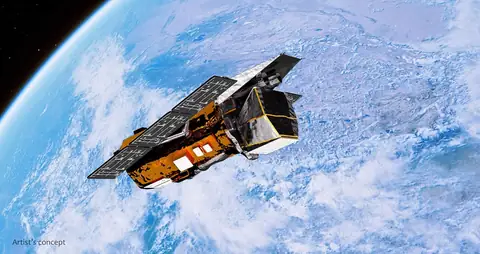
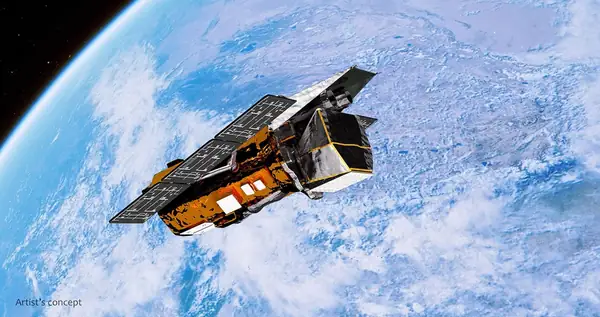
NASA’s Neil Gehrels Swift Observatory re-entered Earth’s atmosphere over North Sumatra, Indonesia, on November 4, 2026. The U.S. Space Force confirmed the time as 7:39 a.m. Eastern Standard Time, or 12:39 UTC. The return ended the spacecraft’s physical presence in orbit almost 22 years after launch. Its scientific observations had already stopped on October 20, making the end of operations and the atmospheric return two separate events.
NASA placed the re-entry at approximately 3.4 degrees north latitude and 98.6 degrees east longitude. Those coordinates describe the confirmed atmospheric re-entry location. They do not identify a recovered piece of hardware or establish where every fragment went. The agency expected most of the observatory to burn up during its passage through the atmosphere, while allowing that some components might survive. Its confirmation does not provide a complete inventory of surviving debris.
Independent coverage published by ABC News in Australia on November 5 also reported the November 4 return near Sumatra. It said the amount of material that burned up was not immediately known. That distinction matters for readers encountering headlines about a telescope falling to Earth. A confirmed re-entry can coexist with uncertainty about what happened to individual components during the descent.
The date on NASA’s confirmation page can cause confusion. The page retains its November 2 publication date and URL, but an editor’s update says NASA revised it on November 4 to confirm the return. Its current wording reports an event that has happened. Earlier forecasts about when Swift might come down should therefore give way to the confirmed November 4 time, rather than circulate as competing accounts of the outcome.
Swift launched on November 20, 2004, for a planned two-year primary mission. It remained useful for more than two decades by responding to explosions and other changes in the sky. NASA renamed the mission in 2018 to honor Neil Gehrels, its first principal investigator, following his death.
The immediate news is the end of an observatory that could both detect an event and help other telescopes find it. The longer-term issue is how astronomers continue that rapid response. NASA says it is exploring options involving its existing telescope fleet and future capabilities. The agency’s end-of-mission statement describes work to fill the gap, rather than announcing that an identical replacement is already operating.
Why Swift lost altitude and the rescue attempt could not save it
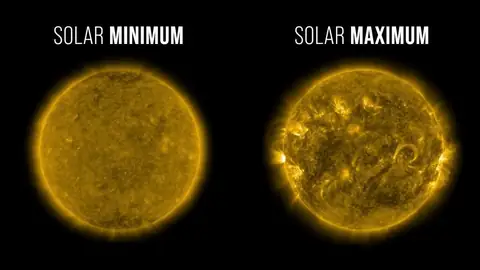
Swift’s descent resulted from atmospheric drag acting on a satellite without a propulsion system for maintaining its orbit. Space at the observatory’s altitude was not completely empty. Encounters with the upper atmosphere gradually reduced its orbital altitude, and increased solar activity accelerated that process. NASA’s May 2026 account explains that activity around the Sun’s 2024 maximum expanded Earth’s atmosphere and increased the drag on Swift.
The relationship between the Sun, the atmosphere and the spacecraft also made long-range predictions difficult. NASA’s November 2023 modeling produced a wide spread of possible return dates, including some in the 2030s. By early 2025, most models were pointing toward summer 2026. Those were forecasts based on information and assumptions available at the time. Changes in how the team operated Swift subsequently slowed its descent and altered the expected timetable.
Engineers and scientists used the spacecraft’s orientation as one way to buy time. Pointing it to reduce drag meant limiting the movements normally used to observe astronomical targets. NASA temporarily paused science observations to support a proposed orbit-raising mission. This was a trade between collecting new data immediately and preserving the chance to keep the observatory working for longer.
NASA awarded Katalyst Space a contract in September 2025 to attempt that intervention. The company’s LINK servicing spacecraft launched on July 3, 2026, aboard a Northrop Grumman Pegasus XL rocket from Kwajalein Atoll. The plan called for a robotic spacecraft to reach Swift, capture it and raise its orbit. A successful boost would have reduced the effects of drag and extended the opportunity for observations.
On August 19, NASA announced that LINK had an attitude-control problem and would not capture or boost Swift as planned. The agency said the commercial spacecraft could still attempt rendezvous and proximity operations to demonstrate servicing capabilities. Its later October account confirmed that the servicing mission had ended in August without an attempt to boost the observatory. The rescue effort therefore did not change Swift’s orbit in the way required to preserve the mission.
Swift resumed science observations after that effort and studied hundreds more targets. The additional pointing needed for those observations increased drag again. On October 20, the satellite reached an altitude of 171 miles, or 275 kilometers, and entered safe mode when it could no longer compensate for the drag. The Penn State operations team then sent a command ending operations in preparation for re-entry. The final weeks were shaped by the limits of observing from a falling orbit, rather than a new failure of the science instruments described in NASA’s account.
What ends with Swift, and what remains available to science
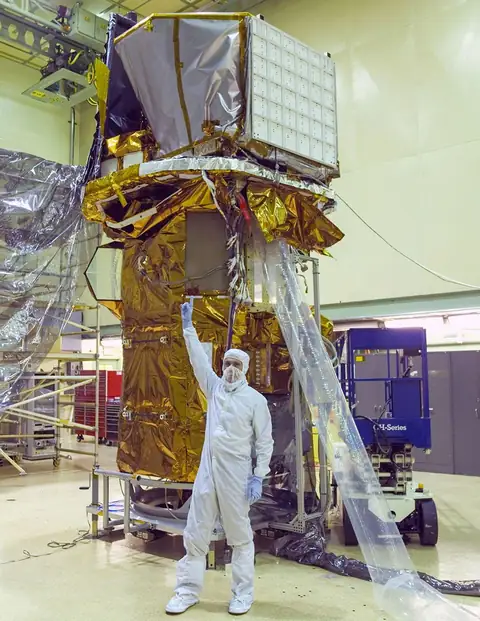
Swift’s scientific value depended on speed and coordination as well as the number of objects it observed. Its instruments could detect and locate a gamma-ray burst, relay its position to other observatories and turn toward the fading afterglow. NASA says that sequence typically took about a minute. Co-aligned X-ray and optical/ultraviolet telescopes allowed the same spacecraft to examine a burst location in different parts of the spectrum.
That response mattered because some bursts disappeared too quickly for a slower observing process. In May 2005, Swift detected the afterglow of GRB 050509B, a short gamma-ray burst lasting only 0.03 seconds. Its X-ray telescope collected 11 photons from the afterglow. NASA identifies this as the first detected afterglow of a short burst, an observation that supported models linking those events to mergers of neutron stars.
The mission also developed beyond its original gamma-ray-burst assignment. Astronomers could request observations of newly interesting objects or arrange monitoring over time. NASA says the planning system could schedule as many as 75 independent targets in a day. That flexibility let researchers study a changing sky without treating every observation as a fixed program prepared far in advance.
Across its career, Swift observed more than 2,000 gamma-ray bursts and more than 1,400 supernova explosions. Its work also included active galaxies, stars disrupted by black holes, comets and asteroids. NASA estimates that its data contributed to about 7,000 published scientific papers. Those figures describe a record of observations and research use, rather than a count of discoveries made by the spacecraft alone.
The archive remains a resource after the satellite’s destruction. NASA describes approximately 12 terabytes of publicly available data, including brightness measurements, spectra and more than 1.5 million images from the Ultraviolet/Optical Telescope. Researchers can continue to compare those records with other observations. Re-entry ends the supply of new Swift measurements, while leaving the accumulated measurements available for further work.
Even the descent has become a research opportunity. NASA’s Community Coordinated Modeling Center and its partners are using Swift’s return to compare models of thermospheric density and satellite trajectories with the observed outcome. Atmospheric density is a major source of uncertainty in predicting drag. The challenge is still accepting hindcasts, which reconstruct the event using models, and plans a preliminary discussion at the CEDAR Workshop in 2027. That work addresses a separate question from Swift’s astronomy: how to improve predictions for satellites approaching the atmosphere. The confirmed return now supplies an outcome against which those calculations can be tested.
View sources
Source publication or schedule date: Re-entry November 4, 2026, at 12:39 UTC; science ended October 20. Sources checked November 5.
- NASA — re-entry confirmation, updated November 4
- ABC News Australia — independent November 5 report
- NASA — October 23 mission legacy and public archive
- NASA — May 26 explanation of atmospheric drag and forecasts
- NASA — August 19 LINK servicing update
- NASA — October 23 operations chronology
- NASA CCMC — confirmed UTC time and atmospheric modeling challenge
Prepared with AI assistance. Source-based reporting checked on November 5, 2026. This article does not update automatically. Read our editorial standards.