Knicks vs. Bulls: a 19-point deficit becomes a 133–127 win
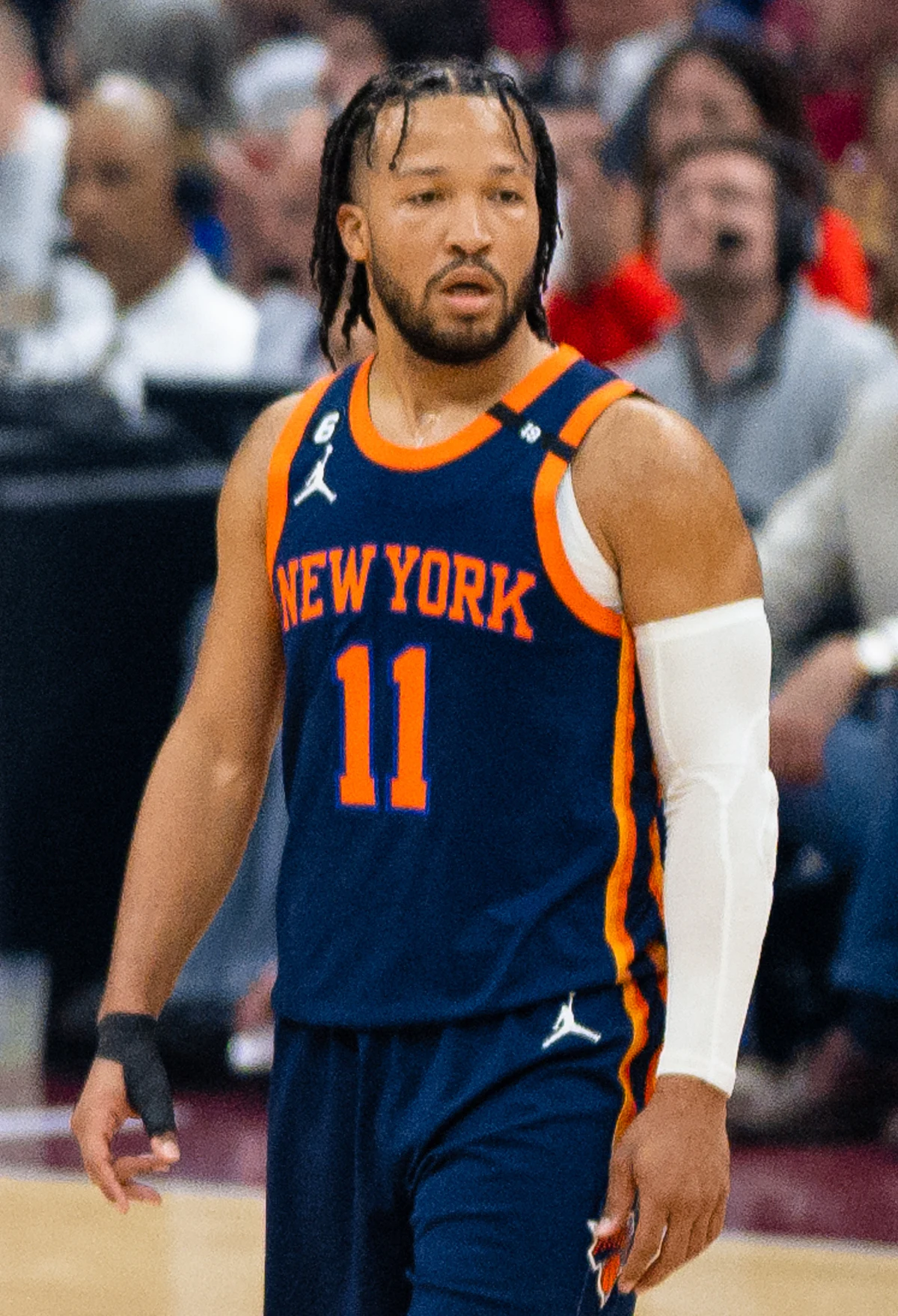
Jalen Brunson scored 38 points as the New York Knicks recovered from a 19-point third-quarter deficit to beat the Chicago Bulls 133–127 at United Center on October 28, 2026. New York improved to 2–3 and Chicago fell to 1–4. The final score and Brunson’s production are confirmed by the NBA’s official record and independent reporting from Reuters/Field Level Media and Sportsnet.
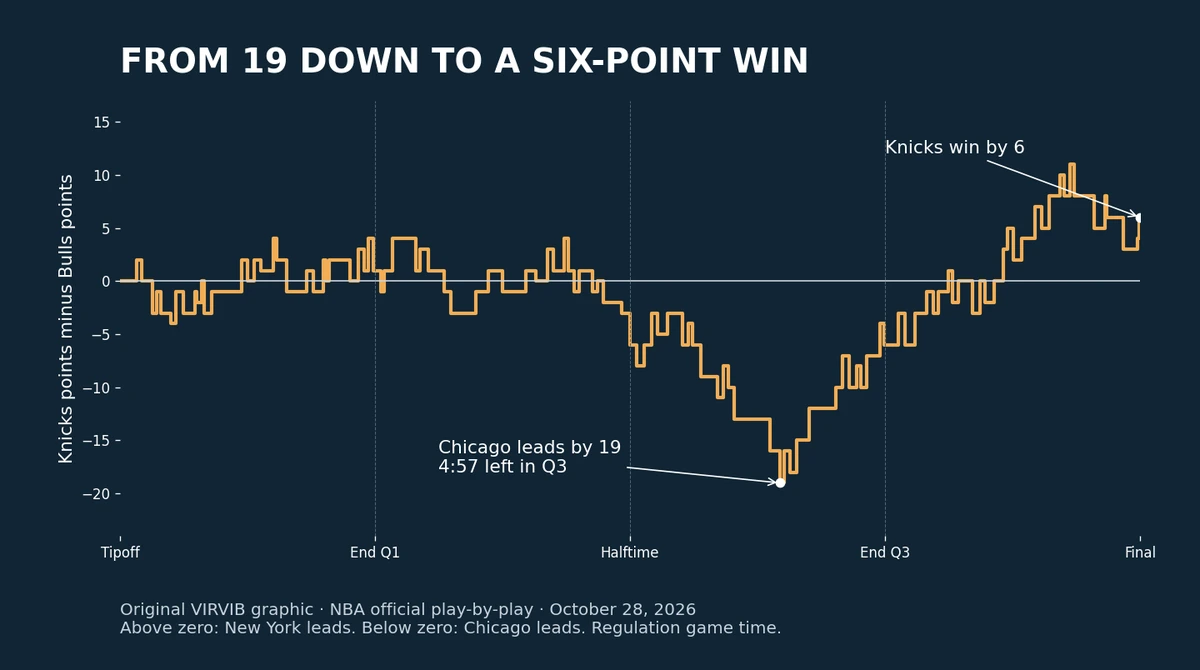
The recovery was substantial, but it was not confined to the fourth quarter. Chicago’s lead reached 87–68 when Norman Powell made a three-pointer with 4:57 left in the third. New York responded before the quarter ended, reaching the final period down 96–90. The visitors had already removed 13 points from the deficit before beginning the closing 12 minutes.
That distinction explains an otherwise surprising line score. Both teams scored 34 in the third quarter, even though the period contained Chicago’s biggest lead. A quarter can finish level while including a major run and a major response. Looking only at its final total would conceal the passage in which the game moved furthest toward the Bulls and then back toward the Knicks.
New York had led 34–33 after the first quarter, but Chicago won the second 29–22 for a 62–56 halftime advantage. The Knicks then won the fourth 43–31. That 12-point fourth-quarter edge converted a six-point deficit into a six-point victory. The accompanying margin chart follows the official scoring events rather than drawing a straight line between quarter breaks.
Landry Shamet supplied two important fourth-quarter threes. His first tied the score 107–107 with 7:32 left. His next, a running three off a Brunson assist at 6:26, made it 112–109. New York did not surrender the lead after that basket, although Chicago later reduced the gap and kept the closing possessions meaningful.
VIRVIB analysis: the comeback required recovery and consolidation. Getting within six before the fourth made the remaining task smaller; turning the lead into a win still required another strong quarter. The chronology gives credit to both stages, rather than presenting a single shot as if it erased the full deficit by itself.
Sources: NBA — official final game record and published statistics ↗ · NBA — final box score ↗ · NBA — official play-by-play ↗ · Reuters / Field Level Media — independent result report ↗
Brunson’s 38, Towns’ double-double and the players around them
Brunson made 13 of 25 field-goal attempts, including six of 10 threes. His remaining seven baskets were twos, and he added six free throws. VIRVIB’s calculation divides his scoring into 18 points from threes, 14 from twos and six at the line. That accounts for all 38 while showing how much of his output came from distance.
He also supplied seven assists. The leading passer for New York, however, was Tyler Kolek, who recorded nine assists without a turnover in 18 minutes and 23 seconds. Kolek scored nine points on three made threes. His line combines a relatively small scoring total with a large role in distributing the ball, an important distinction in a game led by Brunson’s headline number.
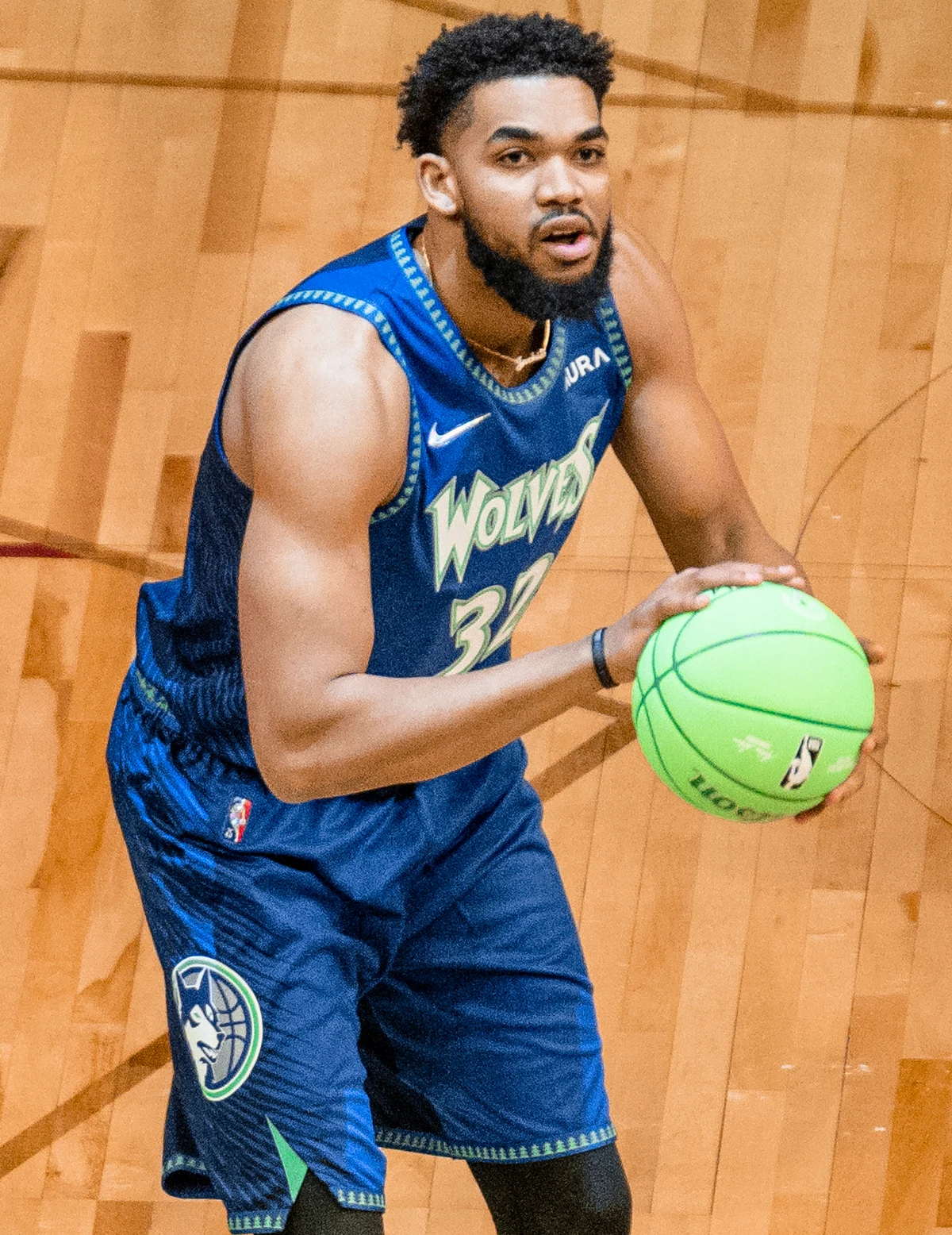
Karl-Anthony Towns finished with 19 points, 13 rebounds and five assists. He converted seven of 14 shots, including three of six from outside, and both free throws. Towns also recorded five personal fouls and four turnovers. Including those figures gives a fuller account of his night than the double-double label alone.
OG Anunoby contributed 23 points, six rebounds and seven made free throws. Jordan Clarkson scored 18 on seven-for-11 shooting, while Shamet supplied 14, including four threes. Those contributions meant New York did not need Brunson to account for every phase of the recovery. The leading scorer supplied roughly 28.6 percent of the team’s points, a VIRVIB calculation from the final totals.
Andre Drummond added 11 rebounds in just over 15 minutes, including four offensive boards. New York’s team total of 16 offensive rebounds was twice Chicago’s eight. Recovering a missed shot provides another opportunity within the same possession, though the rebound total should not be treated as a count of automatically converted baskets.
VIRVIB analysis: the useful supporting story is the variety of work around Brunson. Kolek’s passing, Drummond’s recovered misses and the outside shooting from Towns, Clarkson and Shamet appear in different statistical columns. Together they help explain how New York could generate 133 points. No individual plus-minus figure can isolate each player’s contribution from the teammates and opponents sharing his minutes.
Sources: NBA — official final game record and published statistics ↗ · NBA — final box score ↗ · Sportsnet — result and leading players ↗
Why the shooting totals mattered, and how New York closed it out
Chicago had an efficient leading scorer of its own. Powell finished with 30 points on 10-for-15 shooting, including four threes. Caleb Wilson scored 20, while Matas Buzelis and Jalen Smith each had 17. Josh Giddey supplied 10 points, 11 assists and eight rebounds. Those contributions kept the Bulls competitive even after their largest advantage disappeared.
The teams’ shooting percentages tell only part of the outcome. Chicago made 48.4 percent of its field goals, a higher rate than New York’s 44.8 percent. The Knicks nevertheless made 47 baskets to the Bulls’ 44 because they attempted 105 shots compared with 91. Offensive rebounds were one documented source of additional shooting opportunities; the percentages alone cannot describe that difference in volume.
New York’s 22 made threes produced 66 points, compared with 54 from Chicago’s 18 threes. The Bulls scored 52 points from twos and 21 at the line, while the Knicks had 50 from twos and 17 from free throws. VIRVIB’s scoring calculation therefore gives New York a 12-point advantage from three, offset by a six-point disadvantage across twos and free throws, for the six-point final margin.
Chicago still had a chance to force a different finish. Smith’s three with 46 seconds left made it 130–127. Towns missed a layup and Giddey collected the rebound. Powell then missed a three with 10.1 seconds remaining that could have tied the score. This was a three-point game at that moment, despite the much larger swings earlier.
Brunson made the second of two free throws with 6.2 seconds left for a 131–127 lead. After another Powell three-point miss, Anunoby secured the rebound and converted two free throws with 1.7 seconds remaining. Those final makes completed the 133–127 score. The official play-by-play distinguishes Powell’s potential tying attempt from his later attempt when Chicago was four behind.
VIRVIB analysis: New York’s second victory of the season establishes a completed recovery in this game, not a guarantee about its next performance. Chicago’s 19-point lead and late tying opportunity show how close the result was to taking another direction. The strongest evidence from the night is specific: Brunson’s scoring, production around him, a recovered third quarter and a 43-point fourth were enough to turn this one into a Knicks win.
Sources: NBA — official final game record and published statistics ↗ · NBA — final box score ↗ · NBA — official play-by-play ↗ · Reuters / Field Level Media — independent result report ↗
Why this story is in the editionKnicks vs Bulls appeared in Google Trends Trending Now for the United States, past 24 hours, checked October 29, 2026. Editorial selection, not a national ranking or precise search-volume claim.
Prepared with AI assistance. Source-based reporting checked on 2026-10-29. This article does not update automatically. Read our editorial standards.