How the Brewers turned a 4–0 deficit into a 5–4 win

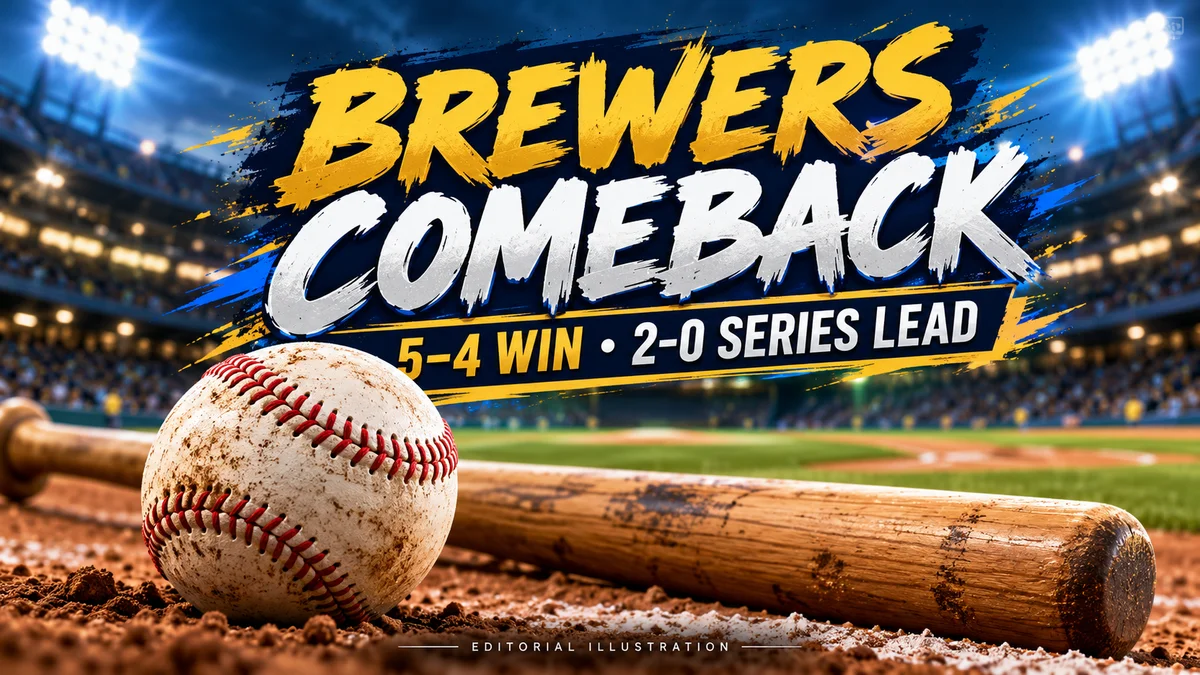
The Milwaukee Brewers defeated the Tampa Bay Rays 5–4 on October 24 after trailing by four runs in the first inning. Milwaukee now leads the World Series 2–0. Sal Frelick supplied the tying home run, and Cooper Pratt drove in the run that put the Brewers ahead. The result leaves Milwaukee two wins from the championship and Tampa Bay needing a response when the series resumes in Florida. It does not settle the title, even after two consecutive Milwaukee victories.
The early scoreboard favored Tampa Bay. The Rays scored four times before the Brewers came to bat, with Liam Hicks contributing a two-run homer. Milwaukee then cut the gap in half during its own first inning. That immediate response mattered because it reduced the amount of recovery required later. Instead of needing one enormous inning, the Brewers could keep applying pressure while their pitching staff prevented the Rays from extending the advantage.
A fourth-inning run brought Milwaukee within one. Frelick’s sixth-inning homer then made the score 4–4. In the seventh, Brice Turang doubled and ultimately scored on Pratt’s single. Field Level Media’s account records that sequence and the bullpen’s six scoreless innings. The winning run came well before the final out, so the comeback also required protecting a one-run margin. That part of the result belongs beside the swings that changed the score, rather than disappearing behind a single highlight.
Pratt’s contribution also followed a difficult start in the field. His throwing error had helped Tampa Bay’s first-inning rally. The Associated Press describes his later single as the decisive offensive contribution after Frelick’s homer restored the tie. An error and a winning hit can coexist in the same player’s game. Treating the night as either an uninterrupted success or a failure decided by the first inning would miss the sequence that actually produced the final result.
For a reader following the series rather than every pitch, the score progression is the simplest guide. Tampa Bay led 4–0, Milwaukee narrowed it to 4–2, another run made it 4–3, Frelick tied it, and Pratt’s RBI put the Brewers in front. Each stage reduced the margin without eliminating Tampa Bay’s opportunities. The account is therefore a story of accumulating runs and preventing replies, not a claim that an early lead is unimportant or that a comeback becomes inevitable once a team begins one.
Sources: Associated Press — Game 2 result and scoring sequence ↗ · Field Level Media — scoring progression and relief pitching ↗ · Reuters / Field Level Media — bullpen and comeback report ↗
Why pitching, plate appearances and defense mattered

Drew Rasmussen could not complete the fourth inning for Tampa Bay. AP’s separate report on his start records three runs allowed in 3⅔ innings and 89 pitches before his exit. He acknowledged problems with command and credited Milwaukee’s hitters for extending plate appearances. A short start creates decisions for a manager earlier than planned, particularly when a team is trying to protect a lead. It changes which relievers must cover the remaining outs and when the next matchup begins.
The value of a long plate appearance is not limited to whether the hitter reaches base. FanGraphs’ analysis of Frelick’s night follows the pitch sequence of his sixth-inning at-bat against Ian Seymour. That account provides a closer look at the confrontation behind the tying swing. A home run is one result, but the pitches before it establish the count and the choices available to pitcher and hitter. Highlight clips can show the finish while omitting that development.
Milwaukee’s relief pitching supplied the other half of the comeback. Reuters and Field Level Media report six innings without a Tampa Bay run after Logan Henderson’s start. Aaron Ashby completed a five-out save. AP’s account of Ashby’s postseason says his scoreless run reached 15⅔ innings and describes the potential tying run stranded at third when he struck out Yandy Díaz. Those are recorded outcomes through Game 2, rather than a guarantee that the next appearance will follow the same pattern.
Analysis: a bullpen’s role changes with the scoreboard. When a team trails, a scoreless inning preserves the chance to catch up. Once the game is tied, it prevents the offense from having to restart the recovery. After the lead changes, each out moves the team closer to ending the game. The same zero on a pitching line can therefore serve three different purposes during one comeback. Milwaukee needed all three stages, not only a reliever capable of handling the last batter.
The next evaluation should keep pitching and defense connected. A pitcher’s workload can grow when an opponent earns extra opportunities, while a fielding play can end an inning before another matchup is necessary. That does not make every error the explanation for a defeat. It means the final score should be read alongside how the innings unfolded. Game 2 demonstrated why a four-run opening cannot substitute for recording outs through the rest of the night, and why an offense still needs its pitching staff after it recovers.
Sources: Reuters / Field Level Media — bullpen and comeback report ↗ · Associated Press — Rasmussen’s start and plate appearances ↗ · FanGraphs — the pitch sequence behind Frelick’s home run ↗ · Associated Press — Aaron Ashby’s postseason relief work ↗
Game 3 time, the pitching matchup and what a 2–0 lead means

Game 3 is scheduled for Monday, October 26, at 8 p.m. Eastern, with Freddy Peralta expected to start for Tampa Bay against Milwaukee’s Robert Gasser. MLB lists FOX, FOX Deportes and FOX One among the U.S. viewing options. The pitching assignment brings Peralta back into competition with the franchise where he spent his first eight major-league seasons. AP’s preview describes the unusual situation of his former team reaching the same World Series on the opposite side.
Peralta’s current job is to help the Rays recover, regardless of his history in Milwaukee. That is the competitive question for the preview. Familiarity supplies background, but it cannot establish the result of a future start. The scheduled matchup should also be distinguished from a confirmed performance: no Game 3 innings have been played in this report. Readers checking closer to first pitch should use the official matchup page for any changes to pitchers, lineups or viewing arrangements.
The series format helps explain the pressure. The World Series is best of seven, so four victories are required. Milwaukee has two. Tampa Bay has none and must win four of the remaining five possible games to take the title. That is series arithmetic, not a prediction. Winning Game 3 would leave the Rays behind 2–1, while a Milwaukee victory would produce a 3–0 lead. Neither branch should be written as an outcome before the game takes place.
Analysis: the change in venue gives Tampa Bay a new setting, but the tasks remain concrete. Its pitchers need outs without giving away additional chances, and its lineup needs production beyond an early burst. Milwaukee’s question is whether it can maintain the combination of run creation and prevention that decided Game 2. A series lead provides room for a setback. It does not remove the need for the next starter, the next fielding play or the next useful plate appearance.
For anyone catching up before Monday, the official MLB highlight page linked below provides the Game 2 plays, while the matchup guide handles the next game. Keeping those resources separate avoids confusing a completed result with a preview. Through October 25, the verified position is a 5–4 Milwaukee victory and a 2–0 Brewers lead. The next evidence will come from Game 3. The comeback has changed the series position, while leaving the championship to be decided on the field.
Sources: MLB — Game 3 time, broadcast options and matchup ↗ · Associated Press — Peralta faces his former club ↗ · MLB — World Series format and history ↗ · MLB — official Game 2 highlights ↗
Why this story is in the editionSelected for current U.S. news coverage. This is an editorial selection, not a measured ranking of searches or social-media trends.
Prepared with AI assistance. Source-based reporting checked on October 25, 2026. This article does not update automatically. Read our editorial standards.