Kane wins in London after a season built on finishing
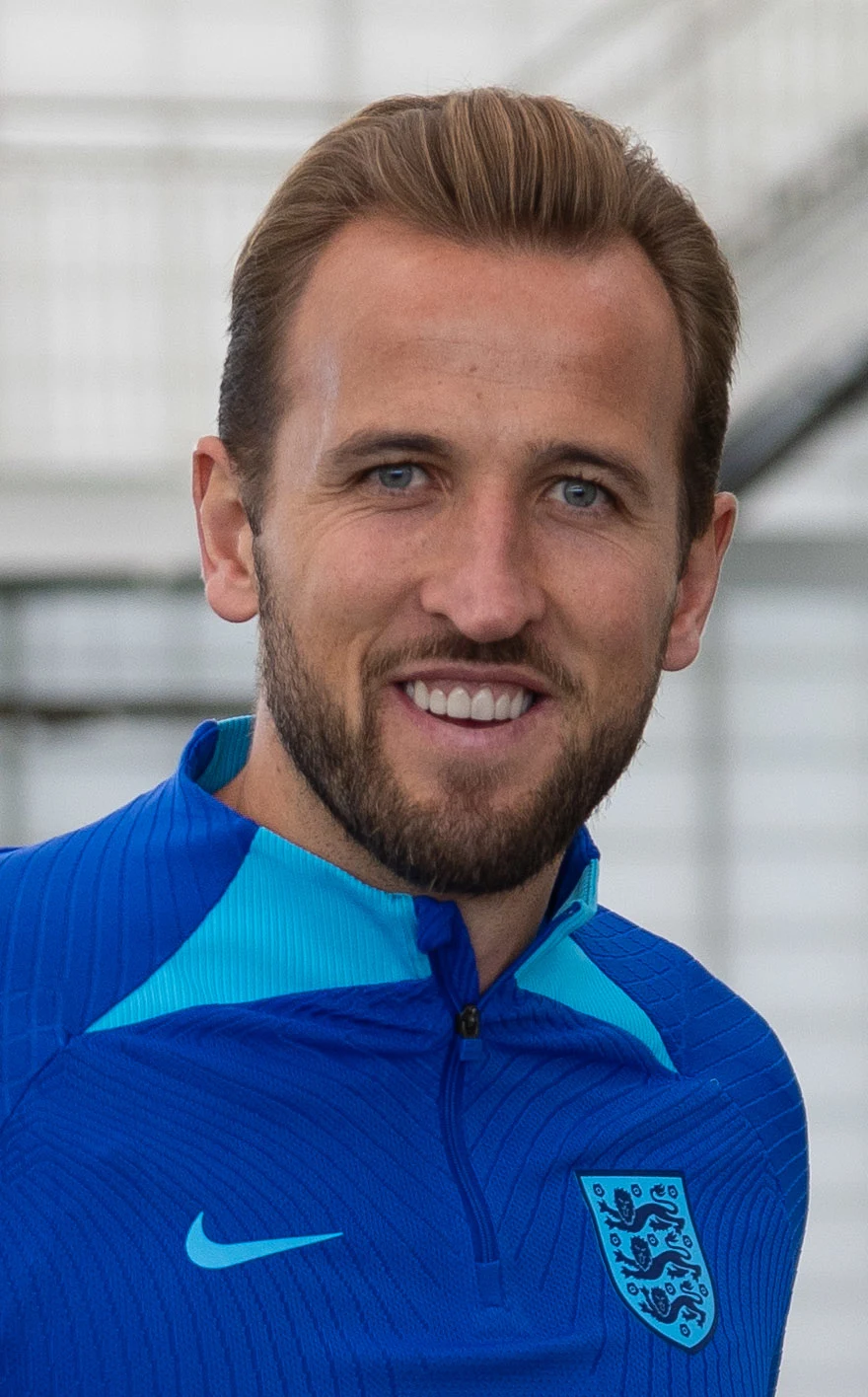
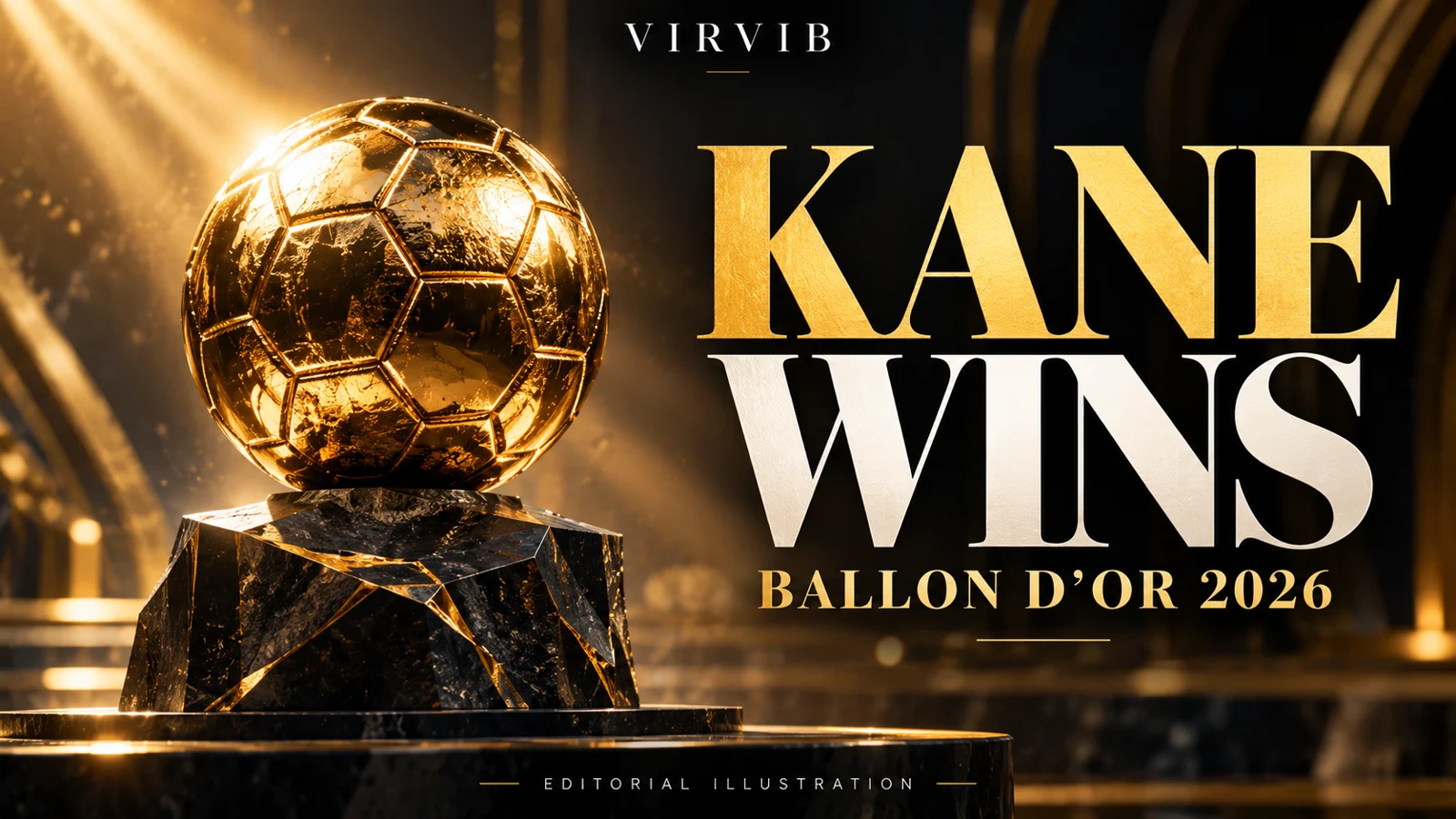
Harry Kane has won the 2026 men’s Ballon d’Or. Bayern Munich confirmed its striker’s victory after the October 26 ceremony in London, turning a season of scoring records into the leading individual honor of his career. This article updates VIRVIB’s pre-ceremony guide with the announced result. The award is no longer a contest awaiting a verdict.
Reuters reports that Kane is the first English winner since Michael Owen in 2001. The England captain’s success follows his move to Bayern in 2023 and the team trophies that accompanied his goals in Germany. It is a result with significance for both a national team whose players had waited a quarter-century for this prize and a club accustomed to competing for European football’s major honors.
The organizer’s account gives the clearest competition-by-competition breakdown of Kane’s club year. He scored 36 times in 31 Bundesliga appearances, ten times in six German Cup games, 14 times in 13 Champions League appearances and once in the German Supercup. That produces 61 goals in 51 Bayern games. Twelve more for England bring the club-and-country total to 73. The two totals measure different scopes, so describing 73 as his Bayern total would be wrong.
Several individual matches give that record context. The official retrospective highlights a league-opening hat-trick against Leipzig and a hat-trick against Stuttgart in the German Cup final. His scoring extended across a season and across competitions, rather than depending on one tournament or a single sequence of favorable fixtures. The organizer also identifies his rapid arrival at 100 Bayern goals as part of the wider story of his adaptation to the club.
VIRVIB analysis: Kane’s case is unusually easy to express in a headline because scoring totals are accessible. Yet the competition breakdown is more informative than the headline number alone. A domestic league goal, a cup-final goal and a Champions League goal all contribute to the total while occurring in different competitive circumstances. The award does not require readers to pretend those circumstances are identical. It asks them to evaluate a season in which a forward repeatedly supplied his team’s decisive action. That is a richer assessment than reducing the winner to either a goalscoring machine or the beneficiary of a particular league.
Sources: FC Bayern — club confirms Harry Kane’s victory ↗ · Reuters — Kane and Putellas win the 2026 awards ↗ · Ballon d’Or — Harry Kane wins the 2026 award ↗
Three trophies with similar language measure different achievements
Kane also received the men’s Striker of the Year award, the honor previously called the Gerd Müller Trophy. That presentation belongs to the Ballon d’Or gala but is separate from the main men’s award. A photograph of a player holding one trophy should therefore be captioned according to the presentation it actually depicts. Winning the scoring honor does not automatically establish that the same person has won the Ballon d’Or, even though Kane took both this year.
The organizer traces the striker award to 2021. Robert Lewandowski won the first two editions, Erling Haaland followed in 2023, and Kane shared the 2024 award with Kylian Mbappé after each accumulated 52 goals. Viktor Gyökeres received the following edition. Kane’s latest success is therefore his second in this category, whereas the main Ballon d’Or is his first.
A third award, the European Golden Shoe, also featured in Kane’s season. Bayern’s May report records 36 Bundesliga goals and 72 points in that competition’s ranking, ahead of Erling Haaland’s 54 points and Mbappé’s 50. The ranking applies a league-based weighting system rather than simply adding every club and international goal. It is one reason the same player can have different numerical totals attached to different awards without either total necessarily being mistaken.
For readers comparing honors, the simplest discipline is to name the competition and the relevant scope before using a statistic. The league scoring race concerns league matches. The season’s club total includes other club competitions. The club-and-country total adds international football. The main Ballon d’Or is a jury assessment under its published criteria. Those measures overlap, but none should silently substitute for the others.
VIRVIB analysis: the significance of Kane winning multiple categories is that separate routes to recognition converged on the same player. His scoring record supported a specialist award, while the broader assessment placed him at the top of the men’s field. This does not turn every scoring prize into a reliable forecast of next year’s vote. A defender, midfielder or creative attacker can make a case through contributions that are not captured by the scorer’s total. It does explain why Kane’s evening should be described as more than one trophy and why accurate award names improve, rather than diminish, the story.
Sources: Ballon d’Or — Kane’s Striker of the Year award ↗ · FC Bayern — 2026 Golden Shoe and scoring table ↗
The verdict fits a defined season, not a lifetime ranking
France Football’s published framework assesses the period from August 3, 2025 to July 19, 2026. Individual performance and decisive impact take priority, followed by team achievements and then class and fair play. The window includes the men’s World Cup. Performances from the new club season immediately before the gala may shape conversation but do not belong to that completed evaluation period.
That distinction matters for a player whose career has often been discussed through accumulated achievements and missing trophies. The Ballon d’Or is recognition for the assessed season, not a formal compensation scheme for previous disappointments. Kane’s years of work provide narrative context; the award’s rules still direct voters toward the relevant performances. A compelling personal history and a strong seasonal case can coexist without becoming the same argument.
Bayern’s earlier Ballon d’Or tradition helps place the victory within a club history. The organizer’s retrospective describes Franz Beckenbauer and Gerd Müller as central figures in the club’s early nominations and victories, followed by Karl-Heinz Rummenigge’s successes in the early 1980s. It also identifies Robert Lewandowski’s repeated nominations during his Bayern career. Kane joins that institutional story while bringing a different nationality and a different route to Munich.
The retrospective listed four Bayern men on the 2026 shortlist: Kane, Michael Olise, Luis Díaz and Dayot Upamecano. Their presence underscores the team setting around an individual award. A scorer receives the final statistical credit for a goal, but his season also depends on teammates, coaching and the competitive platform his club provides. Recognizing that context does not reduce his achievement.
VIRVIB analysis: the result settles the identity of the winner, not every reasonable argument about how football excellence should be judged. Supporters can prefer a creator’s influence or place greater emphasis on international success. What changes after the ceremony is the status of those claims: they are arguments about a known verdict, rather than predictions of an undisclosed result. The useful record now is Kane’s confirmed victory, the defined season that supported it and the separate trophies he received. Future scoring milestones will add to his career, but they should not be retroactively inserted into the evidence for this award.
Sources: Ballon d’Or — evaluation period and criteria ↗ · Ballon d’Or — Bayern’s award history ↗
Prepared with AI assistance. Source-based reporting checked on 2026-10-27. This article does not update automatically. Read our editorial standards.