What the official review concluded
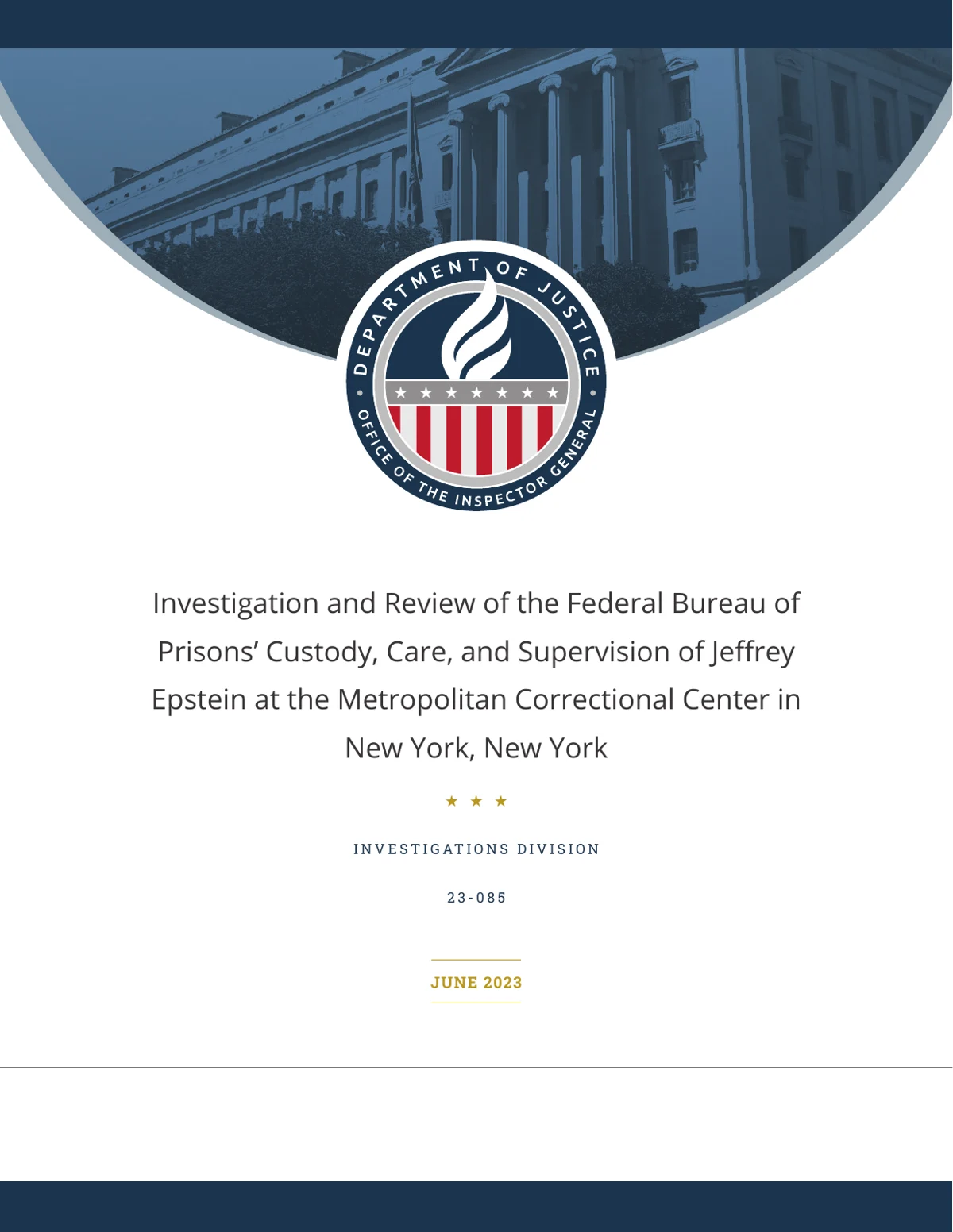
Epstein died at the Metropolitan Correctional Center in New York on August 10, 2019. The New York City medical examiner determined that the death was a suicide. The DOJ inspector general’s 2023 report states that the FBI found no criminality connected with the death and that the inspector general found no evidence contradicting the FBI’s determination.[S07]
This chapter reports those conclusions as the official findings. It does not diagnose the death from photographs, invent a forensic reconstruction or describe the method.
The failures were real subjects of investigation
The report documents substantial problems in custody and supervision, including staff failures, missed monitoring and deficiencies involving surveillance recordings. Its account concerns institutional performance as well as individual conduct. The suicide determination does not make those failures irrelevant.[S07]
Conversely, identifying a failure is not enough to establish that someone planned a killing. A claim about intent needs evidence of intent. That distinction allows institutional criticism to be forceful without turning an inference into a fact.
Keep the questions separate
Three questions should guide a careful reading. What did the medical authority determine? What did criminal investigators conclude? What did the inspector general find about the institution’s conduct? A report can supply a different kind of answer to each.
When a passage describes a missing record, treat it as a gap in the record. Do not describe the absent material as showing an event that no one can inspect. Equally, do not treat the gap as a reason to stop asking why the record was not preserved.
What a new claim would need
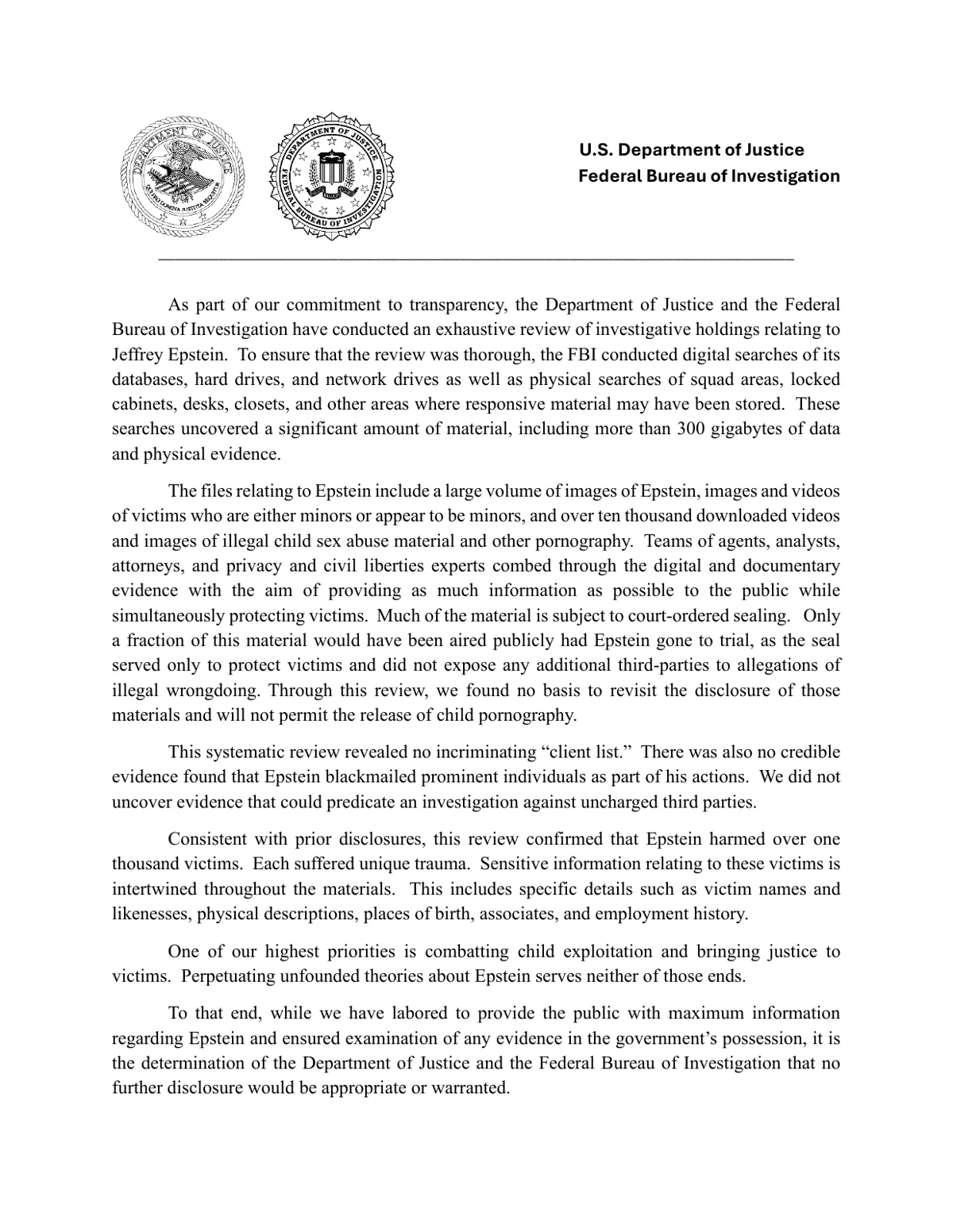
A credible challenge should identify a specific finding, provide authenticated contrary evidence and explain why that evidence changes the assessment. Repeated claims, cropped images and dramatic narration are not substitutes for that work.
The linked inspector general report is provided so readers can examine the findings themselves. It is not mirrored here as a gallery of sensitive evidence. Selected sections were reviewed for this dossier, and the source register identifies the report and its scope.
The most useful public-interest follow-up is to test accountability against the documented failures: what was recommended, what changed and what evidence demonstrates implementation. This edition does not claim to have audited the Bureau of Prisons’ subsequent compliance with every recommendation.