Spurs vs. Jazz: overtime finally separates the teams
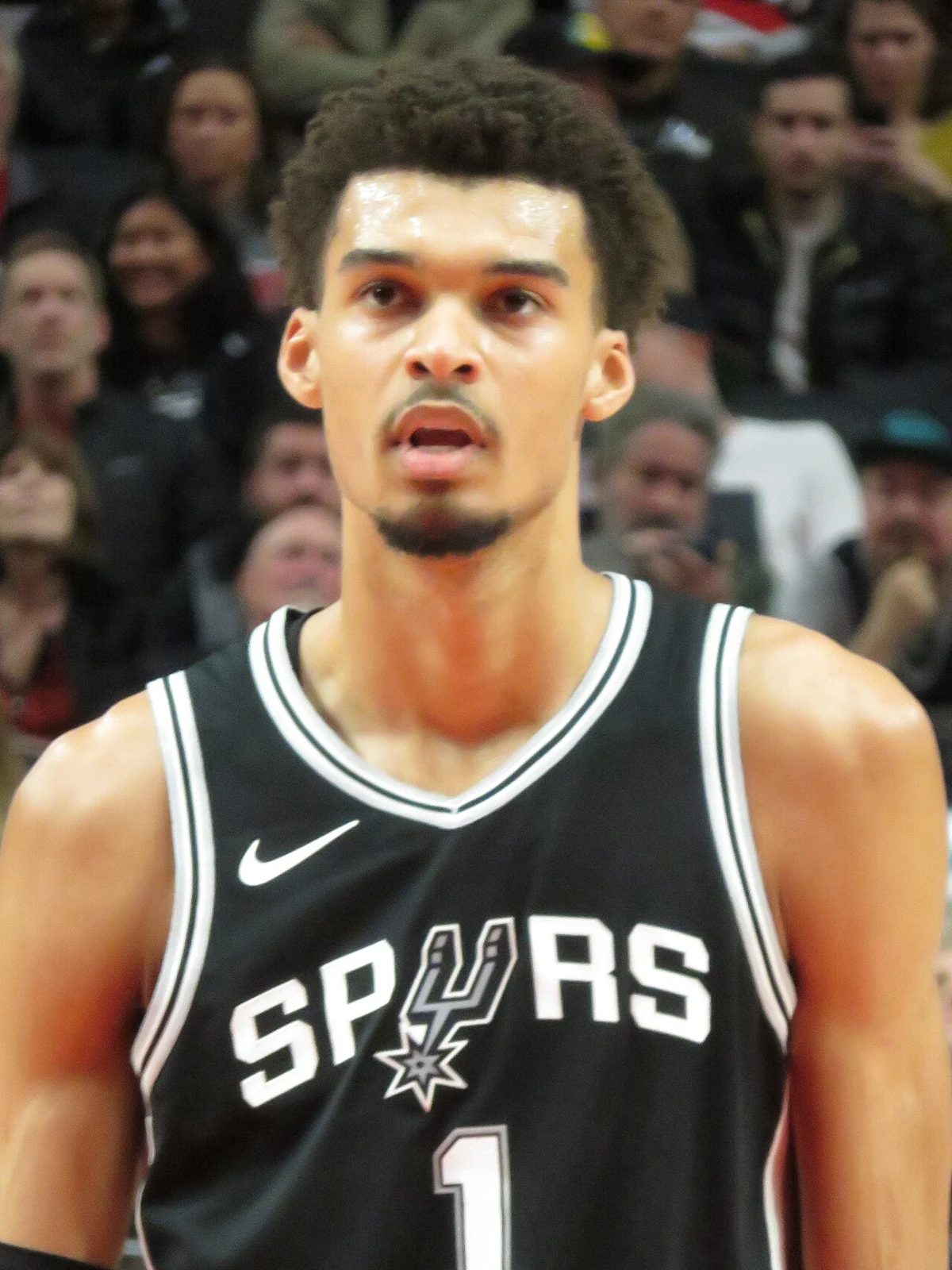
Victor Wembanyama scored 36 points and collected 14 rebounds as the San Antonio Spurs beat the Utah Jazz 117–111 in overtime at Delta Center on Wednesday, October 28, 2026. San Antonio improved to 3–2 with a third consecutive victory. Utah fell to 1–4 after taking the visitors through a game that remained level after four quarters. The NBA’s official match record confirms the result and the extra period.
The finish was less straightforward than the six-point margin suggests. Regulation ended at 105–105, and Brice Sensabaugh put Utah ahead with a three-pointer with 3:15 left in overtime. San Antonio then scored the next 12 points. The official play-by-play shows a sequence involving several different contributors, rather than a closing stretch carried solely by Wembanyama.
Devin Vassell answered Sensabaugh with a jumper at 2:53. Dylan Harper made two free throws at 2:24 to move the Spurs ahead 109–108. Vassell followed with a tip dunk after a missed Harper layup, and Wembanyama added a jumper with 1:34 remaining. Those possessions changed a three-point deficit into a five-point advantage without requiring San Antonio to make a three-pointer.
Wembanyama then stole a pass from Keyonte George and finished a dunk assisted by Vassell. Another George turnover, this time with De’Aaron Fox credited with the steal, led to Fox’s running dunk with 58.1 seconds left. That made it 117–108. Sensabaugh’s subsequent three reduced the gap but did not reverse the result. Utah’s two overtime baskets were both Sensabaugh threes; the Spurs’ 12 points arrived between them.
The teams had already passed up opportunities to settle the game in regulation. George’s driving layup tied it at 105 with 41.4 seconds left. Wembanyama missed a turnaround jumper, George missed a three that the official log credits Stephon Castle with blocking, and Fox missed the final long attempt. The decisive defensive sequence therefore began before overtime, even though the extra five minutes supplied the separation.
VIRVIB analysis: the useful contrast is between San Antonio’s unsuccessful final possessions in regulation and its response after falling behind again. The Spurs did not need to pretend the earlier misses had never happened. They generated a second chance through Vassell’s offensive rebound, converted Harper’s free throws and turned defensive disruption into points. The winning run was a combination of those actions, not simply a hot shooting spell.
Sources: NBA — official Spurs–Jazz box score, team totals and period scores ↗ · NBA — official chronological play-by-play ↗ · Reuters — independent October 29 match report ↗
Wembanyama’s 36 points, Vassell’s support and the possession advantage
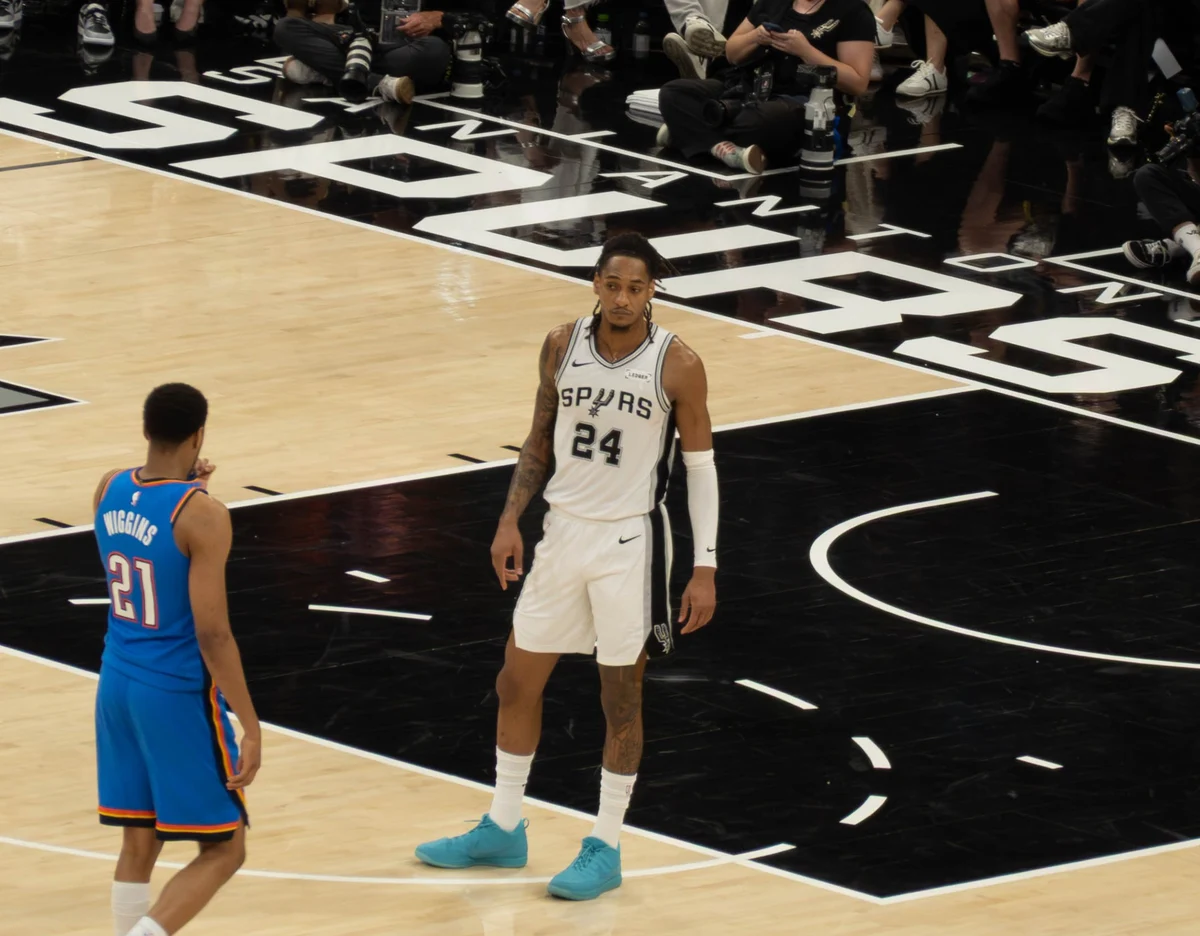
Wembanyama’s scoring came on 14-for-25 shooting, including four makes in 10 three-point attempts and a perfect four-for-four at the foul line. He also had five assists, three steals and two blocks. Perhaps the cleanest companion figure to his scoring was zero turnovers in 38 minutes and 48 seconds. The official box score gives a fuller account of his influence than the points-and-rebounds headline alone.
His 12 defensive rebounds mattered because they completed possessions after Utah misses. His five assists also show that his offensive contribution extended beyond his own attempts. Those figures do not identify every defensive assignment or prove that he created each teammate’s shot, but they do establish production in several distinct parts of the game. San Antonio finished plus-14 during his minutes, a single-game on-court differential rather than a standalone measure of individual value.
Vassell finished with 21 points, five rebounds, two assists and three steals. He made eight of 18 shots and all four free throws despite going one-for-seven from three. The late jumper and tip dunk were particularly useful because they supplied four overtime points before Wembanyama’s final two baskets. His assist on Wembanyama’s dunk added another direct link in the closing run.
Fox and Castle scored 14 apiece. Castle and Harper each recorded eight assists, while Harper added 13 points despite a four-for-17 shooting night. That mixed line is significant: inefficient shooting did not eliminate Harper’s ability to move the ball or contribute at the foul line. San Antonio’s five starters scored 98 of its 117 points, with Keldon Johnson adding nine from the bench.
The teams’ shooting percentages were close enough that possession management deserves attention. San Antonio made 44 of 101 field-goal attempts; Utah made 39 of 92. The Spurs committed 11 turnovers to the Jazz’s 19 and collected 15 offensive rebounds against Utah’s 12. The Jazz actually led total rebounds 53–51, demonstrating why the overall rebounding count can obscure differences in extra chances and lost possessions.
VIRVIB analysis: those numbers explain how a team making only 31.6% of its threes could still win. San Antonio had more field-goal attempts and fewer turnovers, while Wembanyama combined scoring volume with ball security. That is a firmer reading of this game than treating every poor outside-shooting night as either a crisis or proof of championship resilience. The result shows an effective alternative route to offense on this occasion; repeating it against different opponents remains a separate test.
Sources: NBA — official Spurs–Jazz box score, team totals and period scores ↗ · NBA — official chronological play-by-play ↗
What Utah’s resistance showed, and what comes next
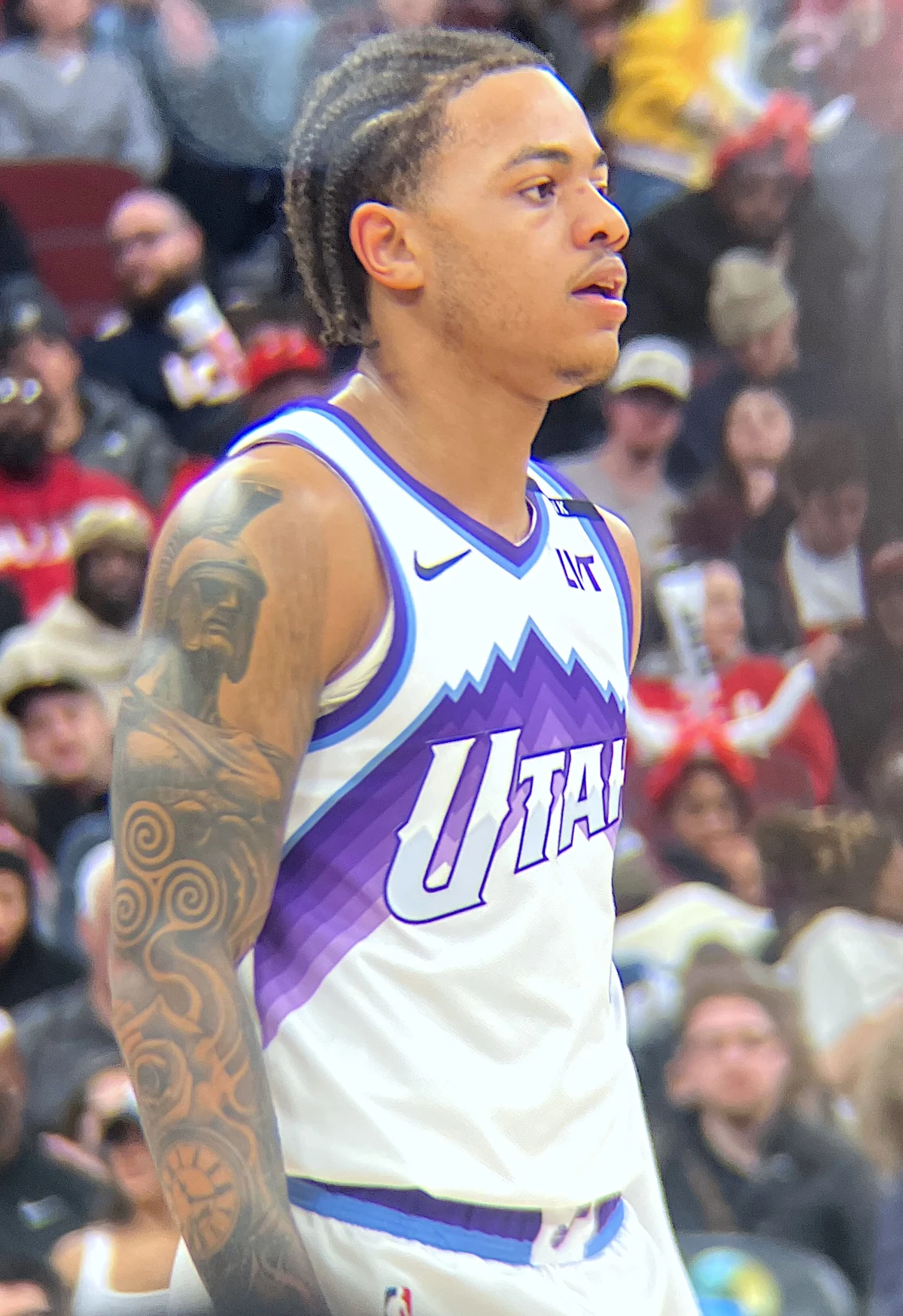
George led Utah with 31 points, making 11 of 27 shots and five of 12 threes. Ace Bailey supplied 19 points and six rebounds, while Darryn Peterson scored 18. Sensabaugh added 16 on five-for-nine shooting, including four of five from beyond the arc. Their production kept Utah competitive even as the late turnovers left the team without enough successful possessions to finish the game.
The Jazz’s early advantage was substantial. Utah won the first quarter 32–22 and led 55–51 at halftime. San Antonio’s 34-point third quarter brought the teams level at 85, and each scored 20 in the fourth. The period-by-period record shows a lead being gradually repaired, followed by a level fourth quarter. It does not support describing the entire second half as uninterrupted Spurs control.
Utah also had an advantage in three-point production, making 15 to San Antonio’s 12, and converted 18 of 19 free throws. Those strengths were insufficient because the Spurs made five more field goals overall. Utah’s 19 turnovers included five by George and six by Isaiah Collier. In a six-point overtime loss, that difficulty retaining the ball sits alongside the strong outside shooting as an essential part of the account.
The available roster provides further context. The NBA lists Lauri Markkanen, Jaren Jackson Jr. and Jusuf Nurkic among Utah’s inactive players for the game. The Associated Press independently reported the Jazz’s missing frontcourt regulars. Their absence matters when evaluating this particular matchup, but it cannot tell us what the score would have been with a different lineup. The players who were available still carried Utah into overtime.
The AP’s postgame schedule lists Minnesota visiting San Antonio next and Portland visiting Utah, both on Saturday, October 31. For the Spurs, the practical follow-up is whether the combination of Wembanyama’s efficiency, shared creation and pressure on opposing ballhandlers travels into the next matchup. Utah has a different immediate question: how to preserve the scoring its young guards generated while reducing the costly empty trips.
VIRVIB analysis: this was a meaningful road win with visible imperfections. San Antonio needed overtime, received uneven shooting from several starters and still found enough ways to finish ahead. Utah’s record worsened, but the detail of its scoring and first-half lead deserves inclusion. Wembanyama’s 36 points earned the headline; Vassell’s extra-possession finish and the late steals explain how that individual performance became a team victory.
Sources: NBA — official Spurs–Jazz box score, team totals and period scores ↗ · NBA — official chronological play-by-play ↗ · Associated Press via CBS Sports — October 28 recap and next fixtures ↗
Why this story is in the editionSpurs vs Jazz appeared in Google Trends U.S. Trending Now results checked October 29. No national ranking or search-volume claim is made.
Prepared with AI assistance. Source-based reporting checked on 2026-10-29. This article does not update automatically. Read our editorial standards.