What the FTC personalized pricing inquiry actually does

The Federal Trade Commission is demanding records from nine major companies to examine whether personal data influences the prices consumers see and the compensation offered to workers. Announced October 28, 2026, the inquiry reaches Walmart, Target, Delta, United, JetBlue, Uber, Lyft, DoorDash and Instacart. Its scope connects familiar purchases—groceries, airline tickets, rides and deliveries—with a less visible question: what information helps determine the offer on an individual person's screen?
The immediate action is an information-gathering study under Section 6(b) of the FTC Act. It is not a finding that any named company broke the law, and it does not establish that all nine use the same practices. The agency approved the orders by a 2–0 vote. Recipients have 45 days after receiving them to respond; that is a deadline tied to service of each order, not a single public response date that can safely be calculated from the announcement alone.
Companies have disputed suggestions that they set individualized prices using personal information. The Associated Press reported that Delta denied using, testing or planning fare products that target customers with individualized offers based on personal data. JetBlue said it does not use personal information or browsing history to set individual prices and instead bases fares on demand and seat availability. AP also noted Walmart's earlier public statement that it does not use income, shopping history or willingness to pay to determine prices and would not do so in the future.
Reuters independently confirmed the nine-company inquiry and reported that Instacart also said it does not use personalized pricing. Those responses are company positions, rather than the conclusions of the FTC's unfinished study. They matter because a request for records should not be written as though the requested records have already proved misconduct. The public announcement establishes what regulators want to investigate; the responses show where companies contest the premise or describe their practices differently.
VIRVIB analysis: the inquiry is consequential because it seeks evidence from businesses that directly sell products or arrange work, rather than relying only on descriptions of pricing technology. A familiar brand name or an artificial-intelligence label cannot answer the central question. The relevant issue is the connection between a particular data input and a particular offer, including whether customers or workers understand that connection. That requires records of how systems operate, not simply a comparison of two screenshots.
Sources: FTC — October 28, 2026 inquiry announcement ↗ · Associated Press via ABC News — independent reporting and company responses ↗ · Reuters — independent reporting and Instacart response ↗ · FTC — Section 6(b) study and enforcement authority ↗
Why the orders examine job offers as well as consumer prices
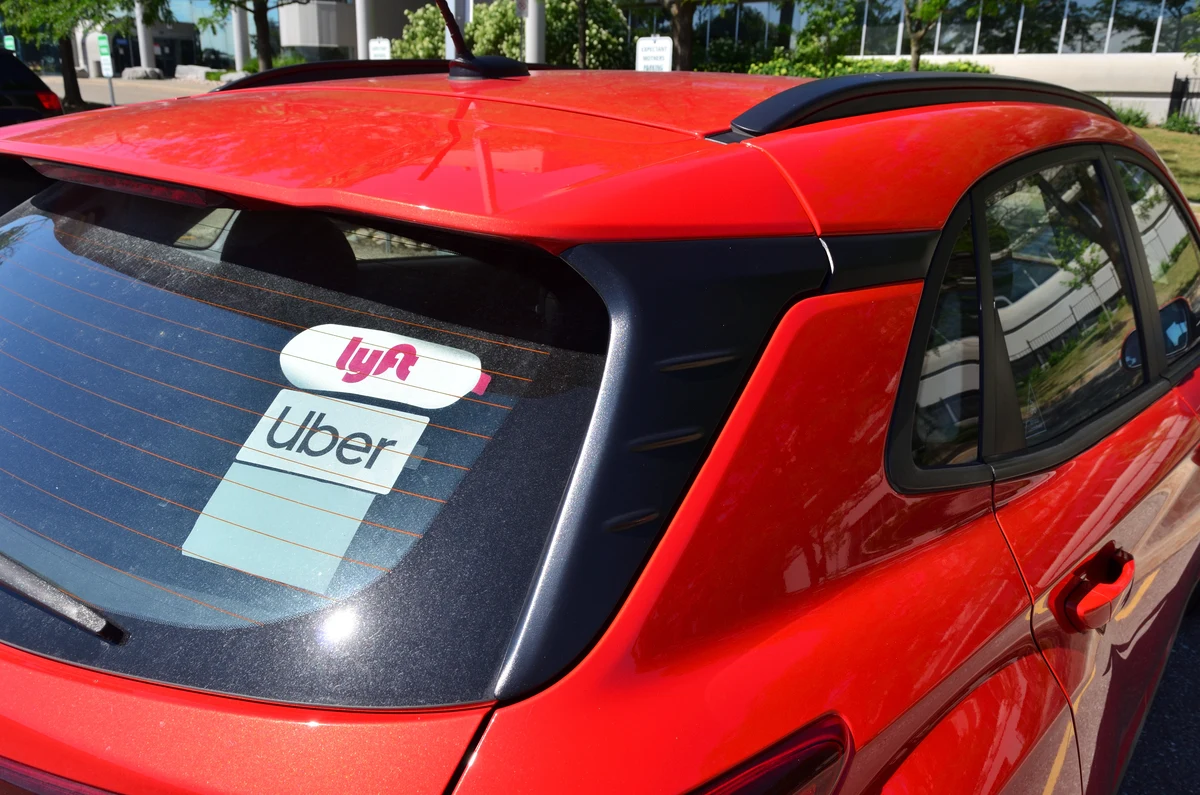
The published special-order template makes the worker side concrete. It asks about methods that use personal information to assign jobs and set compensation, as well as methods that influence consumer pricing. Its requests cover the tools, inputs, steps and overrides involved. For compensation, the template also asks how a customer's payment is allocated between the worker and the company. The default period covered begins January 1, 2023, and runs through full compliance with the order.
The instructions demand a sworn report supervised or prepared by a company official. They also require explanations when answers are incomplete. Confidential commercial or financial material is subject to protections, with aggregate or anonymous reporting described in the template. These procedural details help distinguish a compulsory records request from a voluntary public-relations questionnaire. They do not mean that every underlying document will become immediately available to consumers or that a public report has a guaranteed publication date.
VIRVIB analysis: price, job allocation and pay are three different decisions. A rider sees a trip price; a driver may see an offer to perform the trip; the platform determines which driver receives that offer. Studying only the customer's bill would leave the other decisions unexplained. Even when all three relate to one transaction, evidence about one does not automatically establish how the others were calculated. That is why the separation in the order is useful for understanding its scope.
The same caution applies to comparisons between workers. Two offers with different amounts may involve different distances, timing or tasks. To establish that personal information caused a difference, investigators need to identify the relevant inputs and account for other differences. Conversely, a company-wide description of a pay formula may not reveal every input used in a particular decision. The inquiry can test those competing explanations against operational records rather than treating either a worker's suspicion or a company's general assurance as conclusive.
For consumers, changing prices and personalized prices should also be distinguished. A broadly available fare can change when seats become scarce without being individually tailored to a traveler's profile. A loyalty discount may have an explicit eligibility condition. The question raised by personalized pricing is whether information about the person helps determine the price or offer, and what that person was told. Those distinctions allow scrutiny of data-driven decisions without declaring every discount, price change or algorithm unlawful.
Sources: FTC — original 15-page special-order template ↗ · FTC — August 2026 proposed personalized-pricing policy ↗
The earlier study, the disclosure debate and what comes next

The FTC's January 2025 preliminary surveillance-pricing findings provide background, but they are not findings against the nine companies named this week. That earlier work examined documents from pricing intermediaries, including Mastercard, Accenture, PROS, Bloomreach, Revionics and McKinsey. The agency described tools capable of using information such as location, browsing patterns and shopping behavior to tailor prices, promotions or the products shown to a shopper.
The earlier publication also warned that its examples were hypothetical because confidential information had to be aggregated or anonymized. That qualification matters when striking examples circulate online. A hypothetical shopper shown a more expensive product is not a documented incident involving a particular named retailer. The 2025 findings help explain why the subject attracted regulatory attention; they should not be repurposed as proof that Walmart, an airline or a delivery platform committed a specific act in 2026.
A separate August 2026 FTC proposal addressed disclosure of personalized pricing. The agency said undisclosed use of personal information to set a consumer-specific price could raise concerns under the laws it enforces. Chairman Andrew Ferguson also acknowledged that the FTC does not have authority to ban personalized pricing in every circumstance. That combination places transparency near the center of the debate: what a business represents about a price may matter alongside the data and method used to produce it.
The agency's general explanation of its authority reinforces the procedural distinction. Section 6(b) permits broad studies without a specific law-enforcement purpose. Recipients can seek to limit or quash an order, and the commission can seek court enforcement of compliance. Those powers allow the FTC to obtain information; they do not themselves resolve whether a business practice is deceptive or unfair. Any later enforcement action would be a separate development requiring its own evidence and legal process.
VIRVIB analysis: an informative eventual report would help readers distinguish advertised discounts, ordinary market-driven price changes and offers influenced by personal profiles. It would also explain worker-facing decisions separately from consumer-facing ones. The current record supplies the questions and the demand for evidence, not a verified estimate of how much any household has lost or any worker has been underpaid. No such amount can responsibly be inferred from the announcement.
The next developments to watch are the companies' responses, any disputes over the orders and the FTC's eventual public findings. For now, the documented change is federal scrutiny of how personal data enters everyday commercial decisions. The study may clarify those systems, but neither refunds, a nationwide pricing ban nor a specific enforcement outcome has been established by these orders.
Sources: FTC — January 2025 preliminary findings and their limitations ↗ · FTC — August 2026 proposed personalized-pricing policy ↗ · FTC — Section 6(b) study and enforcement authority ↗
Why this story is in the editionGoogle Trends U.S. RSS was checked October 29. This topic was selected from corroborated current U.S. consumer news rather than represented as a listed Google Trends query; no ranking or search-volume claim is made.
Prepared with AI assistance. Source-based reporting checked on 2026-10-29. This article does not update automatically. Read our editorial standards.