A neck injury ends Tokyo after the ranking milestone
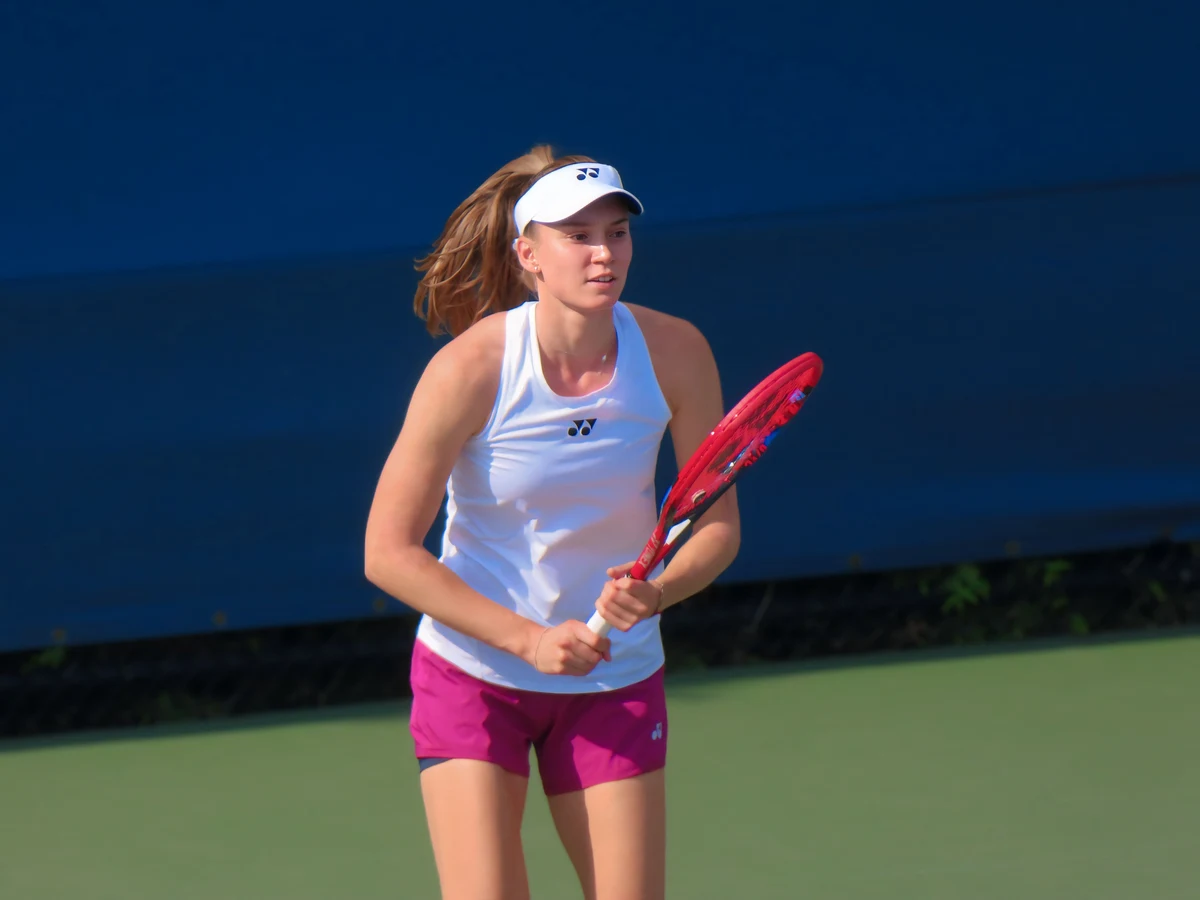
Elena Rybakina withdrew from her Tokyo quarter-final against Leylah Fernandez on October 30, 2026, because of a neck injury, a day after securing the year-end No. 1 ranking. Fernandez advanced by walkover. The tournament’s official withdrawal notice records an injury-related withdrawal on October 30; Reuters independently identifies the neck injury and confirms the quarter-final outcome. No completed match score should be attached to that walkover.
Reuters reports that Rybakina described inflammation and pain in her neck in a statement published by the WTA. AFP separately reported her explanation to the Tokyo crowd and her intention to return for the WTA Finals in Indian Wells. Those are accounts of her symptoms and plans, not a published medical clearance or a guarantee that she will be fully fit for the next event.
The withdrawal changes her immediate tournament schedule without reversing the ranking milestone already secured. Her Tokyo campaign ended before the quarter-final could be played, while the year-end No. 1 honor remains established by the WTA’s October 29 announcement. For readers following her toward California, the new question is her readiness to compete there, rather than whether she still needs to win Tokyo to finish the season on top.
Elena Rybakina secured the year-end world No. 1 singles ranking for the first time on October 29, 2026, beating Yulia Putintseva 6-2, 6-3 in the second round of the Toray Pan Pacific Open in Tokyo. The WTA confirmed the distinction, and Reuters independently reported the result. The season still has tennis to play, including the WTA Finals in California, but the contest for the year-end top position has been settled.
The achievement carries two separate pieces of history. The WTA identifies Rybakina as the 17th woman to finish a season at No. 1 and the first player representing Kazakhstan, in either singles or doubles, to secure a year-end No. 1 ranking.
Thursday’s match was a controlled route to that milestone. The WTA reports that Rybakina needed 70 minutes, held serve throughout and saved the only break point she faced in the final game. She finished with her sixth ace. The straight-set score tells part of the story; the absence of a lost service game helps explain why Putintseva could not turn isolated opportunities into a sustained challenge.
This was not the day Rybakina first became world No. 1. The WTA announced on September 9 that she had secured her initial ascent, with the updated ranking taking effect on September 14 after the US Open. October 29 established a later distinction: she would also hold the leading position at the end of the season. Keeping those dates separate avoids turning a new achievement into a second announcement of the same event.
Reuters reported that Rybakina arrived in Tokyo needing one more victory during the remainder of the year to put the top position beyond Aryna Sabalenka’s reach. She had a first-round bye, so the Putintseva match was her opening appearance even though it belonged to the tournament’s second round. That explains why descriptions of an opening win and a second-round win can both be accurate. The result secured the ranking honor; it did not award her the Tokyo tournament title.
Sources: WTA — October 29 year-end No. 1 announcement ↗ · WTA — October 29 Tokyo match report ↗ · Reuters via WHBL — independent October 29 confirmation ↗ · WTA — September 9 announcement of first No. 1 ranking ↗ · Google Trends — United States trending searches ↗ · Toray Pan Pacific Open — official withdrawal notice, October 30 entry ↗ · Reuters via CNA — October 30 injury and walkover report ↗ · AFP via SuperSport — October 30 remarks and Finals intention ↗
From Wimbledon to two major titles in 2026
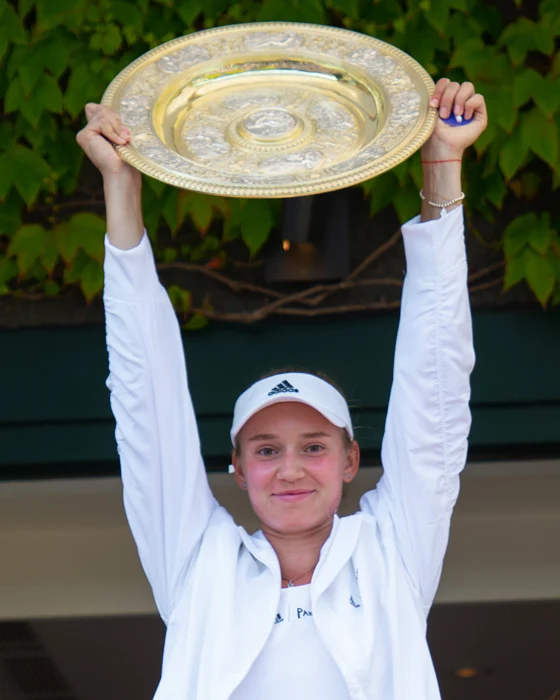
Rybakina’s first Grand Slam singles championship came at Wimbledon in 2022. She recovered from losing the opening set to beat Ons Jabeur 3-6, 6-2, 6-2, becoming the first player representing Kazakhstan to win a major singles title. The archival trophy photograph in this section belongs to that July 2022 victory, not to the Tokyo match or the forthcoming presentation in California.
Her second major arrived at the Australian Open on January 31, 2026. The tournament’s official report records a 6-4, 4-6, 6-4 victory over Sabalenka in a final lasting two hours and 18 minutes. It was a reversal of their 2023 Melbourne championship match, which Sabalenka had won. Rybakina entered the 2026 final as the fifth seed and left as the first Kazakh player to win the Australian Open singles crown.
The deciding set made that result more than a straightforward continuation of her early lead. After Sabalenka moved ahead in the third, Rybakina recovered and earned the break that gave her a 4-3 advantage. Melbourne’s account describes the final as a contest that required her to regain control after the second-set setback. It provides a concrete example of the competitive recovery behind the season’s headline achievements, rather than an assumption that a champion wins every match comfortably.
At the US Open on September 12, she again beat Sabalenka in a major final, this time 6-4, 5-7, 6-2. The USTA’s official report confirms that it was Rybakina’s first New York title and ended Sabalenka’s bid for a third consecutive championship there. This was her third career major overall, with two of those three titles coming in the same season. The title and her move to No. 1 converged during the New York fortnight, but the ranking announcement had already been made before the final.
October supplied another important result. On October 25, Rybakina defeated Leylah Fernandez 6-2, 6-2 in the Ningbo final. The WTA reports that she held every service game and broke twice in each set during the 76-minute match. Ningbo was her fourth title of 2026, alongside the Australian Open, Stuttgart and the US Open, and her first successful defense of a tour title. It also gave her a first trophy as the reigning No. 1 before she traveled to Tokyo.
The sequence matters more than a single celebratory label: a major in Melbourne, another title on Stuttgart’s clay, a major in New York and a successful defense in Ningbo. Those results show that her season was not built around one isolated fortnight. At the same time, the record does not erase the setbacks that Reuters describes after New York, including an opening defeat in Beijing and a leg injury that kept her out of Wuhan.
Sources: Australian Open — January 31 championship report ↗ · US Open — September 12 final report ↗ · WTA — October 25 Ningbo final report ↗ · WTA — 2022 Wimbledon championship report ↗ · Reuters via WHBL — independent October 29 confirmation ↗
What remains at the WTA Finals in Indian Wells
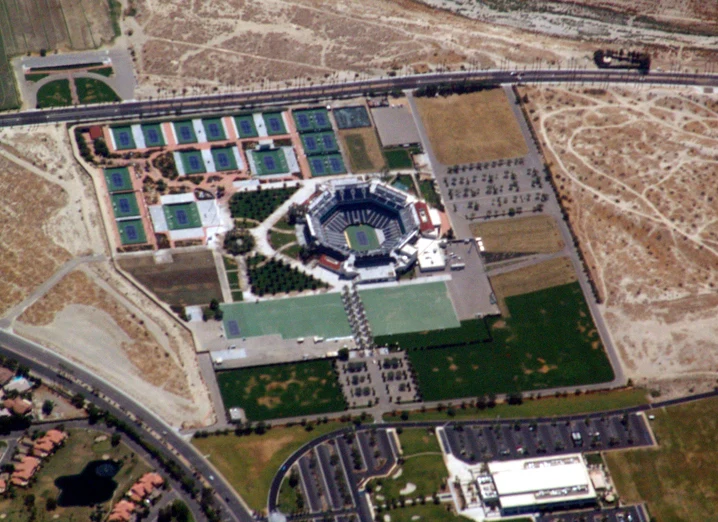
For U.S. tennis followers, the next major setting is Indian Wells Tennis Garden in California. The WTA’s official tournament page lists the 2026 Finals for November 8–15 on hard courts, with eight singles players and eight doubles teams. Its published format begins with two groups of four; the top two players or teams in each group advance to the knockout stage. That structure differs from a draw in which one opening defeat immediately ends a player’s tournament.
Rybakina’s year-end ranking honor and the Finals championship are separate prizes. The WTA says she will receive the Chris Evert WTA No. 1 Trophy during a special presentation at Indian Wells. Winning that distinction does not pre-award the tournament’s singles title, for which the official page identifies the Billie Jean King Trophy. Her rivals still have a championship to pursue, and she still has matches to win if she is to finish the competitive schedule with another trophy.
If she competes, she will bring experience of winning the season-ending event. The WTA’s September announcement records her undefeated run to the 2025 Finals title. That earlier success helps explain the title-defense storyline in Reuters’ reporting, but it supplies no guarantee about the 2026 outcome. The forthcoming event has its own venue, field, group matches and knockout rounds.
VIRVIB analysis: the useful distinction is between what the results have already established and what the remaining competition can still decide. Tokyo resolved the year-end No. 1 question. The Finals will determine their own champion. The completed October 29 match, the subsequent injury withdrawal and the official November schedule establish three different facts. Her stated intention to compete in California leaves her physical readiness to be assessed closer to the event. The ranking honor has been secured; the remaining championship still requires matches to be played.
Sources: WTA — official 2026 Finals dates, venue and format ↗ · WTA — October 29 year-end No. 1 announcement ↗ · WTA — September 9 announcement of first No. 1 ranking ↗ · Reuters via WHBL — independent October 29 confirmation ↗ · Reuters via CNA — October 30 injury and walkover report ↗ · AFP via SuperSport — October 30 remarks and Finals intention ↗
Why this story is in the editionGoogle Trends U.S. RSS retrieved October 30, 2026 included “rybakina,” timestamped October 29 at 23:10 PDT, alongside Reuters and BBC news links. This establishes current search interest, not a national ranking or exact volume. Fresh U.S. Trends reviewed again at this update; this is a substantive follow-up to the existing tennis report, not a claim that it is the current top search.
Prepared with AI assistance. Source-based reporting checked on 2026-10-31. This article does not update automatically. Read our editorial standards.