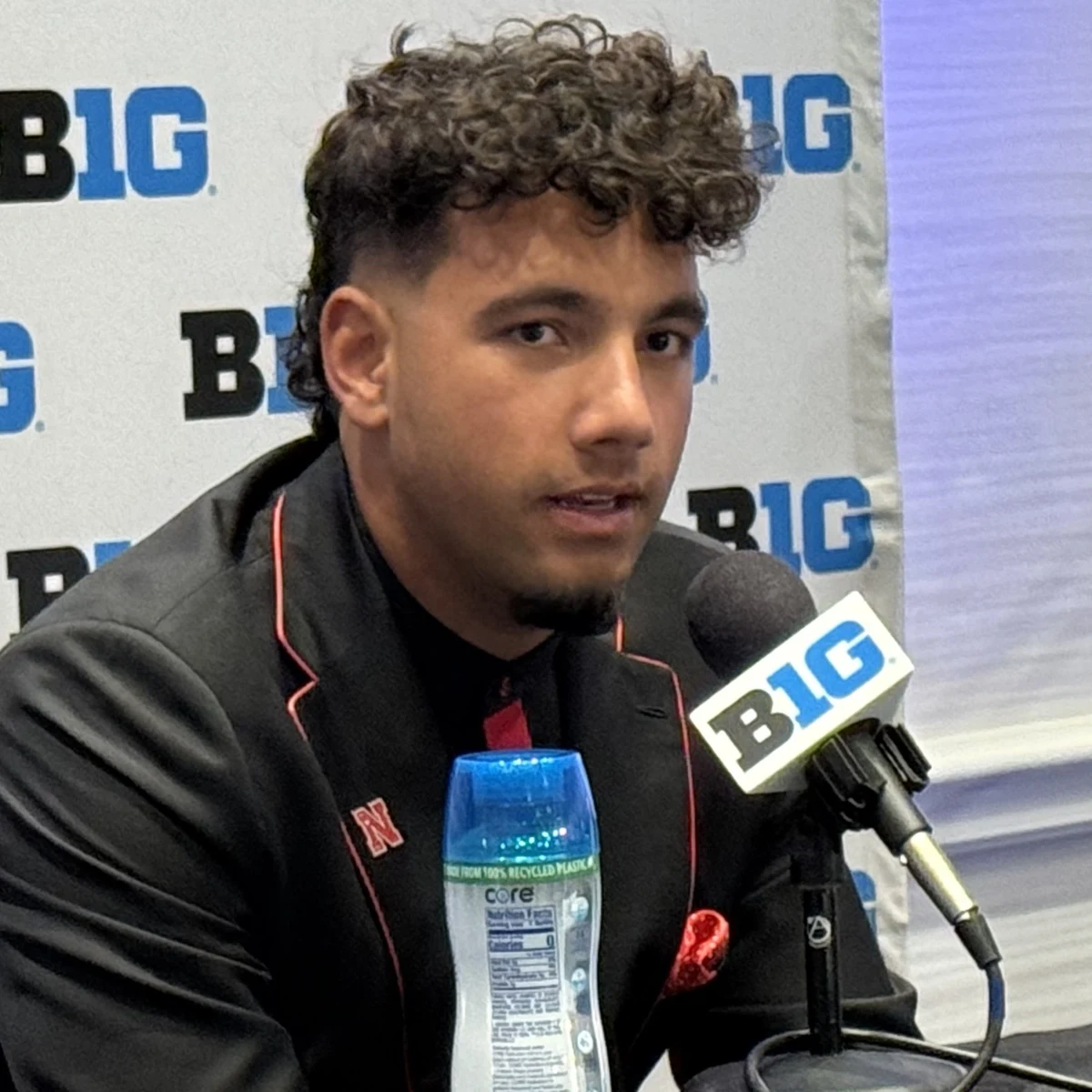
CJ Carr and Micah Gilbert put Notre Dame ahead
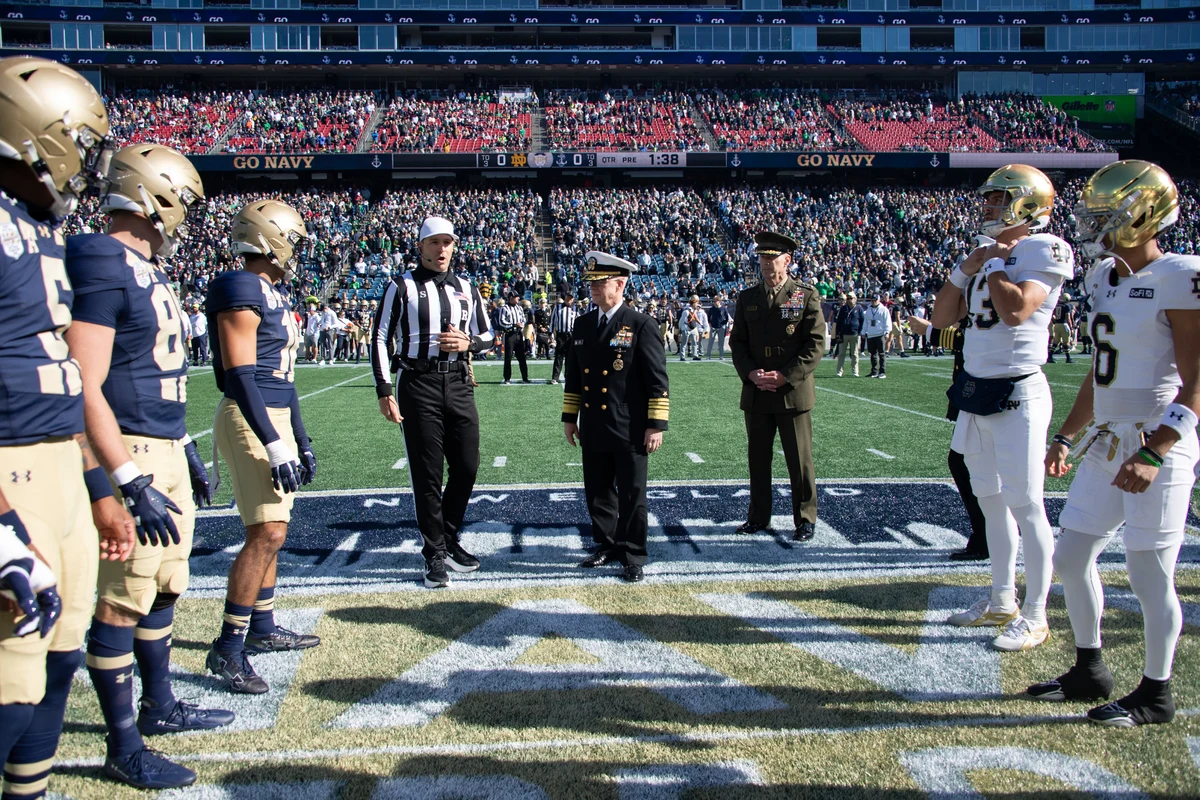
Notre Dame beat Miami 31–24 in South Bend on November 7, ending the Hurricanes’ unbeaten start and giving the Fighting Irish a victory over the team leading both the AP poll and the College Football Playoff rankings. CJ Carr threw for 319 yards and three touchdowns. A late defensive stop kept Miami from completing a comeback after Notre Dame had led by 21 points.
Both teams finished the night 8–1. That shared record conceals the difference in their positions entering the game. Notre Dame was fourth in the AP Top 25 but eleventh in the playoff committee’s first rankings, released November 3. Miami occupied first place in both. The result supplies a new head-to-head comparison before the committee meets again, without settling either team’s postseason destination.
Carr completed 29 of 40 passes without an interception, according to Notre Dame’s report and the official game record. Micah Gilbert caught nine passes for 98 yards and two touchdowns. Jordan Faison supplied Carr’s other touchdown reception. Those contributions gave the Irish an advantage before Miami’s passing attack began to generate second-half scores.
The scoring sequence shows how Notre Dame built that advantage. Spencer Porath opened with a field goal, and Carr found Faison for a 27-yard touchdown early in the second quarter. Miami answered with Jake Weinberg’s field goal. Gilbert then scored on an 18-yard reception with 29 seconds remaining before halftime, leaving the Hurricanes behind 17–3.
The timing mattered as much as the total. Miami had reduced its deficit to one touchdown, but Notre Dame restored a two-score separation before the break. The Irish did not need to rely entirely on a second-half response to protect a narrow lead. Carr and Gilbert had already changed the starting conditions for the remaining two quarters.
Gilbert’s second touchdown, from 20 yards early in the third quarter, made it 24–3. Notre Dame’s passing game had produced all three touchdowns to that point. Carr’s final completion rate was 72.5 percent, calculated from his 29 completions in 40 attempts. That figure describes this game’s efficiency, rather than a claim about his season average or standing among other quarterbacks.
The win also reversed the outcome of these teams’ previous meeting. Miami won 27–24 at Hard Rock Stadium in 2025. Notre Dame’s November 6 preview documented that result and its 18–9–1 advantage in the series before Saturday. Adding this victory makes the series 19–9–1, a calculation from the pregame record rather than a separately updated historical table.
Miami’s rally ends with a fourth-down incompletion
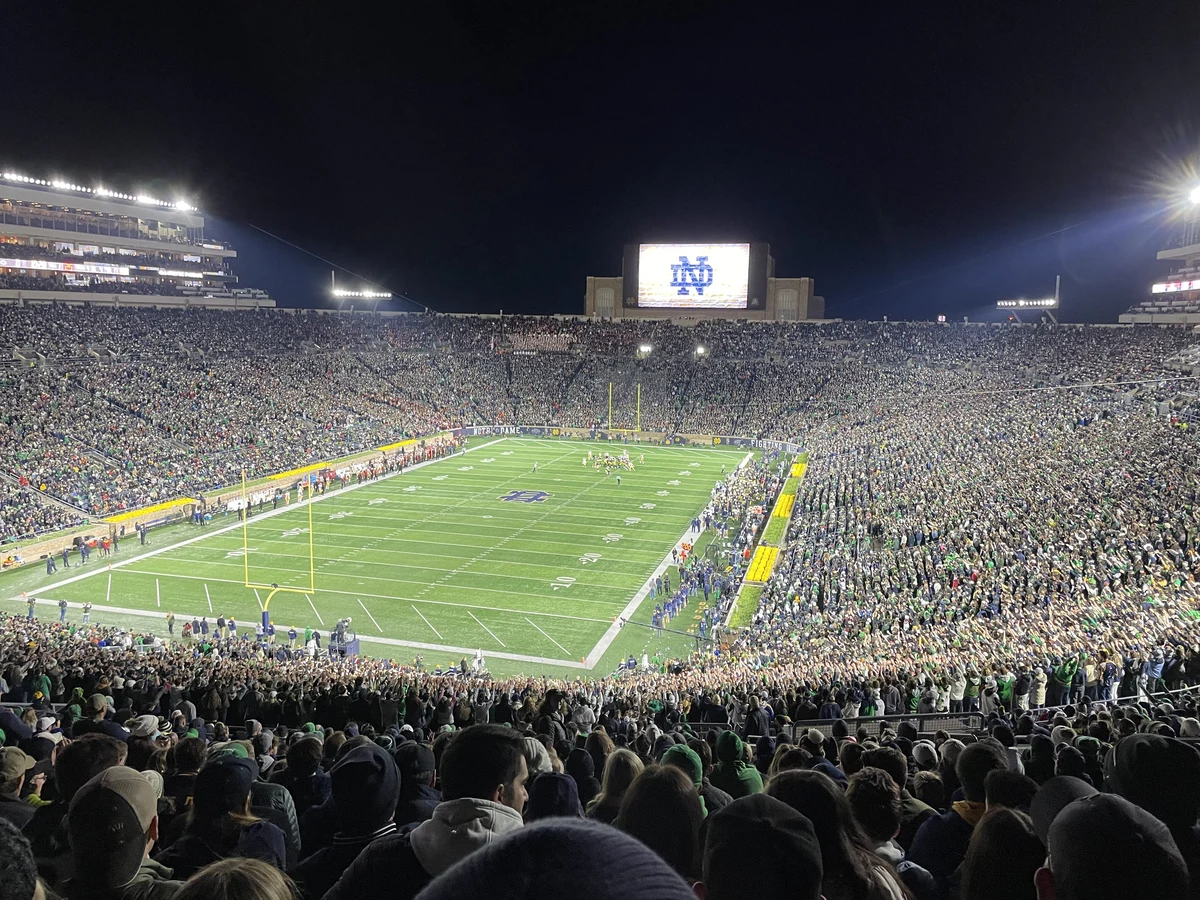
Miami scored 21 points after halftime, compared with Notre Dame’s 14, the Hurricanes’ own account notes. Darian Mensah threw touchdown passes to Elija Lofton and Cooper Barkate as Miami cut the deficit from 24–3 to 24–17. The rally forced Notre Dame to find another scoring drive and then defend a lead that had once looked much safer.
The Hurricanes’ first-half goal-line possession helps explain the difficulty of that pursuit. Miami reached first-and-goal at the Notre Dame 1-yard line but settled for a field goal after three unsuccessful running plays. A touchdown there would have changed the arithmetic. The actual possession yielded three points, leaving Miami with fewer opportunities to absorb another Notre Dame score.
Luke Talich interrupted Miami’s next attempt to draw level with an interception near midfield. Notre Dame turned the possession into a one-yard Nolan James Jr. touchdown run early in the fourth quarter. Miami answered again when Mensah connected with Barkate for another touchdown, bringing the score to 31–24 with 9:53 remaining.
That exchange is central to understanding why the comeback stopped short. Miami was generating touchdowns, but Notre Dame’s response after the interception meant the Hurricanes still needed another. The third-quarter scoring burst had reduced the deficit without erasing it. Each subsequent Irish possession could therefore affect Miami’s remaining time as well as the score.
The decisive late opportunity came on fourth down with Miami inside Notre Dame territory. Mensah targeted Lofton in the end zone. Talich knocked the ball away, and officials ruled the pass incomplete. The official play-by-play records a review and an upheld ruling, followed by Notre Dame taking possession with 3:36 left. Associated Press reporting independently describes the same sequence.
The ruling did not cancel a completed tying touchdown. The official result of the play was an incompletion and a turnover on downs. Even a touchdown would first have made the score 31–30, with an extra point or a two-point attempt still to follow. That distinction separates the recorded decision from assumptions about how the rest of the possession would have ended.
James then gained a first down on Notre Dame’s next possession, helping reduce the time left for Miami. The Irish eventually punted, and the Hurricanes received one last possession inside the final minute. Notre Dame held the seven-point margin. The ending required both the defensive stop and the offense’s subsequent use of the clock, rather than a single play automatically ending the game.
What the win means for the College Football Playoff
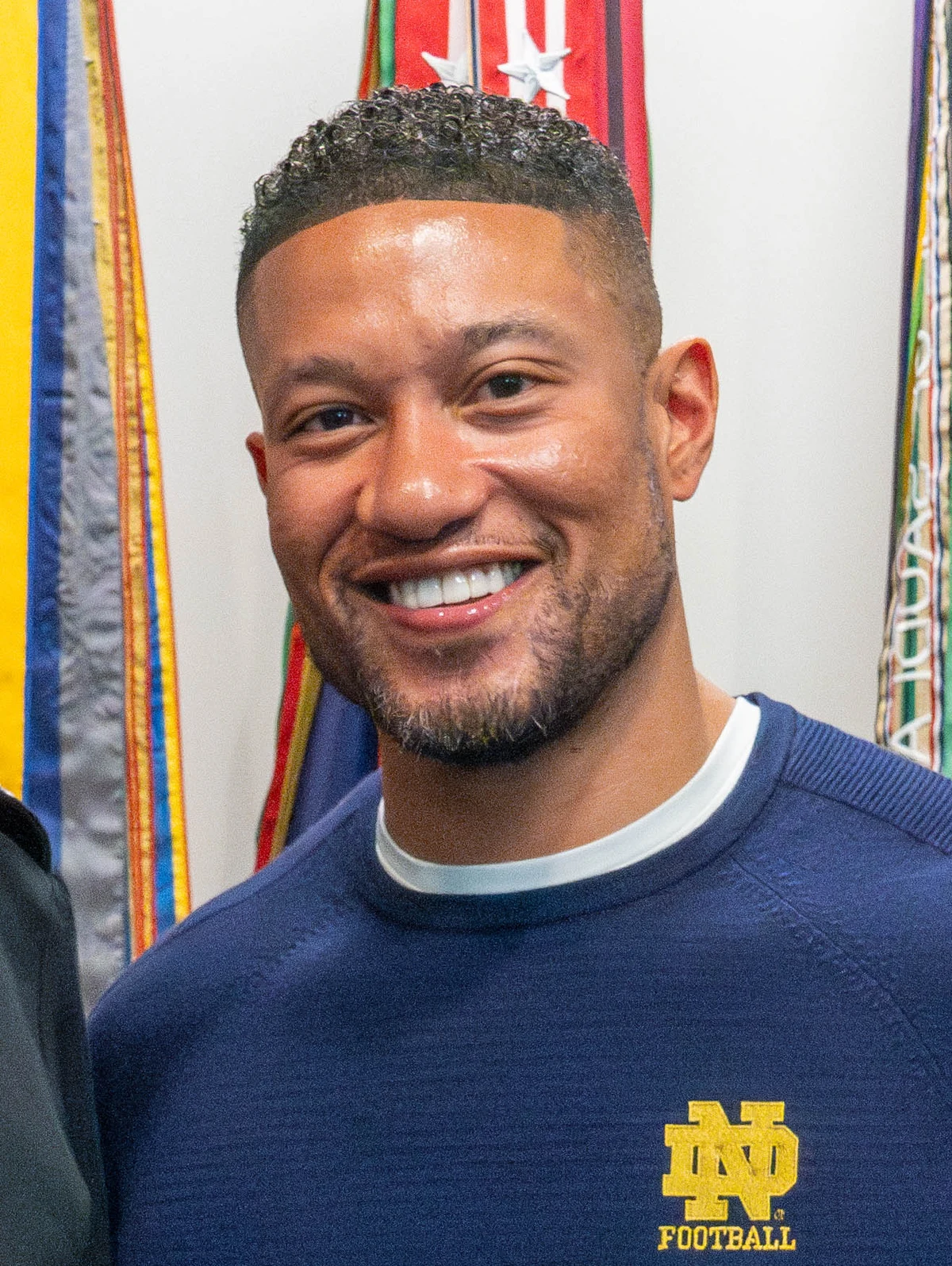
The ranking attached to Notre Dame depends on which list a reader is consulting. The AP poll placed the Irish fourth entering Saturday. The playoff committee placed them eleventh in its November 3 release, based on games through October 31. Neither number should be presented as a new ranking produced by this result. The committee’s next scheduled announcement is November 10.
Its published protocol explains why this matchup will matter to that discussion. When comparing teams, members consider schedule strength, head-to-head results, outcomes against common opponents and relevant circumstances involving unavailable players or coaches. There is no published rule that automatically awards a particular jump for defeating the previous No. 1. The whole season remains part of the comparison.
Notre Dame does have a specific route under the current selection rules. The CFP states that the Irish will be included if they finish among the top 12 in the final committee rankings. That is a condition attached to the final list, not a playoff berth secured by holding eleventh place in early November. A win over Miami strengthens the evidence available to the committee while leaving that final requirement in place.
For Miami, the loss removes its unbeaten record but does not by itself establish exclusion from the 12-team field. The selection process also provides places for specified conference champions and uses the final rankings to complete the bracket. With games still to play, neither a definitive seed nor a first-round opponent can be assigned from Saturday’s score.
The rivalry gives Notre Dame another historical comparison. Its pregame notes identified the November 7, 2020 double-overtime victory over Clemson as its most recent win against an AP No. 1. Saturday’s victory arrived exactly six years later. The university described it as the program’s tenth win over a top-ranked team, placing Carr’s performance within a record extending beyond this season’s playoff argument.
The immediate schedule returns both programs to work on November 14. Notre Dame is due to host Boston College, while Miami hosts Duke, according to the AP’s postgame report. Before those games, the November 10 committee rankings will provide the first official indication of how the Miami result affects the postseason comparison. Saturday established a 31–24 Notre Dame win. The rankings and remaining schedule will determine what that win ultimately earns.
View sources
Source publication or schedule date: November 7 U.S. game date. Final team reports, ACC play-by-play, AP independent report and current CFP rules checked November 8. Photographs archival.
- Notre Dame Athletics — November 7 official game report
- Notre Dame / WMT Statistics — official final score and game record
- Miami Athletics — team account of the comeback and goal-line possession
- Associated Press / ClickOrlando — independent November 7 game report
- College Football Playoff — first 2026 rankings and next announcement
- College Football Playoff — selection protocol and Notre Dame qualification rule
- Notre Dame Athletics — November 6 series history and stadium notes
- College Football Playoff — 2026–27 bracket and final selection date
Prepared with AI assistance. Source-based reporting checked on 2026-11-08. This article does not update automatically. Read our editorial standards.