What CENTCOM says happened to Huda
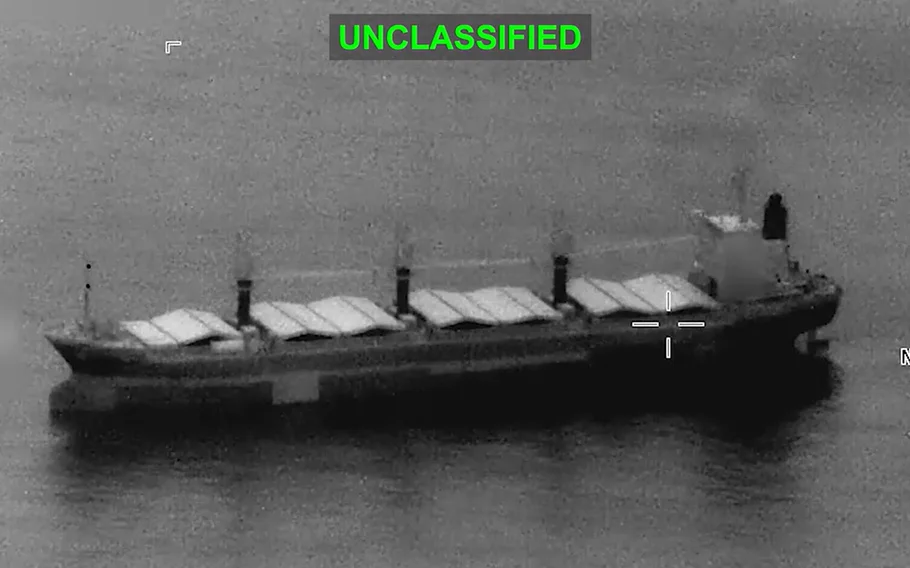
A U.S. military aircraft disabled the commercial cargo ship M/V Huda in the Gulf of Oman on November 7, 2026, according to U.S. Central Command. The announcement came on the same day that the command established Task Force Iron Gate, a Tampa-based team focused on Iran’s land routes and the Caspian Sea. Together, the developments describe pressure on separate parts of Iran’s transport network: a military enforcement action at sea and a coordination effort beyond it.
CENTCOM identified Huda as a St. Kitts-flagged vessel. It said the ship had visited an Iranian port and was attempting to leave regional waters when its civilian crew ignored repeated warnings and tried to violate the blockade. According to the command, U.S. forces directed crew members to leave the areas being targeted before an aircraft fired precision munitions at the stern. The command described the result as disabling the ship. It did not describe the vessel as sunk.
Stars and Stripes reported the operation and identified the ship in imagery supplied by CENTCOM. Reuters also reported the announcement on November 7. These reports corroborate that the military publicly announced the operation. They should not be treated as separate eyewitness accounts establishing every exchange between U.S. forces and the civilian crew. The claim that Huda attempted to breach the blockade remains attributed to the command that ordered its enforcement.
The release does not state the crew’s condition or provide a detailed assessment of damage. That leaves a gap between the operational description and the human consequences. An instruction to leave targeted spaces is not, on its own, evidence that every crew member reached safety. Nor does disabling propulsion establish what happened to the cargo, who would arrange assistance or when the vessel could move again.
Both the event and the statement are dated November 7. Reports appearing on November 8 concern that operation, rather than establishing a second strike. The distinction matters in a developing maritime story, where photographs and descriptions of earlier encounters can circulate alongside a new announcement. The image reproduced in this section is specifically credited to CENTCOM’s Huda footage, rather than a different ship attacked during the wider conflict.
How Huda fits the blockade’s earlier enforcement record
The Huda announcement follows a documented October 10 encounter involving another commercial ship. In that earlier statement, CENTCOM named the Panama-flagged M/V Ocean Molica, also known as Arika Sun. It said a fighter jet struck the stern with a precision munition after the ship attempted to transit regional waters following departure from an Iranian port. The command said the strike disabled the ship’s propulsion without harming its crew. Reuters reported the account that day and said it could not immediately reach the operator for comment.
That earlier assurance about crew safety applies to Ocean Molica. It cannot be carried over to Huda, whose November 7 release does not give the same assurance. The two statements concern different vessels, different flags and operations separated by twenty-eight days. Similar language about the stern and propulsion does not make their outcomes interchangeable.
The releases also provide a limited numerical comparison. On October 10, CENTCOM said four commercial vessels had been disabled and 135 ships turned around during the enforcement period following the blockade’s July 14 resumption. On November 7, the command reported five merchant ships disabled and 147 commercial vessels redirected since July. Comparing those published totals gives an increase of one disabled merchant ship and twelve redirected vessels. These are changes in CENTCOM’s reported cumulative figures, not an independently audited shipping census.
VIRVIB analysis: the totals distinguish two outcomes that headlines can compress into a single description of interdiction. Redirection means a vessel complied with instructions to change course. Disabling a ship involves force that leaves it unable to proceed as intended. A count of redirected ships therefore cannot be presented as a count of ships struck. Equally, these totals do not disclose the full number of vessels that approached the area or attempted a transit, so they cannot establish a compliance rate.
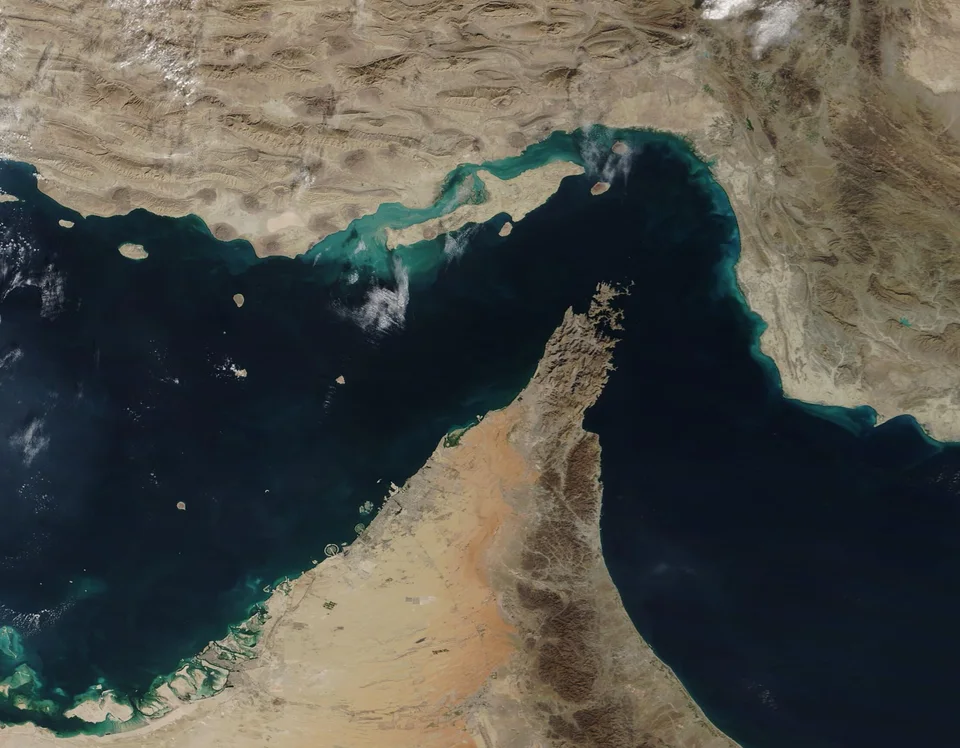
The geography explains why the location remains central to the reporting. NASA’s archived satellite view shows the Strait of Hormuz between Iran and the Arabian Peninsula, linking the Persian Gulf with the Gulf of Oman. The image dates to December 2, 2020. It supplies geographic context, not a position fix for Huda or a picture of the November operation. Neither the satellite photograph nor the cumulative enforcement figures establish the vessel’s precise location when it was struck.
What Task Force Iron Gate adds, and what it does not establish
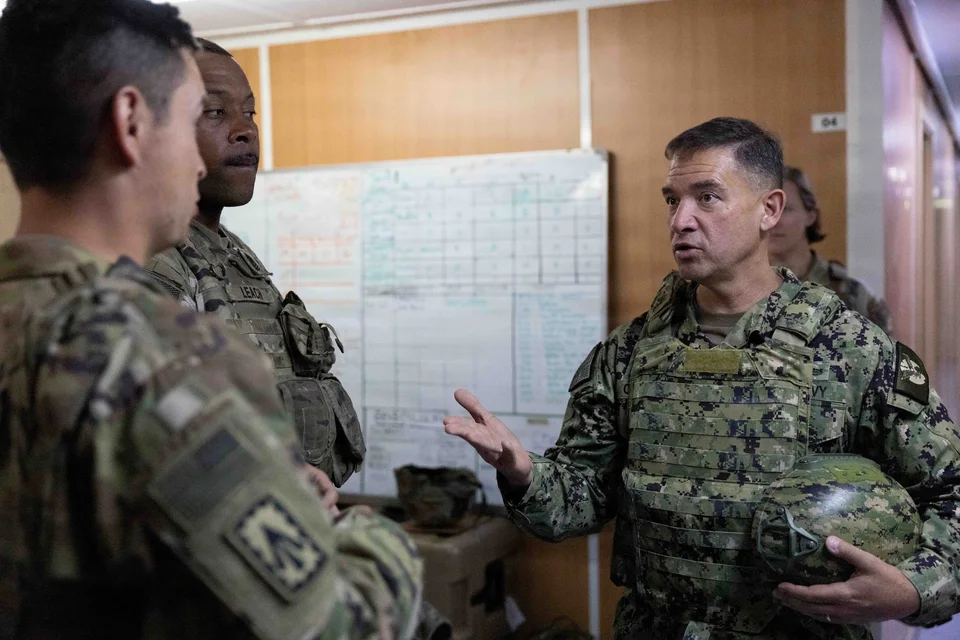
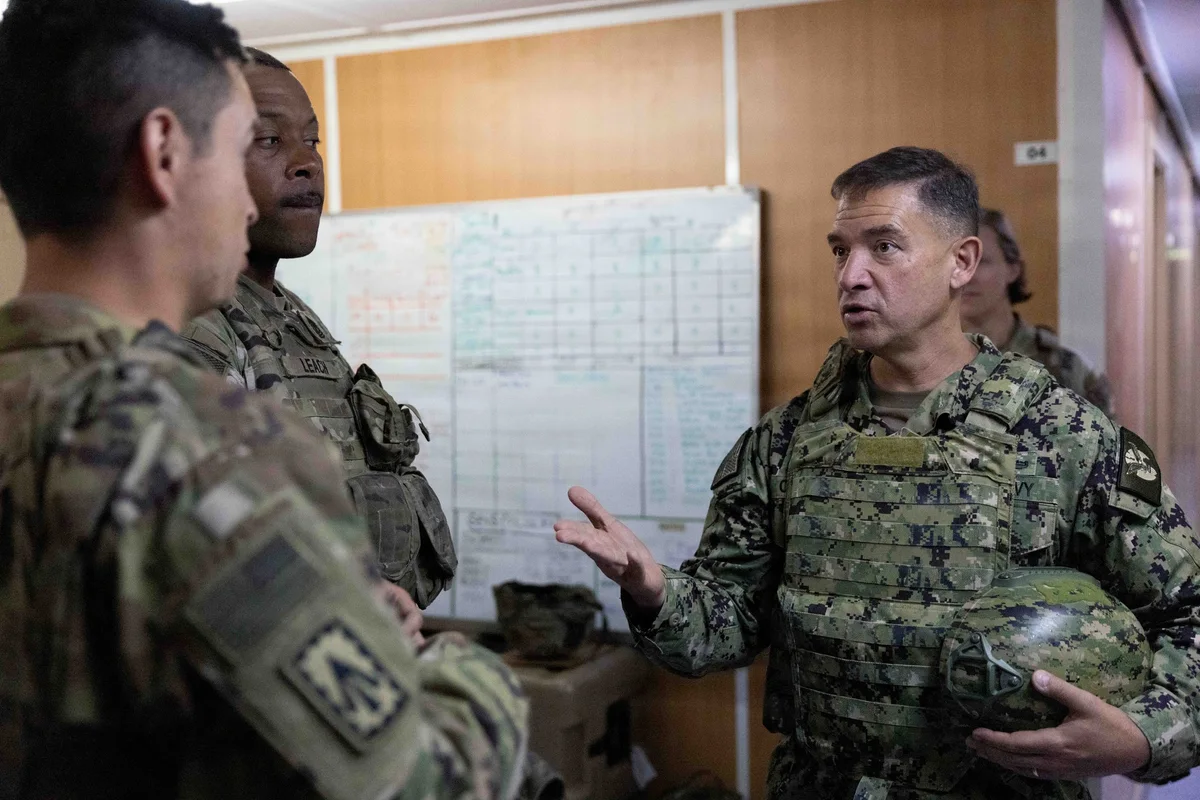
CENTCOM’s other November 7 announcement concerns an internal staff rather than a newly described strike. Admiral Brad Cooper directed the establishment of Task Force Iron Gate, which the release says will consist of approximately twenty civilian and military personnel in Tampa, Florida. Its mission is to coordinate with other U.S. government agencies on movement across Iran’s land borders and the Caspian Sea. The stated targets include advanced weapons, dual-use technology, sanctioned material and revenue streams that Washington describes as illegal.
Reuters supplied background explaining the focus on routes beyond the southern coastline. Its reporting described an investigation that found at least $2 billion in hardware, explosives and heavy-duty trucks imported through a military procurement network since January 2025. According to that investigation, routes included cargo ships from Russia across the Caspian Sea, trucks from Central Asia and freight aircraft from China. Those are Reuters’ findings about a wider network. They do not establish that Huda carried any of those goods or participated in those transactions.
VIRVIB analysis: the routes illustrate why a maritime blockade and an interagency task force address different problems. A measure directed at ships entering or leaving Iranian ports does not by itself account for every consignment moving by road or air. A coordination staff can work on information and enforcement across agencies, but its creation is not evidence that any particular shipment has already been stopped. The announcement does not identify a completed Iron Gate interception or describe ground combat operations beginning at Iran’s borders.
The command also estimates that the naval blockade prevented more than $25 billion in Iranian crude exports. That is its economic assessment, not a separately verified revenue loss or a measure of the new team’s performance. The estimate concerns the existing blockade, while Iron Gate was only announced on November 7. Assigning those claimed results to the new task force would reverse the chronology.
What follows will determine whether the organizational change produces documented outcomes. Further releases could identify enforcement measures or consignments, while subsequent reporting may clarify Huda’s condition and the welfare of its crew. For now, the evidence establishes two announcements with different scopes: CENTCOM says it used force to disable Huda, and it has created a team to coordinate pressure on other supply routes. Neither announcement answers every question about effectiveness, civilian consequences or what action comes next.
View sources
Source publication or schedule date: 2026-11-07
- CENTCOM — November 7 Huda statement, reproduced by Forth
- Stars and Stripes — Huda operation and official imagery
- CENTCOM — November 7 Task Force Iron Gate release, reproduced by Forth
- Reuters via StreetInsider — Iron Gate and procurement-network background
- CENTCOM — October 10 Ocean Molica release, reproduced by Forth
- Reuters via Investing.com — October 10 ship operation
- DVIDS — Cooper photograph and public-domain designation
- NASA satellite image and provenance via Wikimedia Commons
- Reuters via gCaptain — November 7 Huda operation
Prepared with AI assistance. Source-based reporting checked on 2026-11-08. This article does not update automatically. Read our editorial standards.