- State
- Rhode Island
- Office / race
- Governor
- Party
- Democratic
- Reviewed
- October 28, 2026
Career timeline
The executive who returned to the Rhode Island campaign trail
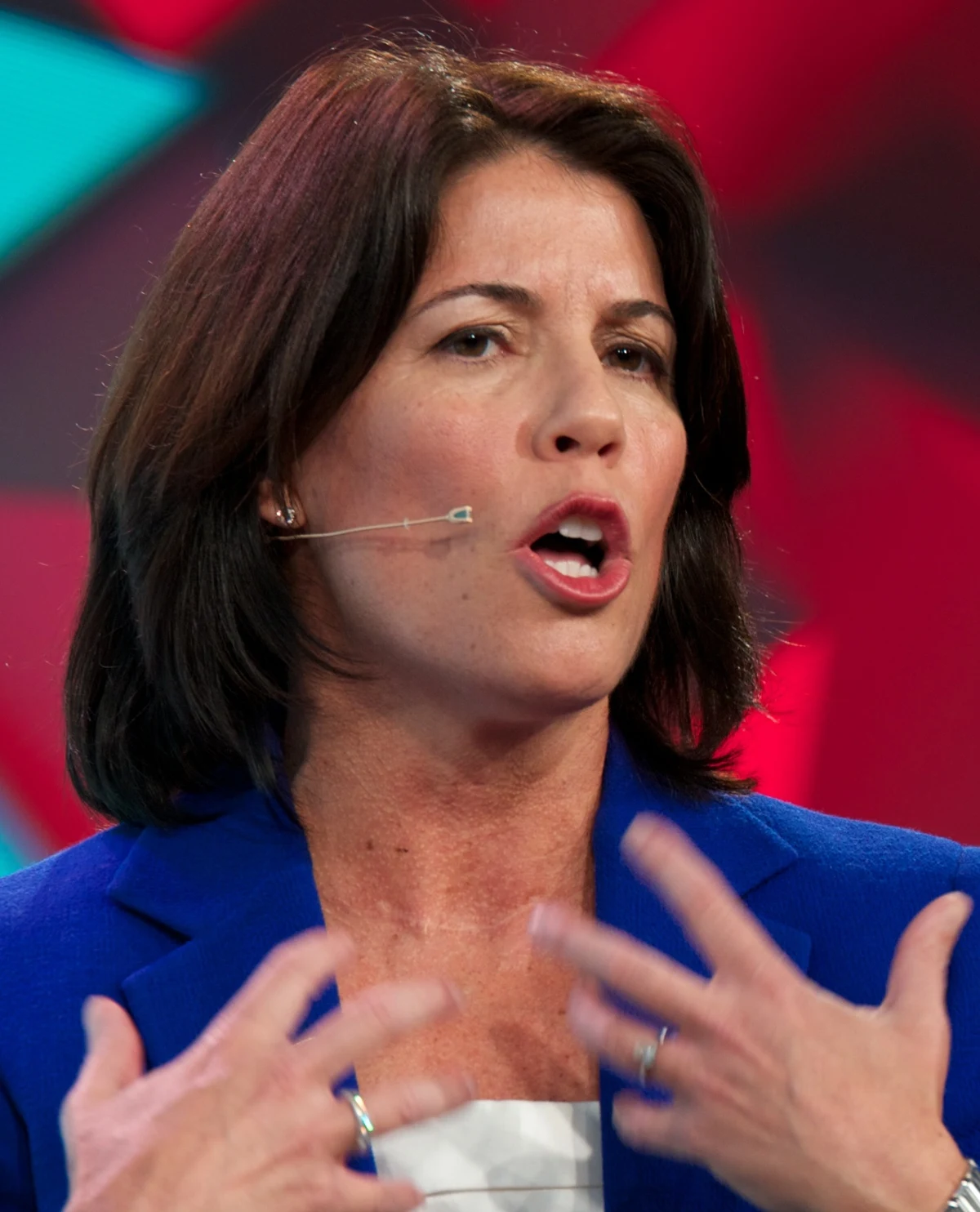
Helena Foulkes’ biography reaches the 2026 Rhode Island governor race through a long corporate career and an earlier electoral defeat. She spent decades at CVS, became president of its retail division and then led Hudson’s Bay Company. In 2022, she sought the governorship and fell short. By the October 28, 2026 review of this profile, she is again asking voters to translate her management experience into public authority. BallotReady lists her as a candidate in the November 3 general election; the official state candidate register supplies the authoritative ballot reference linked below.
For readers searching for a Helena Foulkes biography, the important sequence begins before the campaign. BallotReady records an economics degree from Harvard in 1986 and a Harvard MBA in 1992. Her MIT Sloan conference biography describes an early CVS assignment designing store layouts, followed by a rise through the business. That progression matters because her executive credentials came from operating work inside a company over time, rather than simply holding a title on a board.
A store layout is a small part of a national retailer, but the contrast helps establish the scale of the career that followed. The conference biography credits Foulkes with developing the company’s customer-loyalty program and later leading CVS Pharmacy’s nationwide retail organization. Those descriptions provide evidence of experience with customers, systems and large workforces. They do not mean that every corporate result can be attributed to one executive, or that managing a business and administering a state are equivalent jobs.
Foulkes has also discussed the personal background behind that career. In a Harvard Business School interview published in March 2024, she described being the oldest of five children and recalled her mother encouraging the daughters to develop careers and independent voices. Her campaign describes her as a lifelong Rhode Islander, a mother of four, a grandmother and a cancer survivor. These are attributed accounts of her life, not grounds for speculation about private medical details or family relationships.
The public biography consequently has two connected threads. One is the documented rise through a major company. The other is the explanation Foulkes gives for bringing that experience into politics and community work. A responsible profile can follow both without treating the campaign’s interpretation as the only possible reading. The question for voters is what the experience demonstrates, what it leaves untested and how she proposes to apply it to Rhode Island’s particular needs.
Sources: Rhode Island Department of State: Candidate ballot-status list ↗ · Foulkes campaign: Meet Helena ↗ · MIT Sloan Sports Analytics Conference: Helena Foulkes biography ↗ · Harvard Business School: Deep Purpose interview with Helena Foulkes ↗ · BallotReady: Helena Buonanno Foulkes ↗
CVS, tobacco and the more difficult Hudson’s Bay assignment
One decision appears repeatedly in accounts of Foulkes’ career: CVS ending tobacco sales. Her campaign presents the decision as an example of prioritizing public health despite a substantial commercial cost. The significance in a biography is not merely that a retailer changed its product mix. It is that the choice aligned the stores’ health identity with a decision that required accepting the loss of an established source of revenue. That is the leadership example she offers voters; it should still be understood as a decision taken within a larger corporation.
The Harvard Business School interview explores how she thinks about purpose and risk. Foulkes describes the value of asking what could go right, and discusses encouraging others to pursue change. The conversation is a primary source for her own explanation of management. It is not an independent audit of her entire record. That distinction is useful when a business leader becomes a candidate: an interview can illuminate decision-making while leaving room to examine results and competing assessments.
Her next major operating role was at Hudson’s Bay Company from 2018 to 2020. The institutional biographies and interview describe an organization facing a difficult retail environment and the need to reorganize. Harvard’s account says the group shed underperforming businesses, restructured operations and prepared to become private. This was a different assignment from expanding a successful program inside a single retailer. It involved deciding what a group should retain, what it should leave behind and how its organization should change.
Those experiences add substance to a résumé, but their political meaning requires care. Closing or disposing of a business can be part of a corporate restructuring. A government has obligations to residents that cannot be assessed only as a portfolio of profitable and unprofitable activities. Schools, public health and housing systems serve people whose needs persist even when a program is expensive. The comparison therefore concerns skills such as organization and execution; it cannot erase the difference between a commercial objective and a public obligation.
Foulkes’ board service extends the record beyond day-to-day management. MIT’s biography lists corporate and nonprofit responsibilities, including Harvard’s Board of Overseers and Crossroads Rhode Island. Board membership adds an oversight role, while an executive role involves directing operations. They should not be conflated. For a voter, the relevant inquiry is how those different responsibilities contributed to her ability to question an organization’s performance, understand its finances and hold its leadership accountable. The existence of a position is established; the quality of judgment must be assessed through the decisions and outcomes connected to it.
Sources: Foulkes campaign: Meet Helena ↗ · MIT Sloan Sports Analytics Conference: Helena Foulkes biography ↗ · Harvard Business School: Deep Purpose interview with Helena Foulkes ↗
From the 2022 loss to the questions of the 2026 race
Foulkes did not move directly from the private sector into the governor’s office. Her first campaign ended in defeat in 2022. The Harvard interview describes a close second-place finish, while her campaign explains the intervening period through community work and renewed attention to Rhode Island’s schools. That interval is important to the story. An electoral defeat is part of the record, rather than an episode to remove from a polished biography, and a later candidacy should be assessed on what has changed as well as what remains familiar.
Her campaign says she partnered with the mayor of Central Falls on public-school improvement and continued work on homelessness and domestic violence through nonprofit involvement. The MIT biography independently places Crossroads Rhode Island among her responsibilities. These sources establish the areas in which she has been active. They do not justify assigning a quantified improvement to her efforts without a separate evaluation. Community service and policy outcomes are related subjects, but they are not the same measurement.
The current issue agenda is broader than the career story. BallotReady’s profile links proposals concerning career and technical education, utility bills and clean energy, affordable healthcare, housing supply, childcare, transportation and jobs. It also identifies government-accountability proposals. These listings are useful for finding the campaign’s stated priorities. Their presence in a voter guide is not evidence that the proposals have been enacted, funded or independently found to achieve their objectives.
Several questions connect those policies to her management pitch. Expanding housing involves more than describing a shortage: it requires attention to approvals, infrastructure, financing and the location of new homes. Career and technical education requires coordination among schools, employers and the pathways students can actually use. Lower utility bills must be considered alongside the investments needed to supply reliable energy. These are analytical questions about implementation, not undisclosed additions to Foulkes’ platform.
The central choice in the biography is therefore the proposed transfer of experience. Foulkes can point to operating and oversight roles in large organizations, a long connection to Rhode Island and a continuing effort to build a political career after 2022. Voters still have to decide whether her proposed administration would make the public systems they rely on perform better. A compelling personal account cannot substitute for that assessment.
As the November 3 election approaches, the useful next development is a result from the state’s election authorities, followed by specific decisions from whoever takes office. This profile does not presume that result. It records a business executive and repeat candidate at a defined point in her public career, with the sources showing how she arrived there and the questions her campaign now asks Rhode Islanders to answer.
Sources: Foulkes campaign: Meet Helena ↗ · MIT Sloan Sports Analytics Conference: Helena Foulkes biography ↗ · Harvard Business School: Deep Purpose interview with Helena Foulkes ↗ · BallotReady: Helena Buonanno Foulkes ↗
Prepared with AI assistance. Source-based reporting checked on October 28, 2026. This article does not update automatically. Read our editorial standards.