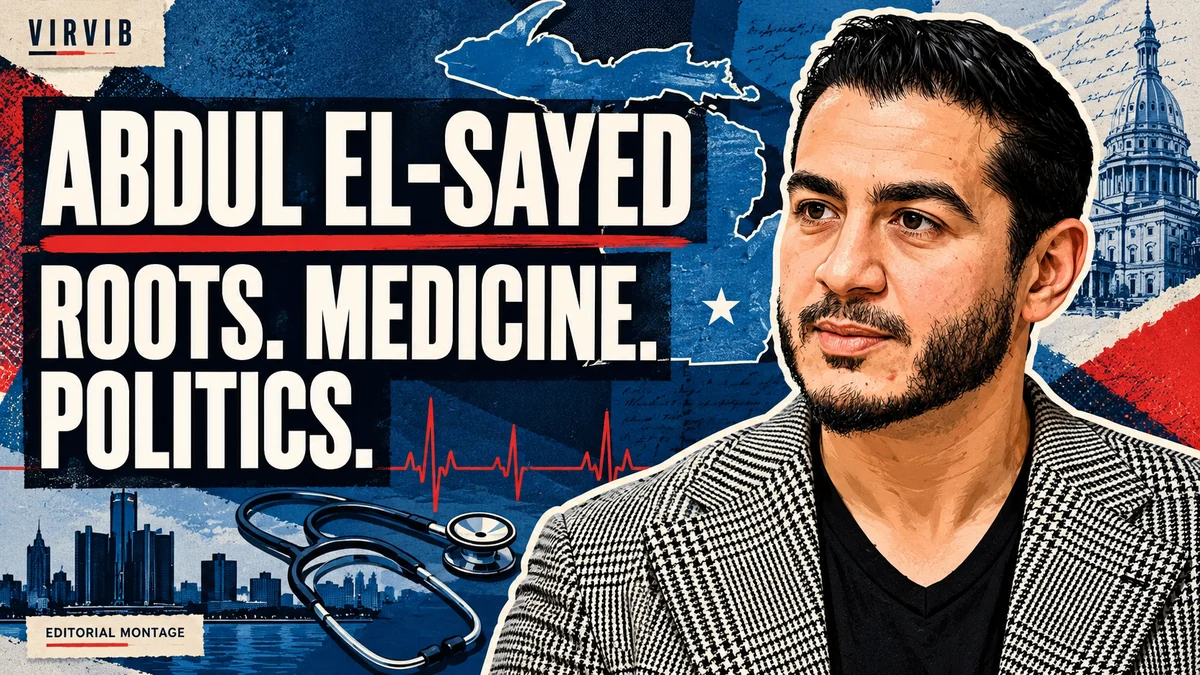
Habibi PAC: the name, the filing and the dates

Abdul El-Sayed has given “habibi,” the Arabic term of affection he directed at JD Vance in his election victory speech, another role: the name of a leadership political action committee. The Federal Election Commission lists Habibi PAC as an active leadership PAC, and its original Statement of Organization identifies El-Sayed as the sponsor. The development takes the phrase from a widely reported speech into a campaign-finance record.
The dates in that record explain why accounts of the launch can sound inconsistent. The first page of Form 1 carries November 5, 2026 in its statement-date field. The treasurer’s electronic signature is dated November 6, and the document’s filing stamp also shows November 6. The FEC’s committee overview lists November 6 as the registration date. The Thursday date on the statement and the Friday filing date describe different fields on the same record.
The committee’s federal identification number is C00964767. Page three of the filing names Abdul El-Sayed and marks the relationship as leadership PAC sponsor. It lists Howie Stanger as treasurer. The Hill reported the launch on November 6, independently connecting the new committee with El-Sayed’s use of the word during the campaign. The New Republic also reported the development that day.
The committee’s category matters more than the name when interpreting what it can do. FEC guidance describes leadership PACs as nonconnected committees that political figures often establish to support other candidates. They remain legally unaffiliated with the sponsor’s authorized campaign committee. Sponsorship therefore does not turn Habibi PAC into another name for El-Sayed’s Senate campaign account.
The same guidance says leadership PAC activity remains subject to applicable contribution limits and source prohibitions. A memorable name does not establish an exemption from those rules. Nor does the registration itself show which candidates the committee will support or how much money it will raise. Those questions require subsequent financial disclosures and documented activity.
At the November 8 check, the FEC overview did not display a financial summary for Habibi PAC for the 2025–2026 period. The page explains that unavailable summaries can reflect processing, filing deadlines or the absence of reported activity. A blank summary is not a verified zero-dollar total. It also supplies no basis for assigning a fundraising target or treating the committee as a presidential campaign announcement.
VIRVIB analysis — The political development is the reuse of an existing campaign expression as an organizational name. In the speech, the word addressed a person. In the filing, it identifies a committee with a sponsor, a treasurer and reporting obligations. Understanding the affectionate expression explains the branding. Reading the record separately explains what has actually been established.
What “habibi” means in El-Sayed’s victory speech

“JD, habibi.” Abdul El-Sayed’s address to Vice President JD Vance turned an Arabic expression of affection into a political punchline after Michigan’s Senate election. The phrase came in his victory speech in Detroit early on November 4, 2026. He paired it with a joke about Vance administering his oath of office in January. For an English-speaking reader encountering the word for the first time, the useful translation in this exchange is closer to “my friend” or “buddy” than a declaration of romantic love.
That does not mean the familiar translation “my love” is wrong. Dictionary.com explains that habibi can express affection toward a partner, relative or friend, with the English equivalent changing according to the relationship. A term used tenderly in one conversation can sound casual in another. The setting here was an election victory speech addressed in part to a political opponent. A literal translation supplies the word’s emotional vocabulary. The surrounding sentence explains how the speaker was using it.
The Arabic spelling is حبيبي. Wiktionary traces the form to habib, meaning a beloved or sweetheart, and the first-person possessive ending. That ending contributes the sense of “my.” The entry identifies it as a masculine form. Habibti is a related feminine form familiar to many learners of spoken Arabic. The Latin spelling habibi represents Arabic sounds for readers using another alphabet, rather than marking an English word with a single fixed use in every setting.
Dictionary.com’s usage account includes parents addressing children and friends speaking to one another. It also describes the expression softening exchanges between strangers in some places. Its entry was published in 2018, years before this election. The phrase’s appearance in American political coverage is therefore a new setting for an established expression. El-Sayed did not coin it, and a reader does not need to assume a romantic relationship to understand why one man might address another that way.
The humor rests on the relationship between the two politicians. In reporting published November 5, the Associated Press described El-Sayed’s use of the affectionate address after Vance had campaigned against him and warned about rioting in Detroit. The agency also reported supporters sharing songs and online reactions. Those observations document a response to the speech. They do not tell us that everyone sharing a clip understood the phrase in the same way or endorsed the same politics.
Al Jazeera’s November 6 account places the line alongside other uses of Arabic in the address. El-Sayed referred to the shift from inshallah, or God willing, during the campaign to alhamdulillah, an expression of praise or thanks to God, after the result. These expressions perform different jobs. One looks toward an uncertain outcome. The other expresses gratitude. Neither is another translation of habibi, which addresses a person. Treating all three as interchangeable would lose what each contributes to the speech.
VIRVIB analysis — The affectionate word sharpens the contrast with the political disagreement instead of erasing it. Addressing an opponent with warmth can make a rebuke sound more pointed, particularly when the next sentence describes an institutional encounter that the opponent may not welcome. In this case, the joke links personal address to public office. It allows the audience to hear both the friendliness of the vocabulary and the challenge in the situation without requiring the two politicians to have reconciled.
The oath joke, the response abroad and the search claims
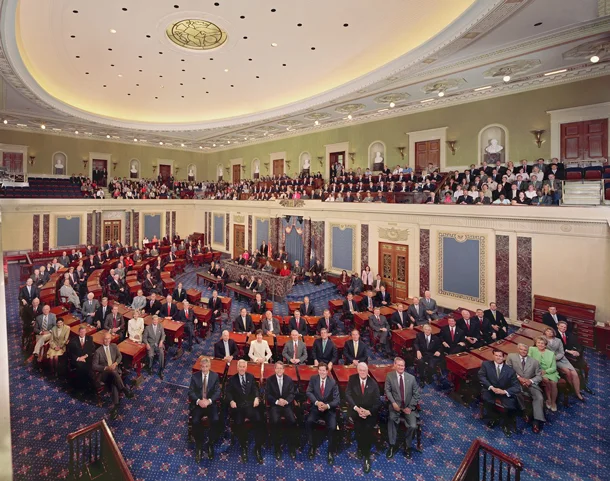
There is a real Senate procedure behind the joke, although the wording should not be treated as a guarantee that Vance personally must conduct this particular ceremony. Title 2, section 21 of the U.S. Code assigns administration of senators’ oaths to the president of the Senate before they take their seats. The vice president serves as the Senate’s president. The oath is an institutional step in taking office, not a favor that a senator-elect must secure from a political ally.
Another statutory provision matters to the personal claim. Section 23 authorizes the Senate’s presiding officer at the time to administer the oaths and affirmations required within its jurisdiction. The Senate’s account of the president pro tempore likewise explains that this officer may administer constitutional oaths in the vice president’s absence. The political image of Vance swearing in a former campaign target is therefore understandable. Federal procedure does not make Vance the only person capable of administering a valid oath.
The Senate also distinguishes the official oath in open session from the photographic reenactments that often accompany it. Its history of oath-taking describes senators-elect appearing with colleagues and later participating in ceremonies for cameras. A photograph of a ceremonial reenactment and the formal act on the Senate floor need not be the same event. That distinction will matter when interpreting images of the incoming Congress, rather than assuming every swearing-in photograph records the legal moment of taking a seat.
The reaction already extended beyond Michigan. Reuters reported on November 4 that Egyptians were celebrating El-Sayed’s victory even as state media gave it little attention. Its account noted that Alaa Mubarak shared a clip containing the address to Vance. That is a documented example of the speech circulating abroad, not a measure of all Egyptian opinion. The story’s cross-border appeal also helps explain why a short Arabic expression became an entry point for audiences following an American election from elsewhere.
Search claims require a different kind of evidence. Al Jazeera’s article says the query “Habibi meaning” appeared seventh among trending searches on November 4, attributing that information to International Business Times. That is a dated, secondhand ranking claim. It does not establish that the word ranked first, that it held the same position on November 7, or that it led every search engine. No independently reproduced historical Google Trends table supporting that position is presented here.
Google’s own methodology explains why the distinction matters. Its Trends service uses sampled, anonymized and aggregated searches. In its standard interest comparisons, results are normalized for the selected time and geography and scaled from zero to 100. An index of 100 marks the peak within that comparison, rather than 100 searches or a nationwide first-place ranking. Two regions can show the same relative interest while having different totals. Search attention also cannot be read as a vote, approval rating or measure of agreement with a politician.
For readers, the established story is clear without inflating those numbers. A senator-elect used an Arabic term whose everyday range is broader than its literal English translation, directed it at a political opponent and attached it to a joke about entering the Senate. Independent reporting documented reactions in the United States and abroad. The word helps explain the exchange, while official procedure qualifies the oath claim. Its meaning and the circumstances of the remark can be established without declaring it America’s most-searched expression.
View sources
Source publication or schedule date: Victory speech November 4, 2026. Reuters November 4, AP November 5, Al Jazeera November 6 updated November 7. Language, procedure and methodology sources checked November 7. PAC overview, original filing, FEC guidance and independent November 6 launch reports checked November 8. Prior language and oath-source verification retained from November 7.
- Dictionary.com — habibi meaning, grammar and everyday use
- Wiktionary — Arabic spelling and possessive construction
- Associated Press — November 5 reporting on the phrase and response
- Al Jazeera — November 6 account, updated November 7; historical search claim is attributed, not independently reproduced
- Reuters — November 4 reporting on reactions in Egypt
- U.S. Code — Title 2, section 21, senators’ oaths
- U.S. Code — Title 2, section 23, presiding officer’s authority
- U.S. Senate — president pro tempore and administration of oaths
- U.S. Senate — official oath and photographic reenactments
- Google — Trends sampling, normalization and limits
- WNEM — full victory speech published November 4, 2026
- Kenneth C. Zirkel — El-Sayed portrait, February 3, 2025, CC BY-SA 4.0
- Daniel Torok — Vance official portrait, January 15, 2025, public domain
- FEC — Habibi PAC overview, registration and financial-summary status
- FEC — original four-page Statement of Organization, statement date November 5, electronically signed and filed November 6
- FEC — definition and legal separation of leadership PACs
- The Hill / AOL — independent November 6 report by Ryan J. Karlin
- The New Republic — independent November 6 report by Malcolm Ferguson
- U.S. Senate Photo Studio — archival chamber photograph and public-domain status
Prepared with AI assistance. Source-based reporting checked on November 8, 2026. This article does not update automatically. Read our editorial standards.