- State
- Oklahoma
- Office / race
- Governor
- Party
- Democratic
- Reviewed
- October 28, 2026
Career timeline
From repeated moves in Lawton to a seat in the Oklahoma House
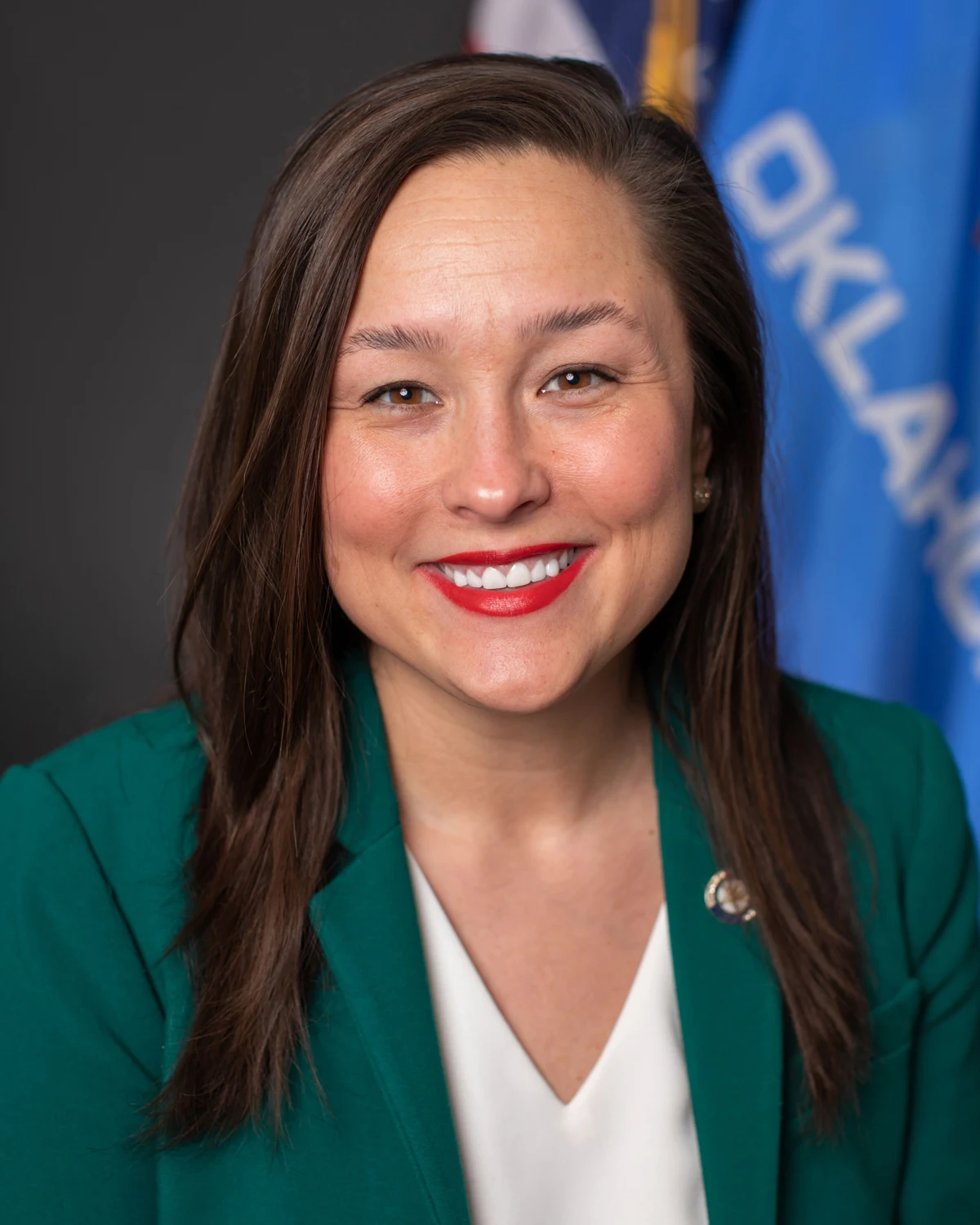
Before Cyndi Munson asked Oklahoma voters to make her governor, she had already crossed a political threshold. Her September 2015 election made her the first Asian American woman elected to the Oklahoma Legislature. In 2026, she is the Democratic nominee for governor. The official state election list places her alongside Republican Mike Mazzei and independent candidates Orlando Lynn Bush, Robert E. Brooks Sr. and Jerry Griffin. The election is scheduled for November 3. Its outcome remains ahead of this profile’s October 28 review.
Munson’s route to that ballot began in Lawton. In her campaign biography, she describes growing up as the daughter of a Vietnam veteran and a South Korean immigrant, with a single father raising her and her younger sister. The family’s repeated moves were searches for cheaper rent, she says. That is her account of a childhood shaped by household costs, and it helps explain the emphasis she now places on affordability. It is not evidence that a particular campaign proposal will deliver its promised savings.
The next turning point was education. Munson says Oklahoma’s Promise made college possible. Her official legislative biography records a political-science degree from the University of Central Oklahoma and a master’s in leadership education from the University of Nebraska–Lincoln. It also describes a semester studying nonprofit and voluntary services at Georgetown. Taken together, the record describes a first-generation college graduate whose preparation combined public affairs, leadership and community organizations.
Her early professional work placed her in programs serving people whose needs did not always command political attention. At Girl Scouts of Western Oklahoma, the House biography says she helped provide leadership programs in low-income schools, public housing and juvenile detention settings. At OK Messages Project, she worked on development and community engagement for an organization supporting children through shared reading with incarcerated parents. These were nonprofit roles, rather than elected authority, but they form a substantial part of the experience she brought to the Legislature.
The connection between those jobs and her later agenda is visible without inventing a private moment of revelation. Children, education and justice appear both in the organizations where she worked and in the policy interests listed by her House office. Her biography therefore offers more than a sequence of titles. It shows how a community-service career preceded the request for legislative responsibility. Voters can consider that continuity while still asking how well the record measures up to the considerably larger powers and obligations of a governor.
Sources: Oklahoma State Election Board: November 2026 candidates ↗ · Oklahoma House: Representative Cyndi Munson ↗ · Munson campaign: Meet Cyndi ↗
What her legislative record says about taxes, justice and schools
The move from nonprofit work to the statehouse changed the kind of decisions Munson could make. A legislator votes on bills, helps negotiate their language and chooses which proposals to advance. A minority leader also has to organize colleagues in a chamber where her party cannot pass an agenda by itself. Those responsibilities are central to understanding her record. A proposal she supported, a bill bearing her name and a law that actually took effect are different measures of influence.
KOSU’s October 23 examination provides specific examples. It reports that Munson supported the bipartisan repeal of the state sales tax on groceries in 2024 and opposed the income-tax cuts enacted in 2025. The apparent contrast is meaningful: the two measures address different tax bases and distribute benefits differently. Her position cannot accurately be reduced to either supporting every tax cut or opposing tax relief. The more useful question is which households a measure benefits and what revenue remains for public services.
The same review identifies House Bill 2235, enacted in 2025, as an effort that increased compensation for Oklahomans wrongfully convicted and incarcerated. That policy brings her criminal-justice interests into a specific legislative setting. Compensation concerns what the state owes after an established injustice; it does not reverse the years a person lost. It also differs from the separate questions of how convictions are obtained and how future errors might be prevented. A biography should preserve those distinctions rather than count every justice proposal as interchangeable.
Education provides another consistent strand. The House biography lists public education among her principal areas of work, while her campaign promises increased funding and higher teacher and support-staff pay. Those statements establish an objective. They leave voters with implementation questions about recurring appropriations, recruitment and retention, and how resources would reach different districts. School funding requires more than announcing an amount: it also involves the terms on which public money is distributed and the responsibilities assigned to education officials.
At an October debate covered by KOSU and KGOU, Munson presented herself as someone who would bring legislators together across party lines. That is a campaign argument, not an independent finding about future cooperation. It can nevertheless be assessed against a record that includes working in the minority and supporting a bipartisan grocery-tax measure. The evidence supports examining her experience in negotiation; it does not allow a prediction that a divided government would automatically accept her proposals. The real test of that argument would come in budgets, appointments and negotiated legislation, where agreement must survive differences over both money and policy.
Sources: Oklahoma House: Representative Cyndi Munson ↗ · KOSU: Comparing the gubernatorial candidates’ legislative records ↗ · KOSU / KGOU: October 2026 gubernatorial debate ↗
The 2026 agenda and the decisions a governor would face
Munson’s campaign identifies four practical priorities: home-insurance costs, public-school investment, healthcare affordability and the use of existing tax dollars. Its public FAQ says she wants stronger accountability for insurers, increased school funding and pay, lower prescription-drug and insurance costs, and a shift toward programs benefiting ordinary households. These are statements from her campaign. They show what she is asking voters to authorize politically, rather than documenting programs already enacted under her leadership as governor.
A particularly current issue is the expansion of data centers. KOSU’s October review reports her proposal for a first-day moratorium on new centers until legislators establish transparency and accountability requirements concerning energy use, environmental effects and impacts on surrounding communities. The distinction between a pause and a permanent prohibition matters. Her stated purpose is to establish conditions before further development. The reporting reviewed here does not establish that every legal or administrative step needed for such a pause has already been settled.
For a community considering a large development, the questions are concrete. What information becomes public before approval? Who pays for additional infrastructure? Which authority monitors compliance after construction? Those questions explain why transparency rules and a temporary halt are separate policy choices. A campaign can favor both, but the duration of a halt, its exceptions and the authority used to impose it determine how it would work in practice. This is analysis of the proposal’s implications, not an additional promise attributed to Munson.
Her statewide campaign also raises a broader question about the transfer from legislative leadership to executive responsibility. A governor must administer agencies as well as persuade lawmakers. A record of advocacy gives voters evidence about priorities; it does not by itself demonstrate how an administration would recruit staff, manage implementation or respond when a favored program underperforms. The same scrutiny belongs to any candidate seeking that transition, irrespective of party.
The reliable portrait at this point is of a former nonprofit professional and long-serving state legislator whose campaign connects personal experience of economic insecurity with public services and household costs. The next decision belongs to Oklahoma’s voters, who will choose among five listed candidates. This profile does not treat a nomination as an election victory, or a campaign pledge as a completed reform. What matters after the campaign is whether the priorities described here become specific, funded and measurable actions. Until then, Munson’s biography, legislative record and published proposals supply the basis for assessing the choice in front of voters.
Sources: KOSU: Comparing the gubernatorial candidates’ legislative records ↗ · Munson campaign: Frequently asked questions ↗ · Oklahoma State Election Board: November 2026 candidates ↗
Prepared with AI assistance. Source-based reporting checked on October 28, 2026. This article does not update automatically. Read our editorial standards.