Patrick Stewart’s death and the stage career behind the screen icon
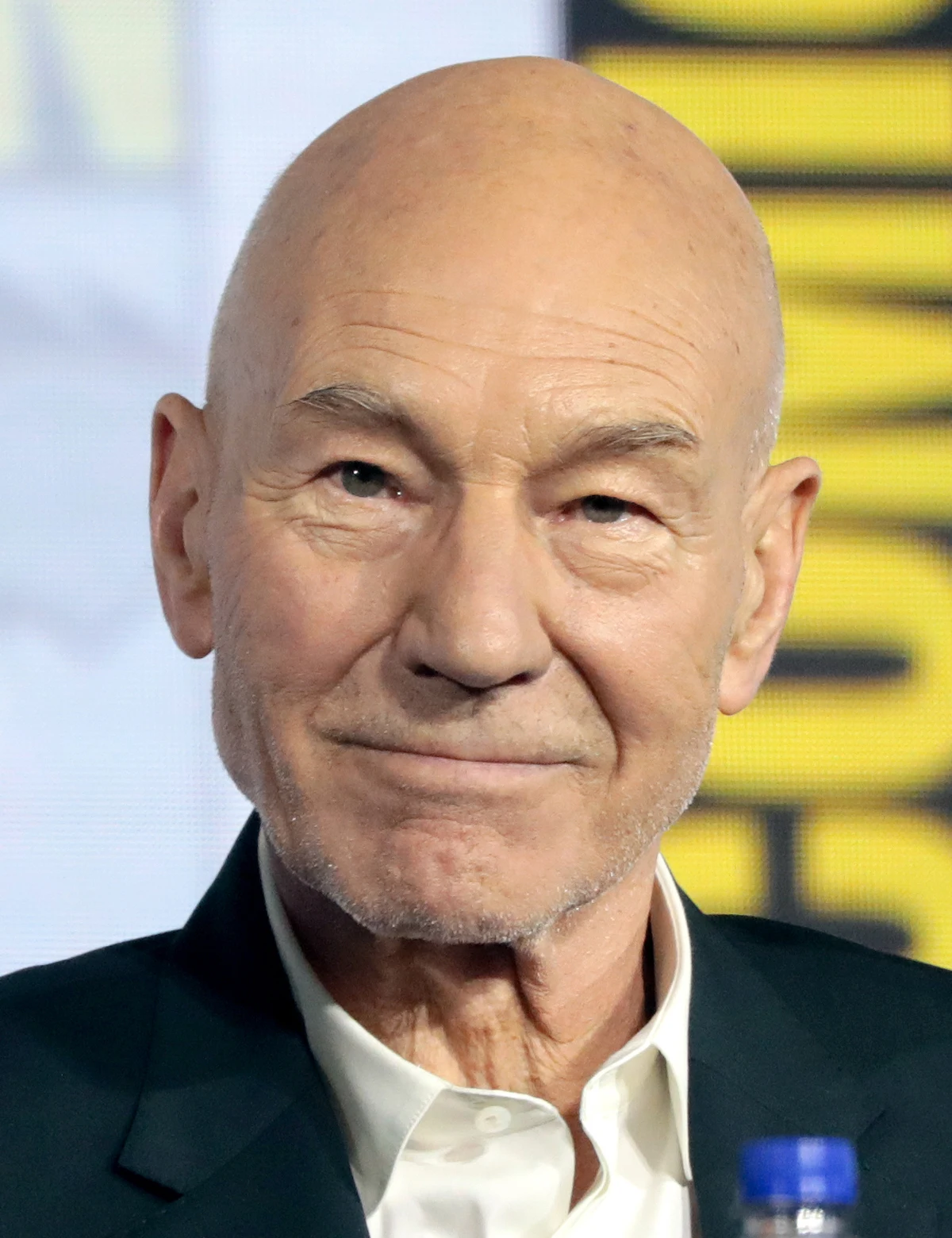
Sir Patrick Stewart, the actor whose Captain Jean-Luc Picard and Professor Charles Xavier became familiar figures to generations of viewers, has died at 86. The Associated Press reported that he died Wednesday, October 28, in Los Angeles, citing spokesperson Kelly Bush Novak. The news became public Thursday, October 29. His official Instagram account posted memorial information that day, directing contributions toward Alzheimer’s research and caregiver resources.
Those two dates should not be confused: October 29 is the day of the announcement, while the spokesperson’s account places his death on October 28. Independent reporting from AP and People corroborates the central news. This article draws on those reports, the official account and records from institutions associated with his work; VIRVIB has not interviewed Stewart’s family or attended a memorial.
Stewart was born in Mirfield, Yorkshire, in 1940, and trained at Bristol Old Vic Theatre School, according to People’s career account. Before American television made his face internationally recognizable, his professional identity was rooted in theater. The Royal Shakespeare Company records that he joined in 1966. That starting point matters because the commanding screen presence often associated with him emerged from a long engagement with language, rehearsal and ensemble performance.
The RSC’s own record offers a more revealing chronology than a general description of him as a Shakespearean actor. It lists King John in 1970, Oberon in A Midsummer Night’s Dream in 1977, Shylock in The Merchant of Venice in 1978 and again in 2011, and Titus Andronicus in 1981. Later roles included Antony and Prospero in 2006 and Claudius in Hamlet in 2008. These dates show a career that continued to return to classical theater rather than simply using it as a prelude to Hollywood.
AP’s obituary also recalls his solo A Christmas Carol and stage partnerships with Ian McKellen in Waiting for Godot and No Man’s Land. Those credits broaden the picture beyond heroic commanders and mentors. Dickens, Beckett, Pinter and Shakespeare require different rhythms and relationships with an audience. Stewart’s career encompassed all of them, alongside work designed for a camera rather than a theater.
VIRVIB analysis: remembering the stage work changes how the familiar screen roles can be understood. His authority was not only a matter of a resonant voice. The documented range of parts includes rulers, antagonists, comic figures and characters whose certainty is under pressure. That range helps explain why he could make a fictional leader persuasive while still allowing doubt and vulnerability into the performance.
Sources: Patrick Stewart’s official Instagram — October 29 memorial information ↗ · Associated Press — death confirmed through spokesperson Kelly Bush Novak ↗ · People — independent obituary and early biography ↗ · Royal Shakespeare Company — membership and documented stage roles ↗
Why Jean-Luc Picard remained central across generations
For many viewers, Stewart’s defining role was Picard. The official Star Trek website records that he played the character for seven seasons of The Next Generation before returning in Star Trek: Picard. The later series ran for three seasons, with its third presented by the franchise as the concluding adventure. The same actor and character thus became a connection between distinct periods of television and between audiences encountering the Enterprise at different ages.
The premise of Picard is important to that continuity. The official series description places the story twenty years after the captain was last seen commanding the Enterprise and finds him in a different phase of his personal life and career. The character’s return was therefore built around time having passed, rather than pretending that the years between appearances had not happened. A familiar presence could carry a different set of responsibilities and uncertainties.
VIRVIB analysis: that distinction is one reason the role offers more than a single nostalgic image. A captain on a bridge represents an institution as well as an individual. An older Picard outside the same command structure poses a different dramatic question: what remains of that identity when its familiar setting changes? Stewart’s continued involvement allowed the franchise to explore that question through a face and voice its audience already knew.
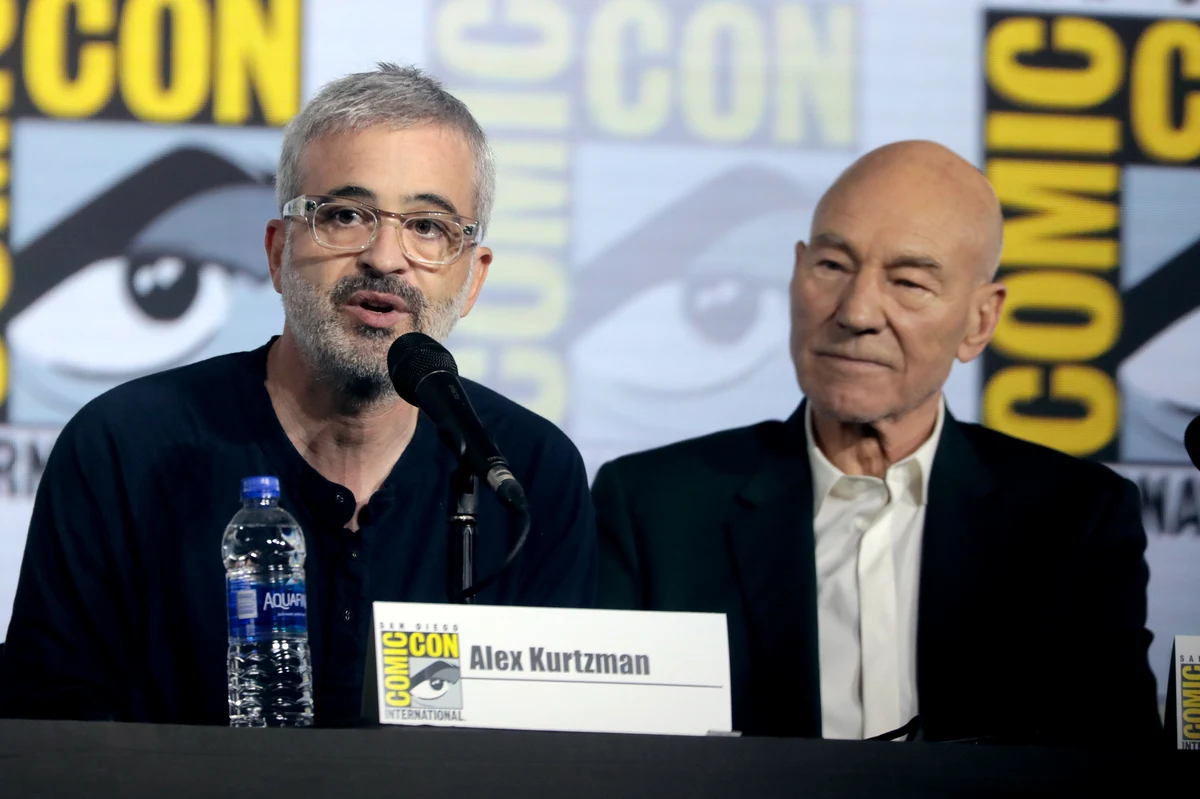
The licensed archival photograph accompanying this section shows Stewart with Alex Kurtzman at the 2019 San Diego Comic-Con panel for Picard. It documents the public introduction of that later chapter, not a private moment or a reaction to today’s news. It also places the actor alongside a creative collaborator, a useful reminder that a long-running screen character is sustained by writers, producers, fellow performers and audiences as well as its lead actor.
For viewers revisiting his work, the official series page provides a reliable starting point for identifying the three Picard seasons and their relationship to The Next Generation. It is preferable to assuming that every title remains available through the same subscription everywhere. This obituary is a record of his work and its significance, not a promise of a particular streaming catalog or a newly announced reunion. The established performances are the evidence; future franchise plans require their own confirmation.
Professor Xavier, comedy and a memoir in his own voice

Stewart reached another major film audience as Xavier in X-Men. The American Film Institute’s catalog records him in the role in the 2000 film, alongside Hugh Jackman as Logan/Wolverine and Ian McKellen as Magneto. The studio lists the film’s U.S. release date as July 14, 2000. Those records establish the beginning of that screen association without requiring an inflated claim about box-office records or the entire history of superhero cinema.
VIRVIB analysis: Picard and Xavier offered an immediately recognizable connection in Stewart’s screen work—both could serve as figures of leadership and guidance—but they were not interchangeable characters. One belonged to Starfleet, the other to the X-Men’s world of mutants and contested belonging. The interesting continuity was the performer’s ability to give weight to ideas and relationships within large-scale genre entertainment, rather than the fact that both characters could speak with authority.
His work also extended into comedy. The publisher’s description of Making It So identifies appearances in American Dad!, Ted, Extras and Blunt Talk alongside his theater and franchise roles. Including those credits matters because a career remembered only through dignified leaders would miss a significant part of its variety. Comedy offered another context for the same recognizable voice and public image, sometimes making the distance between solemnity and absurdity part of the appeal.
Making It So provides a further route into that broader life. Gallery Books published the memoir on October 3, 2023; the publisher lists the hardcover at 480 pages and also identifies an audio edition read by Stewart. These are publication details, not a claim that VIRVIB has reviewed the entire book. They make it possible for readers to distinguish his own retrospective account from the condensed career summaries circulating after his death.
The publisher’s author biography records Olivier recognition, Emmy and Tony nominations, and a Grammy. An awards list, however, cannot fully describe the movement between a classical stage role, a television ensemble, a superhero film and a comic performance. The useful legacy is visible in that range and in the sustained relationships with particular characters, not simply in accumulating honors into an obituary.
Stewart’s death leaves a body of work that can be approached from several directions: the RSC’s performance record, the Star Trek series archive, the original X-Men credits or the memoir he narrated himself. Together they show an actor whose international fame did not reduce his career to one medium. The news announced October 29 closes his life story; the performances remain available to be examined on their own terms.
Sources: American Film Institute — X-Men cast and credits ↗ · 20th Century Studios — X-Men release record ↗ · Simon & Schuster — Making It So, publication details and author biography ↗
Why this story is in the edition“patrick stewart” appeared in Google Trends U.S. RSS checked October 29 with an entry dated 12:30 PDT. No search volume or national ranking claim is made.
Prepared with AI assistance. Source-based reporting checked on 2026-10-29. This article does not update automatically. Read our editorial standards.