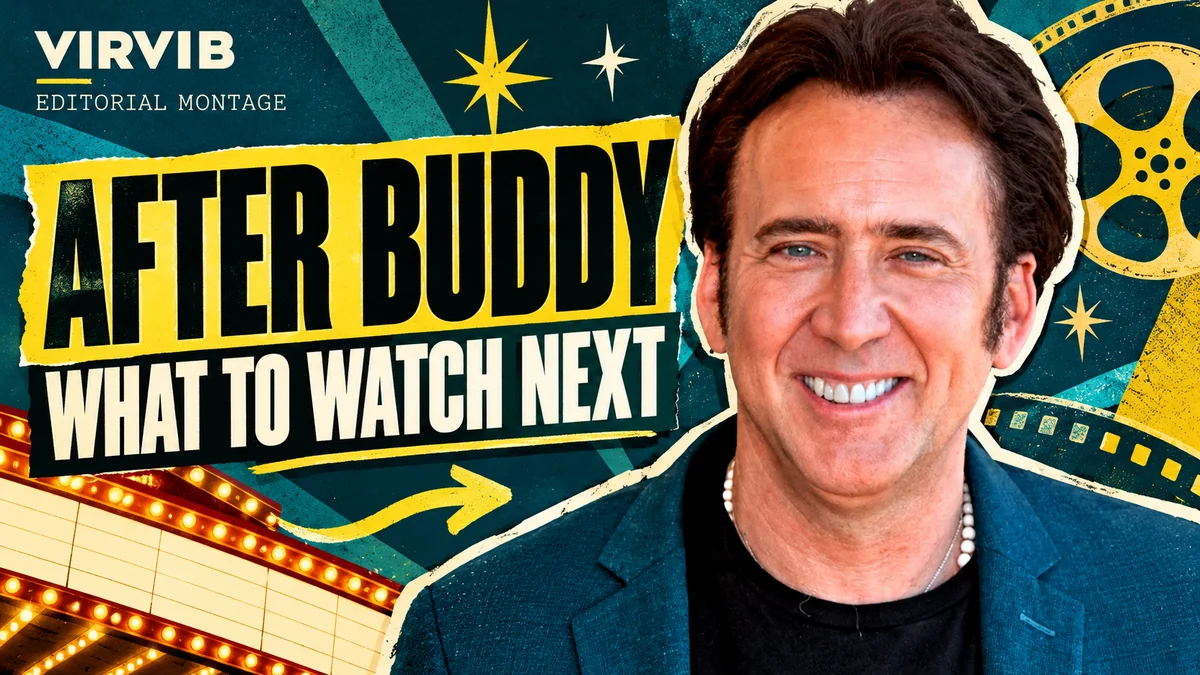
Five Nights at Freddy’s (2023): start with the restaurant after closing

The best movies like Buddy depend on which part of Casper Kelly’s film caught your attention. A smiling character becoming dangerous is one route. A childhood entertainment format that traps its audience is another. This selection follows those separate ideas rather than pretending that an orange unicorn, a possessed doll and a mischievous creature all deliver the same experience. Roadside credits Kelly as Buddy’s director and Kelly and Jamie King as its writers; the comparisons below are VIRVIB’s editorial choices, not a list of films its makers say influenced it.
For the most direct move into animatronic territory, start with Emma Tammi’s Five Nights at Freddy’s. Universal’s synopsis places Mike, played by Josh Hutcherson, in a night-security job at Freddy Fazbear’s Pizzeria while he is trying to retain custody of his younger sister. That employment-and-family framework gives its threatening entertainment venue a different center of gravity from Buddy’s television-world premise.
Choose it if the unsettling attraction is a place designed to welcome children becoming something its adult caretaker cannot understand. The restaurant, rather than a magical broadcast, supplies the boundary between ordinary work and supernatural danger. Universal lists the 2023 film as PG-13 for violent content, bloody images and language. That rating describes this particular movie; it does not make every story built around toy-like characters suitable for the same audience.
Sources: Roadside Attractions — Buddy official credits and release listing ↗ · No Film School — firsthand interview with Casper Kelly ↗ · Universal Pictures At Home — Five Nights at Freddy’s (2023) ↗ · Mongrel Media — Buddy official synopsis and release record ↗
Willy’s Wonderland (2021): the mascot nightmare becomes a physical contest

Willy’s Wonderland is a useful next choice when the appeal is the collision between a mundane job and an absurdly dangerous workplace. Tubi’s official listing identifies Kevin Lewis as director and Nicolas Cage as the lead, with a premise involving a drifter tricked into janitorial work and forced into a fight against demonic animatronics. Its genre labels include horror, action and comedy. That combination is the reason it belongs here, rather than a claim that it shares Buddy’s precise mythology.
The comparison shifts the viewer’s question. In Buddy, the idea of an educational show turning against its participants makes the trusted host and the format itself important. In Willy’s Wonderland, an ordinary cleaning assignment becomes a survival problem. The venue’s cheerful commercial purpose makes the threat incongruous, but the action component points toward a more combative viewing choice.
This is the branch to follow if you want the mascot premise to get to work quickly and are more interested in a human-versus-attraction confrontation than in untangling a strange television reality. It is a less exact match for someone whose favorite part of Buddy is the idea of people having to behave according to a show’s rules. Tubi identifies its edition as TV-MA, another reminder to check the individual title instead of assuming that bright creatures indicate children’s entertainment. The listing is a source for the film’s details, not a promise that playback is available in every region.
Sources: Tubi — Willy’s Wonderland official film listing ↗ · Mongrel Media — Buddy official synopsis and release record ↗
Child’s Play (1988): put the danger inside a supposedly comforting object

A mascot does not have to fill a room to make a reassuring face threatening. Tom Holland’s Child’s Play reduces that tension to the scale of a doll. The American Film Institute’s catalog records the 1988 production, its R rating and the story’s transfer of a killer’s soul into a Good Guy toy. The important point for this comparison is the reversal of a child’s gift: something intended to provide companionship becomes a source of danger.
That makes Child’s Play a related choice, not an interchangeable one. Buddy draws on a children’s-show setting and its expectation that a friendly host will organize a safe world. Child’s Play places the reassuring design inside a home and a parent-child relationship. The threat crosses a more intimate boundary. A toy’s apparent harmlessness can make a child’s account difficult for adults to accept, giving the premise a problem beyond whether the object can attack.
Choose the 1988 film when you want that compact, personal version of the idea. Specifying the year matters because the title also belongs to a later reimagining; a recommendation for one production should not silently become a recommendation for the other. It is also worth resisting the temptation to measure the connection by how closely the villain resembles a mascot. Here, the shared mechanism is misplaced trust in a familiar object. The size, setting and rules of the danger are different.
Sources: American Film Institute — Child’s Play (1988) catalog record ↗ · Mongrel Media — Buddy official synopsis and release record ↗
Gremlins (1984): follow the dark comedy into a town losing control
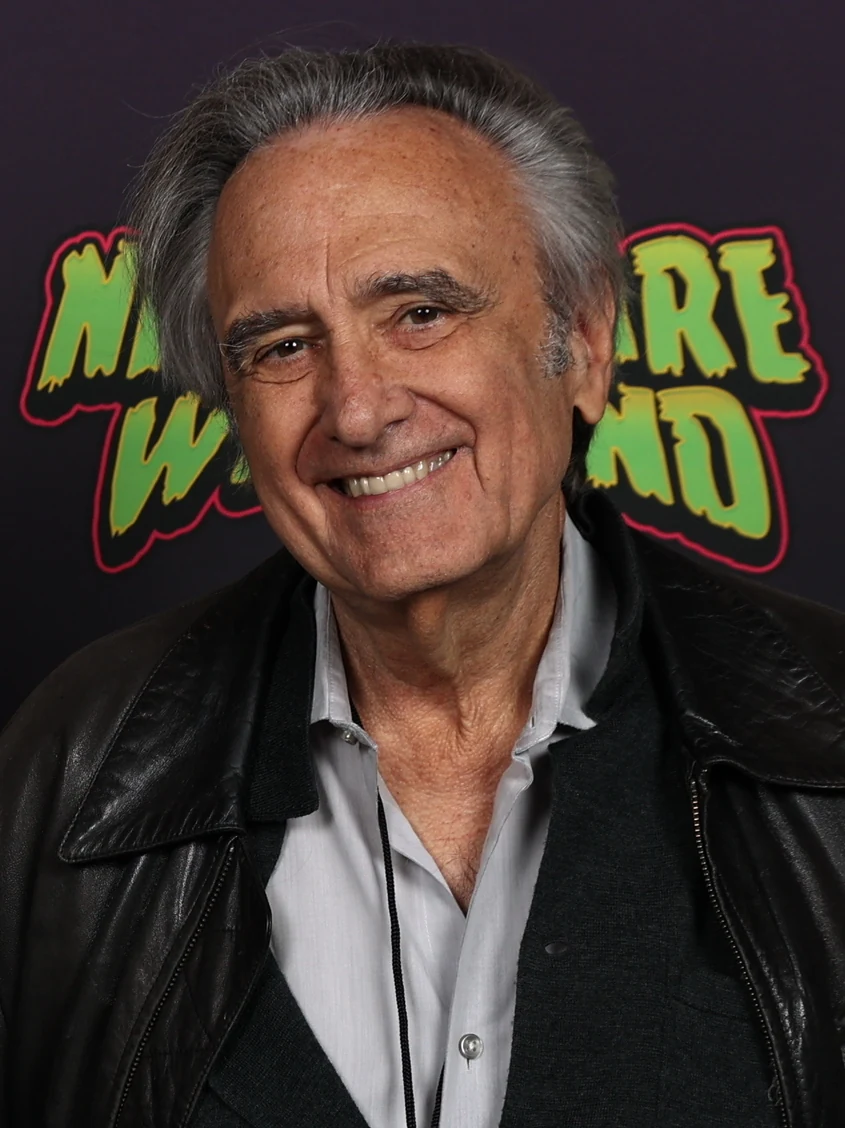
Gremlins opens another door: creature chaos that spreads beyond a single host, room or institution. Warner Bros. describes Kingston Falls as an idyllic small town disrupted by the creatures, while AFI credits Joe Dante as director and Chris Columbus as writer. Its historical classification combines comedy and horror. The connection to Buddy is the unstable meeting of appealing creature design and behavior that does not respect the comforting expectations attached to it.
The distinction is just as important. Gremlins is not a story about escaping an educational television program, and presenting it as mascot horror without qualification would flatten what makes this branch different. Its town-wide setting offers a way to move from an enclosed entertainment nightmare toward a community dealing with escalating disorder. If you want the comic side of the collision, that broader canvas is a reason to consider it.
AFI records the original film as a 1984 PG release. Read that as historical information, not as a modern guarantee of gentleness: the film’s rating belongs to its release context, and individual viewers can still find its creature violence and frightening material uncomfortable. For a watchlist, the useful question is whether you want the dark-comic creature tradition rather than another slasher with a cheerful costume. Gremlins makes the list because it widens the comparison in that direction, not because its plot should be treated as a template for Buddy.
Sources: Warner Bros. — Gremlins official film page ↗ · American Film Institute — Gremlins production and release record ↗ · Mongrel Media — Buddy official synopsis and release record ↗
Death of a Unicorn (2025): keep the unicorn, change the target of the satire

The shared animal makes Death of a Unicorn an obvious search result after Buddy, but the useful comparison requires looking past the title. A24’s synopsis describes a father and daughter, played by Paul Rudd and Jenna Ortega, accidentally killing a unicorn on their way to a retreat involving the father’s billionaire boss. The boss’s interest in exploiting the creature’s healing properties drives the premise. Alex Scharfman wrote and directed the film.
That is a different starting point from Buddy’s corrupted children’s-show host. One story makes a friendly entertainment figure dangerous; the other connects a fantastical creature to adult ambition and the desire to turn an extraordinary discovery into a resource. The matching unicorn is the surface resemblance. The more promising reason to choose it is an interest in horror-comedy that uses an impossible creature to expose the behavior of the people around it.
It is therefore the least exact mascot match among these five films and one of the more useful tonal detours. Pick it if your next watch should keep the absurdity while moving away from an entertainment venue or television set. Skip the assumption that a film about a unicorn must be whimsical family viewing. A24 describes the home release as an action-horror monster mash, and the premise itself includes an animal’s death and lethal consequences. This recommendation is about the contrast between fantasy and human opportunism, not a claim that the two unicorns have a shared origin or that either film is responding to the other.
Sources: A24 — Death of a Unicorn official synopsis and credits ↗ · Mongrel Media — Buddy official synopsis and release record ↗
Don’t Hug Me I’m Scared: one television detour for the lesson that turns wrong
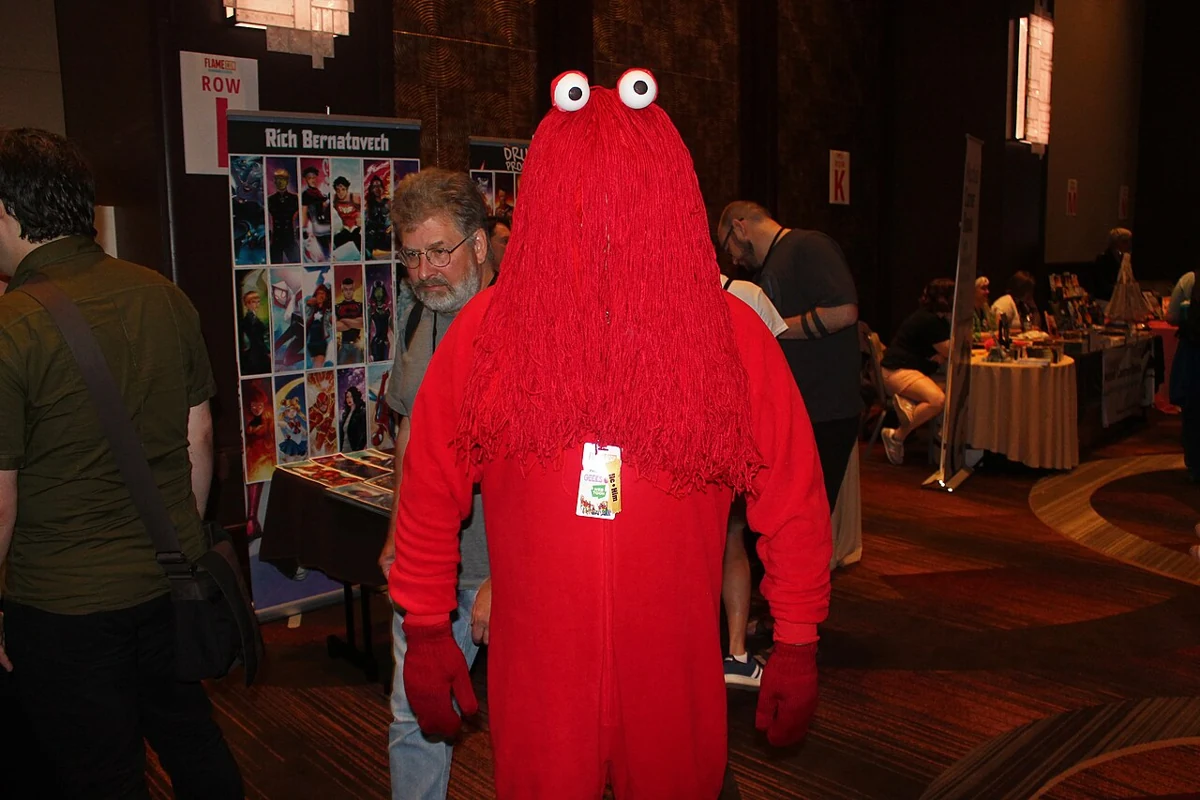
The closest conceptual detour may be television rather than another feature film. Don’t Hug Me I’m Scared uses the recognizable structure of a lesson to lead its characters somewhere much stranger. The creators’ official site separates the web series from the television series and lists six TV episodes around subjects including jobs, family, friendship, transport and electricity. Channel 4’s interview with Becky Sloan, Joe Pelling and Baker Terry provides the makers’ account of developing its puppetry and sets.
The connection to Buddy is the educational format, not merely the presence of colorful characters. A familiar lesson promises that the world will become more understandable. Once the lesson itself becomes a source of discomfort, the viewer can no longer rely on that promise. Kelly’s firsthand No Film School interview likewise discusses his interest in familiar popular-culture formats and the different visual worlds within Buddy. That makes this a more specific comparison than treating every killer doll as the same sort of story.
This remains an explicitly labeled TV alternative, not a sixth movie disguised to lengthen the list. Choose it if you want to explore that broken-lesson idea in separate installments. Choose Five Nights at Freddy’s or Willy’s Wonderland for a feature built around threatening attractions, Child’s Play for a personal toy nightmare, Gremlins for expanding creature disorder, or Death of a Unicorn for another satirical creature story. Following the part you actually enjoyed is more useful than collecting titles that happen to look strange in a thumbnail.
Sources: Don’t Hug Me I’m Scared — official TV and web-series episode guide ↗ · Channel 4 — interview with Becky Sloan, Joe Pelling and Baker Terry ↗ · No Film School — firsthand interview with Casper Kelly ↗
Prepared with AI assistance. Source-based reporting checked on October 25, 2026. This article does not update automatically. Read our editorial standards.