Meta’s November 20 business terms will not take effect
Meta has paused planned changes to four sets of business terms, keeping its existing rules in place instead of implementing the updates on November 20, 2026. The company confirmed the decision to Reuters on Friday, November 6. For publishers, creators and advertisers, the immediate answer is that the announced deadline no longer represents the start of those proposed changes.
The pause covers the Commercial Terms, Product Catalog Terms, Self-Serve Ad Terms and Ad Creative Generative AI Terms. Meta told Reuters it was continuing discussions with stakeholders and taking more time over the changes. That is a suspension of the planned rollout. It does not establish that the company has permanently abandoned every provision or decided what a future version will contain.
Friday’s confirmation followed reporting by Nieman Lab on Thursday, November 5. The journalism publication said Meta had removed the preview of the proposed terms and posted a Business Help Center update stating that the changes would not take effect on November 20. Nieman Lab also obtained a company statement confirming the pause. Its account connects the new notice to several weeks of objections from publishers and other organizations.
The timing has shifted more than once. Nieman Lab reported that the original effective date was October 30, that Meta revised language on October 16, and that the company subsequently moved implementation to November 20. On October 28, communications executive Andy Stone said Meta intended to consult industry groups and leaders before making policy changes, acknowledging that consultations might extend beyond the November deadline.
Those stages describe different actions. Changing wording altered the proposal. Moving the date postponed its introduction. The latest notice removes the November 20 implementation point while consultations continue. None of those steps, by itself, answers the underlying disagreement over whether access to a business’s social audience should come with permissions to collect material from its separate website.
That distinction explains the dispute’s significance for a local newsroom or a creator promoting original work. Posting a link to an article, photograph or business page is a distribution decision. The controversy concerns what additional rights a platform might seek through the contract governing that business relationship. The immediate policy news is the pause. The question of what permissions Meta will eventually request remains open.
Why Schiff and Blackburn challenged the proposed permissions
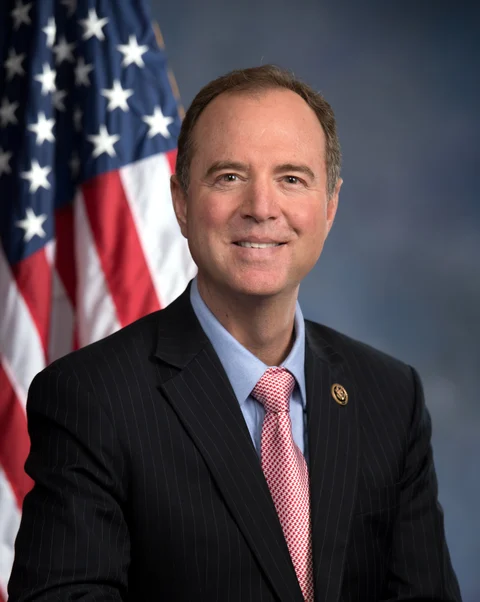
The American objections crossed party lines. Senator Adam Schiff, a California Democrat, urged Meta to stop the changes in a statement his office published on October 26. Senator Marsha Blackburn, a Tennessee Republican, had called for withdrawal in an October 23 letter to Meta chief executive Mark Zuckerberg. Their offices published the reasoning behind those requests, allowing the objections to be distinguished from a finding by a court or regulator.
Schiff focused on the reach of the proposed authorization beyond content uploaded to Meta itself. His office said businesses using Meta products would have to permit automated collection across associated domains. His letter argued that news organizations and independent creators could face a choice between maintaining a channel to audiences and surrendering control over material with licensing value elsewhere.
He also questioned language concerning test credentials and access to content behind technical barriers. Schiff asked for explicit protections for paywalls and robots.txt signals, rather than reliance on assurances outside the contract. His office requested a response outlining Meta’s proposed steps by November 2. These were demands from a senator seeking changes to the proposal, not proof that Meta had already bypassed a particular publisher’s paywall.
Blackburn raised a related concern about the connection between business promotion and outside intellectual property. Her letter argued that linking a website to a Facebook or Instagram business account should not expose a creator’s work to uses far beyond the purpose of reaching customers. She identified news reporting, photography and musical works among the material at issue.
Her office also acknowledged that Meta had revised the language after criticism, removing an explicit reference to training and narrowing its stated purposes to business products. Blackburn argued that those edits still left uncertainty about the scope of collection and potential AI uses. That is her interpretation of the proposal. The pause does not convert that criticism into an adjudicated conclusion about copyright ownership or infringement.
The common concern is concrete. The senators objected to tying a valuable promotional service to permission over content hosted somewhere else. Their letters explain why a wording change alone did not end the controversy. Meta’s subsequent decision to keep existing terms in effect gives the parties more time to address that disagreement, while leaving the eventual contractual language unresolved.
The UK investigation continues as a separate legal process
A formal competition inquiry adds another layer to the dispute. Britain’s Competition and Markets Authority opened its investigation on October 30 under Chapter II of the Competition Act 1998. Its announcement says the authority is examining whether Meta’s commercial terms unfairly harm publishers and other content businesses that rely on its services to reach audiences.
The CMA’s stated concern is about bargaining conditions and market power. It will assess whether Meta occupies a dominant position in a relevant UK market and, if so, whether its existing commercial terms or revisions amount to an abuse of that position. The case therefore goes beyond the calendar date for a single proposed update. It concerns the relationship between access to a platform and the conditions imposed on businesses using it.
The authority explicitly says it has not decided that Meta broke the law. Its case page lists the investigation as open, with initial information gathering and engagement with Meta and third parties indicated for October 2026 through January 2027. Those dates are provisional. The named businesses include Meta Platforms, Facebook UK and Facebook Ireland, and the inquiry may involve other relevant group entities.
The next procedural steps depend on the evidence. The CMA says it may close the inquiry after its initial work if it decides not to proceed. If it provisionally considers there has been an infringement, it may set out objections and allow the parties to respond before reaching a final decision. Opening a case is consequently different from imposing a remedy or issuing a final ruling.
The CMA separately says it is seeking information about Meta One business subscriptions and concerns over posting external links without a fee. It places those questions outside this commercial-terms investigation and says no decision on formal action in that separate area has been made. Treating the two as one concluded case would obscure both their scope and their status.
For U.S. businesses following the dispute, the British inquiry supplies a documented account of the regulator’s concerns, not a ruling under American law. Meta’s confirmed pause answers the near-term implementation question. The next substantive developments will be any revised company proposal and the evidence or decisions emerging from the still-open competition process.
View sources
Source publication or schedule date: November 6 company confirmation; November 5 notice reporting; October 23–30 letters and investigation; case status checked November 6
- Reuters — November 6 confirmation and four paused terms
- Nieman Lab — November 5 company notice and rollout chronology
- Senator Adam Schiff — October 26 statement and letter to Meta
- Senator Marsha Blackburn — October 23 letter and objections
- UK Competition and Markets Authority — October 30 investigation announcement
- UK Competition and Markets Authority — current case status, scope and timetable
Prepared with AI assistance. Source-based reporting checked on November 6, 2026. This article does not update automatically. Read our editorial standards.