Career timeline
The queen audiences remember, and the actress behind the role
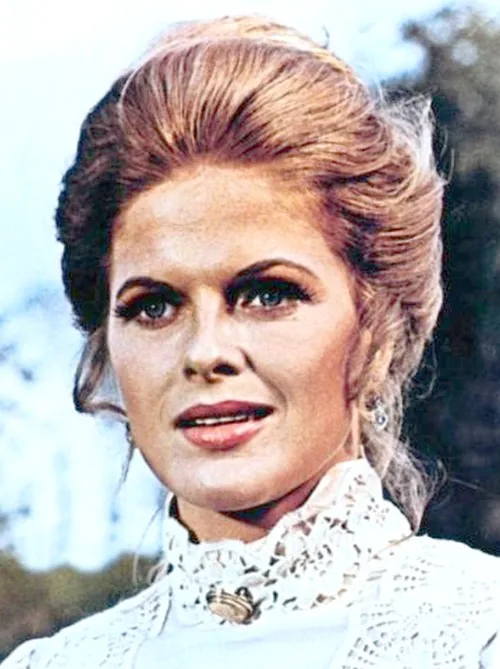
A powerful minister loses the queen’s favor and sets about taking revenge. That is the machinery of La Folie des grandeurs, Gérard Oury’s 1971 comedy, and Karin Schubert plays the woman whose position makes the scheme possible. The role placed a German actress inside a French popular entertainment remembered for Louis de Funès, Yves Montand and Alice Sapritch. It remains a useful entrance into her biography, but it is only one part of a career that moved between national industries and sharply different genres.
Schubert was born in Hamburg on November 26, 1944, according to the German film reference publication Filmdienst. That makes her 81 on October 28, 2026; her next birthday falls in November. The date is more useful than an age copied from an undated search result. CinéDweller describes modeling before she settled in Italy to pursue cinema. The documented movement is from Germany into Italian production, followed by work familiar to French audiences.
There is no need to imagine a private conversation, a chance meeting or an ambition she never placed on the record to make that sequence interesting. An actress working across languages could become recognizable in one country for a film made within an international production network. The credits reveal that movement more reliably than a neat story of overnight discovery.
The question for anyone searching her name is therefore broader than which queen she played. How did the western performer become the figure in Oury’s court comedy, and how did a career containing those films develop into the later work that now dominates many short biographies? Following the titles in order restores the connections between those chapters.
Sources: Filmdienst — Karin Schubert filmography ↗ · CinéDweller — Karin Schubert biography by Virgile Dumez ↗ · Gaumont — Delusions of Grandeur, official film record ↗ · Festival de Cannes — La Folie des grandeurs cast ↗
Italy, Compañeros and the career before the familiar French film
The early record begins before the queen. AlloCiné traces Schubert’s screen appearances to Rolf Olsen’s Le Médecin de Hambourg in 1968 and then to further productions, including a 1970 adventure film. CinéDweller identifies Sergio Corbucci’s Compañeros, also from 1970, as a title that helped bring recognition. The sequence places the Italian western before the French comedy rather than treating the latter as the beginning of her professional life.
That distinction changes the biography. Schubert did not arrive in the record solely as an actress attached to a single famous French cast. She had already entered the Italian industry and appeared in one of its established popular forms. A western credit points to a different screen world from the elaborate court, costumes and social maneuvering of the next year’s comedy. It demonstrates a change of setting and production context without requiring an unsupported claim that one director personally opened a door to another.
The source material also explains why readers encounter different titles in different languages. European films circulated under localized release names. A German reference list, a French biography and an English film discussion may consequently appear to describe separate works when they are identifying different releases of the same production. Director, year and original title are the safest points of comparison.
Filmographies are particularly valuable here because a compressed profile can let the best-known title swallow everything around it. Compañeros belongs in the account for its own chronological place. It shows Schubert working before the role through which many later viewers identify her. The next step was not a simple promotion from obscurity to fame; it was another production, another genre and another audience.
Sources: CinéDweller — Karin Schubert biography by Virgile Dumez ↗ · AlloCiné — Karin Schubert biography ↗
La Folie des grandeurs: why Marie-Anne de Neubourg matters
Gaumont’s official record describes Don Salluste as a minister who falls from grace and tries to compromise the queen through his servant Blaze. The film’s central movement is a revenge scheme. Schubert’s queen is therefore part of the story’s structure, rather than an incidental name attached to an impressive costume. Cannes credits her as Marie-Anne de Neubourg, alongside Montand as Blaze and de Funès as Don Salluste de Bazan.
The distinction between performer and historical character matters. The role identifies the queen portrayed within a comedy; it does not make the film a documentary account of the Spanish court. A biography can explain Schubert’s function in the plot without treating every comic event as history or using the character’s authority to invent something about the actress’s own temperament.
The production record supplies a further reason the film remains visible. Gaumont lists Oury as director and Marcel Jullian, Danièle Thompson and Oury as writers. Its catalog continues to identify Schubert within the cast. The Bibliothèque nationale de France records later home-video editions, including restored presentations and supplementary material. These entries document continuing circulation, rather than proving that Schubert remained professionally involved in later releases.
For someone encountering her through a television repeat or a streaming catalog, release dates can otherwise be misleading. A platform’s posting date and a restored disc’s publication date are not the original production year. TF1 identifies the film as a 1971 comedy and adventure. Keeping that year beside the role returns the viewer to the correct moment in her career: after the Italian western and before the contrasting credits that followed in 1972.
Sources: Gaumont — Delusions of Grandeur, official film record ↗ · Festival de Cannes — La Folie des grandeurs cast ↗ · Bibliothèque nationale de France — La Folie des grandeurs video edition ↗ · TF1 — La Folie des grandeurs film record ↗
After the queen: thrillers, comedy and another change of direction
The following year did not reproduce the same role. AlloCiné records Schubert in Edward Dmytryk’s Bluebeard, with Richard Burton, and in a smaller part in Yves Boisset’s L’Attentat. The shift places her credits alongside different directors and different kinds of material. A biography that moves straight from Oury’s film to her later adult work misses this intervening period.
CinéDweller also lists La Punition in 1973 and Luigi Comencini’s 1974 comedy known in English as Till Marriage Do Us Part. Filmdienst’s record independently includes the Comencini production. These titles help show the range of the filmography without making a ranking of the performances. Being credited in a film establishes participation; the size and artistic success of the role require their own assessment.
The 1970s record then brings Black Emanuelle, released in 1975, followed by further exploitation and erotic productions. AlloCiné describes this as a second phase that overlapped with appearances in more conventional comedy and horror. It was a developing concentration, rather than a clean disappearance from one industry on a single day. Genre categories can be useful, but they should not flatten a sequence of jobs into a moral judgment about the person doing them.
Following the dated credits makes the transition legible. The performer in a 1971 French comedy and the actress appearing in later erotic cinema are the same person working across different parts of commercial filmmaking. That continuity is more informative than a sensational before-and-after headline. It lets readers see what changed in the work while leaving unsupported explanations for those changes outside the narrative.
Sources: Filmdienst — Karin Schubert filmography ↗ · CinéDweller — Karin Schubert biography by Virgile Dumez ↗ · AlloCiné — Karin Schubert biography ↗
The later chapter, the surviving images and the limits of the record
AlloCiné dates Schubert’s concentration on adult-film work from 1985 to 1994, when it says her career ended. CinéDweller also identifies those years as the later adult-film period. This establishes a professional chronology. It does not, by itself, establish every personal explanation repeated in retrospective accounts. The distinction is especially important when biographies move from credits into claims about relatives, finances or health.
This profile does not need those private claims to recover the arc of her working life. A German-born model entered cinema, worked in Italy, appeared in a French costume comedy, moved through thrillers and other popular productions, and later worked in the adult industry. Each chapter can be described through attributed records. None needs to be presented as a punishment for the previous one or an inevitable conclusion to a personality the sources cannot fully reveal.
The archival image used here has a date and a film context: Schubert in The Three Musketeers of the West in 1973. It identifies the actress during the earlier screen career. It is not a current portrait, a childhood photograph or a picture from the Oury production. Preserving that caption helps prevent a familiar face from being detached from its actual source.
The most useful way to revisit Karin Schubert is consequently to begin with the work rather than the reputation attached to it. The queen explains why many French viewers remember her. Compañeros places that memory within an earlier Italian chapter. The 1972 and 1974 credits complicate any one-role account. The later films complete the professional chronology without erasing what came before. Her biography remains the record of a performer moving through European cinema, with more variety than the shortest description allows.
Sources: Filmdienst — Karin Schubert filmography ↗ · CinéDweller — Karin Schubert biography by Virgile Dumez ↗ · AlloCiné — Karin Schubert biography ↗
Prepared with AI assistance. Source-based reporting checked on October 28, 2026. This article does not update automatically. Read our editorial standards.