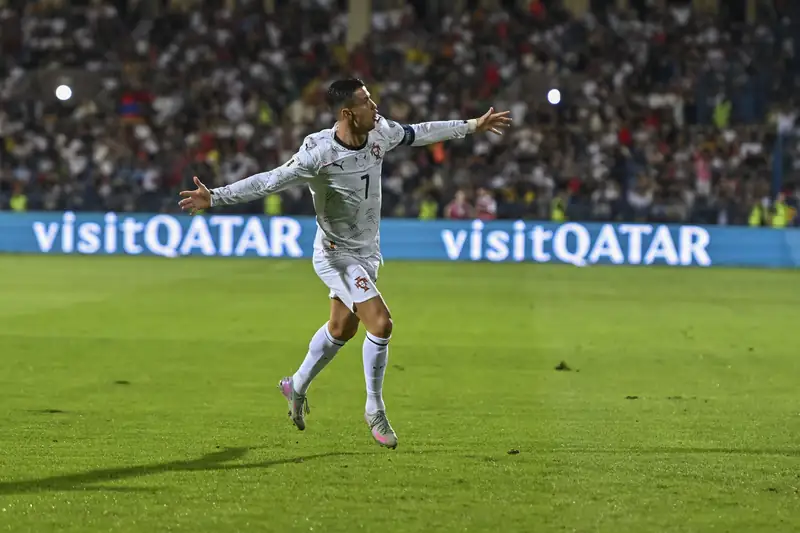
Ronaldo announces his Portugal retirement, while club football continues
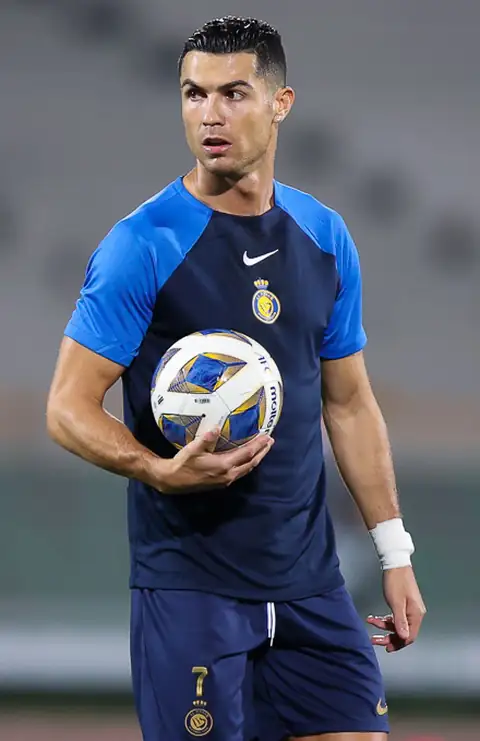
Cristiano Ronaldo announced his retirement from Portugal’s national team on November 5, 2026, drawing a line under a senior international career that began in August 2003. FIFA confirmed the announcement and recorded 234 appearances and 146 goals for the 41-year-old. Both are world records in men’s international football. The announcement concerns Portugal duty. FIFA says he will continue playing club football for Al Nassr in Saudi Arabia.
That distinction answers the immediate question for supporters asking whether Ronaldo has retired from football altogether. His national-team announcement does not amount to an announcement that his club career has ended. International selection and club employment are separate parts of a player’s career, even when the same athlete has become the defining public face of both teams. The November 5 news closes one chapter without establishing a final date for the other.
Ronaldo delivered his message through a social-media video. FIFA reproduced his description of handing back Portugal’s No7 shirt and his reflection on 23 years representing the country. He described the decision as difficult and thanked the people who had shared the journey. The emphasis was on his relationship with Portugal and its supporters, rather than a declaration that he no longer intended to play competitive football anywhere.
Independent Associated Press reporting also distinguished the national-team departure from his continuing club career. It reported that the Portuguese federation planned to organise a tribute that would allow supporters to celebrate him again. A tribute is not automatically a competitive match or a confirmed return to the team. The announcement, the federation’s plans and any later appearance need to be treated as separate developments with their own dates and details.
VIRVIB analysis: the importance of this announcement lies partly in its scope. Ronaldo has represented Portugal across successive generations of teammates, coaches and opponents. Ending that relationship changes the national side’s continuity and public identity even while he remains an active club player. It does not, on its own, establish who will inherit his shirt number, who will captain every future match or how Portugal will replace his goals.
What 234 caps and 146 goals say about his international record
The official totals provide a way to assess the career beyond a list of memorable images. FIFA’s announcement gives Ronaldo 146 goals from 234 senior Portugal appearances. UEFA’s international records also list those totals. VIRVIB calculation: 146 divided by 234 is approximately 0.624 goals per appearance, or about 62 goals for every 100 appearances. That is an aggregate rate across the career, not a claim about his production in every season or every competition.
The appearance record developed alongside the scoring record. UEFA records that Ronaldo made his 197th international appearance against Liechtenstein on March 23, 2023, passing the previous men’s world mark of 196 held by Kuwait’s Bader Al-Mutawa. He scored twice that day. His 200th appearance followed against Iceland on June 20, 2023, and included an 89th-minute winner. The milestones therefore involved both longevity and continuing contributions on the pitch.
He had already established the men’s international goals record before reaching 200 caps. UEFA dates the decisive breakthrough to September 1, 2021, when he scored twice against the Republic of Ireland in Faro-Loulé. That took him beyond the recognised record held by former Iran forward Ali Daei. The achievement came when Ronaldo was 36, with several more years of international appearances still ahead of him.
UEFA also records that he did not score in his first two Portugal appearances in 2003, but then scored in 23 consecutive calendar years through 2026. That sequence adds another dimension to the total. The record was accumulated across years of repeated selection and scoring, rather than through one tournament or a single short period of dominance. It connects his early Portugal career with the player who was still appearing in his forties.
The World Cup supplied a different measure of continuity. FIFA credits Ronaldo with scoring at six editions, beginning in Germany in 2006 and continuing through the 2026 tournament in North America. His three goals at the latest edition took his World Cup tally to 11. Playing across six tournaments and scoring across six tournaments are distinct records, and the latter reflects a scoring contribution at every World Cup he attended.
VIRVIB analysis: appearances measure opportunity and sustained selection, while goals measure one particular form of output. Neither total should be treated as a complete description of his matches, his teammates’ work or Portugal’s tactics. Together, however, they explain why the retirement announcement changes more than a name on a squad list. Portugal is losing a player whose international presence extended across 23 years and multiple cycles of major tournaments.
From an early final to Portugal’s major trophies
Ronaldo’s Portugal story began before the record totals became plausible. FIFA’s career tribute recalls his senior debut against Kazakhstan in 2003, when coach Luiz Felipe Scolari introduced him for Luis Figo at the start of the second half. Portugal won 1–0. The transition from a teenage substitute for an established international star to the team’s long-serving captain gives the later announcement a historical frame without requiring a claim that any successor will follow the same path.
At Euro 2004, the teenager helped Portugal reach the final on home soil, but Greece won the title in Lisbon. At the 2006 World Cup, he scored against Iran and converted the decisive penalty in the quarter-final shootout against England. Portugal reached the semi-finals. Those tournaments brought major occasions and disappointment before the national side achieved its breakthrough title a decade later.
Portugal won Euro 2016, with Ronaldo as captain. The team then added the inaugural Nations League title in 2019 and won the competition again in 2025. FIFA’s retirement announcement identifies all three honours. His Nations League contribution included a hat-trick against Switzerland in the 2019 semi-final, before Portugal defeated the Netherlands in the final. Those results give the international record a team dimension beyond individual scoring and appearance milestones.
The World Cup remained the major title missing from that list. FIFA’s July 6, 2026 report recorded Portugal’s round-of-16 elimination by Spain in Dallas and Ronaldo’s statement that he had played his last World Cup. That July statement concerned the tournament. The November announcement concerns his broader national-team career. Keeping those dates separate explains why a World Cup farewell and an international-retirement announcement can both be news without being the same decision reported twice.
His continuing Al Nassr career now sits alongside Portugal’s task of moving forward. A national team can prepare for future competitions while acknowledging the contribution of a departing captain. The federation’s planned tribute, reported by the AP, offers a further opportunity to mark the career, but its format and timing require their own confirmation. The verified November 5 development is the retirement announcement itself, supported by official records that place his Portugal career at the top of the men’s international appearance and scoring lists.
View sources
Source publication or schedule date: International-retirement announcement November 5, 2026; official records checked the same day.
- FIFA — November 5 international-retirement announcement and continued Al Nassr career
- Associated Press via ABC News — November 5 announcement and federation tribute plans
- UEFA — international goals record and yearly scoring chronology
- UEFA — 197th and 200th appearance milestones
- FIFA — November 5 career tribute and tournament milestones
- FIFA — July 6 World Cup farewell, a separate earlier development
Prepared with AI assistance. Source-based reporting checked on November 5, 2026. This article does not update automatically. Read our editorial standards.